THE ADVENTURE COLLECTIVE® · Independent discovery and booking for outdoor travel

This eight-day Golden Triangle tour pairs sunrise at the Taj with two Ranthambore safaris and city tours of Udaipur and Jaipur. Expect long drives, early-morning game drives, and a close look at Mughal and Rajput architecture with practical, wildlife-focused guidance.
This eight-day Golden Triangle tour pairs sunrise at the Taj with two Ranthambore safaris and city tours of Udaipur and Jaipur. Expect long drives, early-morning game drives, and a close look at Mughal and Rajput architecture with practical, wildlife-focused guidance.
At first light the Taj Mahal glows pale pink, the Yamuna whispering beneath its marble base as the convoy pulls away toward open plains and, later, into dry forest where tigers move like living shadows.
Verified experiences and guided adventures in the surrounding area.
Operated by Joyful Holidays · New Delhi, Delhi
At first light the Taj Mahal glows pale pink, the Yamuna whispering beneath its marble base as the convoy pulls away toward open plains and, later, into dry forest where tigers move like living shadows.
This eight-day circuit threads New Delhi, Agra, Ranthambore, Udaipur and Jaipur — a run of Mughal mausoleums, Rajput palaces and two game drives in one of India’s best-known tiger reserves. The route crosses the Indo-Gangetic plain into the folded ridges of the Aravalli Range; those low, ancient hills shaped regional defenses and palace sites and now shelter scrub forest and seasonal lakes.
Travelers shift between the ornate geometry of Mughal gardens and the carved stone of Rajput forts, while informal markets and lakefront ghats offer everyday culture: brassworkers in Agra, miniature painters in Jaipur, boatmen on Lake Pichola.
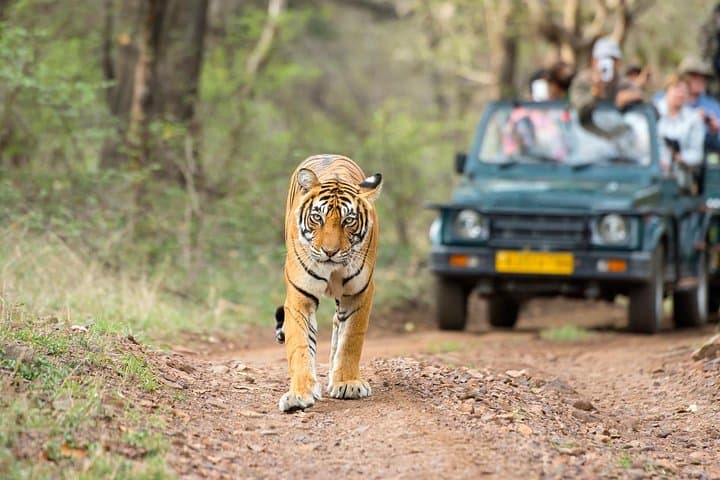
Practically, the tour is road‑heavy but low in technical demand — expect several long drives (Delhi–Agra ~3.5–4 hrs, Agra–Ranthambore ~5–6 hrs, Ranthambore–Udaipur ~6–7 hrs). Ranthambore safaris run as 3–4 hour jeep or canter drives at dawn and late afternoon; sightings are possible but never guaranteed. Early starts, neutral clothing and quiet patience improve chances on game drives.
Pack sun protection, a compact binocular, and comfortable walking shoes; carry cash for smaller stalls. Respect park rules, keep distance from wildlife, and follow guides’ instructions on safaris. With modest fitness and a readiness for early mornings and bumpy roads, this itinerary balances cultural depth with a realistic shot at seeing India’s iconic wildlife.
easy.
8 days.
Suitable for travelers in average physical condition; involves early starts, short walks at sights, and multiple road transfers.
No — sightings depend on animal movement and luck; two scheduled safaris improve odds but guides cannot guarantee encounters.
Yes — the itinerary includes an early visit to the Taj Mahal at sunrise on Day 2 as described in the schedule.
Many transfers use air‑conditioned vehicles and attractions are accessible, but some historic sites have steps and safari vehicles require stepping up; notify operators about mobility needs in advance.
October–March balances cooler weather and strong wildlife activity; April–June is hotter but still popular for cultural visits.
The route contrasts Mughal-era monuments—centred on Agra and Delhi—with Rajput palaces and hilltop forts of Rajasthan, reflecting centuries of imperial patronage and regional kingdoms.
Ranthambore is a protected tiger reserve; follow park rules, avoid feeding or approaching wildlife, and support lodges and guides that practice responsible tourism.
Joyful Holidays operates guided outdoor trips and adventures with an emphasis on safety, stewardship, and memorable experiences.



At first light the Taj Mahal glows pale pink, the Yamuna whispering beneath its marble base as the convoy pulls away toward open plains and, later, into dry forest where tigers move like living shadows.
At first light the Taj Mahal glows pale pink, the Yamuna whispering beneath its marble base as the convoy pulls away toward open plains and, later, into dry forest where tigers move like living shadows.
This eight-day circuit threads New Delhi, Agra, Ranthambore, Udaipur and Jaipur — a run of Mughal mausoleums, Rajput palaces and two game drives in one of India’s best-known tiger reserves. The route crosses the Indo-Gangetic plain into the folded ridges of the Aravalli Range; those low, ancient hills shaped regional defenses and palace sites and now shelter scrub forest and seasonal lakes.
Travelers shift between the ornate geometry of Mughal gardens and the carved stone of Rajput forts, while informal markets and lakefront ghats offer everyday culture: brassworkers in Agra, miniature painters in Jaipur, boatmen on Lake Pichola.
Practically, the tour is road‑heavy but low in technical demand — expect several long drives (Delhi–Agra ~3.5–4 hrs, Agra–Ranthambore ~5–6 hrs, Ranthambore–Udaipur ~6–7 hrs). Ranthambore safaris run as 3–4 hour jeep or canter drives at dawn and late afternoon; sightings are possible but never guaranteed. Early starts, neutral clothing and quiet patience improve chances on game drives.
Pack sun protection, a compact binocular, and comfortable walking shoes; carry cash for smaller stalls. Respect park rules, keep distance from wildlife, and follow guides’ instructions on safaris. With modest fitness and a readiness for early mornings and bumpy roads, this itinerary balances cultural depth with a realistic shot at seeing India’s iconic wildlife.