THE ADVENTURE COLLECTIVE® · Independent discovery and booking for outdoor travel

Cross the Gobi’s wide skies on an eight-day circuit of dunes, dinosaur cliffs and a basalt waterfall. This tour pairs gentle hikes and cultural visits with long vehicle transfers across Mongolia’s southern steppe.
Cross the Gobi’s wide skies on an eight-day circuit of dunes, dinosaur cliffs and a basalt waterfall. This tour pairs gentle hikes and cultural visits with long vehicle transfers across Mongolia’s southern steppe.
The convoy drops off the paved road and the horizon opens: salt-flat light, a wind that pushes at your jacket, and the first low line of dunes cutting the skyline. Over eight days the tour threads ancient riverbeds and basalt cliffs, sleeps in family yurts and campgrounds, and staggers between desert silence and the roar of Ulaan Tsutgalan waterfall.
Verified experiences and guided adventures in the surrounding area.
Operated by Mongolian Tour Guide · Ulaanbaatar, Ulaanbaatar Municipality
The convoy drops off the paved road and the horizon opens: salt-flat light, a wind that pushes at your jacket, and the first low line of dunes cutting the skyline. Over eight days the tour threads ancient riverbeds and basalt cliffs, sleeps in family yurts and campgrounds, and staggers between desert silence and the roar of Ulaan Tsutgalan waterfall.
Travelers move through landscapes carved by time and geology — wind-eroded clay cliffs at Tsagaan Suvarga that reveal fossilized seashells, the 60‑meter escarpments of Bayanzag (Flaming Cliffs) where Roy Chapman Andrews unearthed Cretaceous dinosaur remains, and the narrow ice-sheltered gorge of Yolyn Am carved into the Zuun Saikhan range. The trip also visits Ongiin’s monastery ruins, a reminder of Mongolia’s Buddhist heritage, and Khongoryn Els, the Gobi’s sweeping dunes where sand sings on windy mornings.
Expect long drives across steppe and desert (many legs on gravel tracks), short guided hikes at each stop, and nights in family-run gers or tourist camps. Temperatures swing dramatically between day and night; water is limited outside settlements. Practical planning: pack layered clothing, brimmed sun protection, sturdy boots for sandy and rocky terrain, and enough cash for small village purchases. Allow extra travel time—roads and weather dictate schedules—and follow local guidance around protected areas; some reserves restrict access seasonally.
This itinerary suits travelers wanting varied desert geology, paleontology, and cultural stops with manageable effort rather than technical trekking. With basic mobility and a readiness for long vehicle transfers, the Gobi’s wide skies and ancient formations become an approachable, vivid adventure.
moderate.
8 days.
Suitable for travelers with basic fitness and mobility; short hikes and climbs but no technical routes; handle long vehicle days.
The tour is rated easy to moderate: hikes are short and not technical, but participants must be able to get in and out of vehicles and handle multi-hour drives.
Accommodations are family yurts (gers) and tourist camps or campsites; expect basic amenities and communal arrangements in remote areas.
Late spring through early autumn (May–September) is most comfortable; summers are warm but nights can be cool, while winter travel is icy and often impractical.
Visits to Bayanzag (Flaming Cliffs) are part of the itinerary and typically include an explanatory stop; excavation access is restricted and regulated.
Bayanzag’s red cliffs became famous after 1920s American expeditions recovered Cretaceous dinosaur fossils; nomadic herding and Buddhist monasteries shaped human presence across the steppe.
Several stops lie within protected reserves—follow guides, avoid collecting fossils or disturbing archaeological sites, and minimize water use to protect scarce desert resources.
Mongolian Tour Guide operates guided outdoor trips and adventures with an emphasis on safety, stewardship, and memorable experiences.
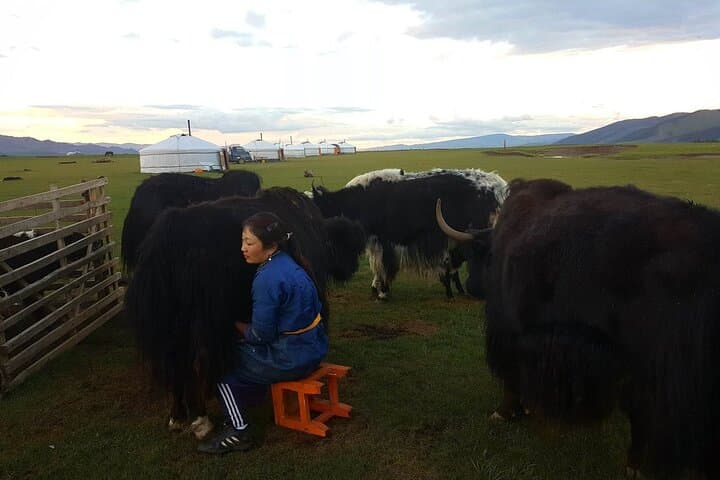

The convoy drops off the paved road and the horizon opens: salt-flat light, a wind that pushes at your jacket, and the first low line of dunes cutting the skyline. Over eight days the tour threads ancient riverbeds and basalt cliffs, sleeps in family yurts and campgrounds, and staggers between desert silence and the roar of Ulaan Tsutgalan waterfall.
The convoy drops off the paved road and the horizon opens: salt-flat light, a wind that pushes at your jacket, and the first low line of dunes cutting the skyline. Over eight days the tour threads ancient riverbeds and basalt cliffs, sleeps in family yurts and campgrounds, and staggers between desert silence and the roar of Ulaan Tsutgalan waterfall.
Travelers move through landscapes carved by time and geology — wind-eroded clay cliffs at Tsagaan Suvarga that reveal fossilized seashells, the 60‑meter escarpments of Bayanzag (Flaming Cliffs) where Roy Chapman Andrews unearthed Cretaceous dinosaur remains, and the narrow ice-sheltered gorge of Yolyn Am carved into the Zuun Saikhan range. The trip also visits Ongiin’s monastery ruins, a reminder of Mongolia’s Buddhist heritage, and Khongoryn Els, the Gobi’s sweeping dunes where sand sings on windy mornings.
Expect long drives across steppe and desert (many legs on gravel tracks), short guided hikes at each stop, and nights in family-run gers or tourist camps. Temperatures swing dramatically between day and night; water is limited outside settlements. Practical planning: pack layered clothing, brimmed sun protection, sturdy boots for sandy and rocky terrain, and enough cash for small village purchases. Allow extra travel time—roads and weather dictate schedules—and follow local guidance around protected areas; some reserves restrict access seasonally.
This itinerary suits travelers wanting varied desert geology, paleontology, and cultural stops with manageable effort rather than technical trekking. With basic mobility and a readiness for long vehicle transfers, the Gobi’s wide skies and ancient formations become an approachable, vivid adventure.