THE ADVENTURE COLLECTIVE® · Independent discovery and booking for outdoor travel

A compact eight-day circuit from Cairo to Abu Simbel combining Giza’s pyramids, a Nile cruise, Luxor’s temples and the relocated marvels of Abu Simbel. Expect guided archaeology, sleeper-train travel and comfortable cruise nights between major sites.
A compact eight-day circuit from Cairo to Abu Simbel combining Giza’s pyramids, a Nile cruise, Luxor’s temples and the relocated marvels of Abu Simbel. Expect guided archaeology, sleeper-train travel and comfortable cruise nights between major sites.
You stand at the edge of the Giza plateau as the city hums beneath the shadow of the Great Pyramid. Dust lifts in thin ribbons while guidebooks and an Egyptologist’s voice map out pharaohs, quarrymen and the river that made them rich. The pulse of Cairo gives way to sleeper-train rattle, then to the slow, forward push of a Nile cruise as the river carries you past palm-lined banks and low, sunbaked villages.
Verified experiences and guided adventures in the surrounding area.
Operated by ETB Tours Egypt · Cairo, Cairo Governorate
You stand at the edge of the Giza plateau as the city hums beneath the shadow of the Great Pyramid. Dust lifts in thin ribbons while guidebooks and an Egyptologist’s voice map out pharaohs, quarrymen and the river that made them rich. The pulse of Cairo gives way to sleeper-train rattle, then to the slow, forward push of a Nile cruise as the river carries you past palm-lined banks and low, sunbaked villages.
This eight-day itinerary threads key chapters of Pharaonic history: Giza’s monumental funerary architecture, Saqqara’s step pyramid complex, Karnak and Luxor’s temple avenues, the Valley of the Kings’ painted tombs, and Abu Simbel’s colossal façades—relocated stone-by-stone during the Aswan High Dam project in the 1960s. Geology here is simple and stark: Nile silt, soft sandstone temples, and desert plateaus that preserve carvings for millennia.
Culturally you’ll meet temple ritual spaces, modern souks and a living river economy—feluccas, fishermen and market vendors who shaped the Nile’s rhythm. Expect guided walks across temple floors, short climbs up escarpments, and moderate pacing aboard a five-star cruise where meals and transfers are handled.
Practical guidance: travel light with layered clothing for hot days and cool nights, carry photocopies of passport pages, and budget time for security checkpoints and museum queues. Hydrate aggressively and wear closed-toe shoes for uneven temple surfaces. If you’re looking for concentrated history with comfortable logistics and expert interpretation, this route delivers an approachable, deeply physical encounter with ancient Egypt.
easy.
8 days.
Suitable for travelers in general good health who can manage several hours of walking and climbing short temple steps.
Many nationalities require a visa for Egypt—check current entry rules and secure a visa online or on arrival if eligible.
Sleeper trains vary; private cabins are basic but functional—expect limited space but a cost-effective overnight transfer.
Major sites have uneven surfaces and steps; some areas are wheelchair-friendly but access to tomb interiors often requires stairs.
Tipping (baksheesh) is common for guides, drivers and service staff; budget modest tips per service and carry small bills.
The itinerary traces continuous settlement along the Nile; many temples were aligned with riverine cycles and the 1960s Aswan High Dam project prompted the international relocation of Abu Simbel.
Tourism supports conservation funding but also stresses fragile sites—avoid touching reliefs, follow marked paths and use licensed guides to minimize impact.
ETB Tours Egypt operates guided outdoor trips and adventures with an emphasis on safety, stewardship, and memorable experiences.


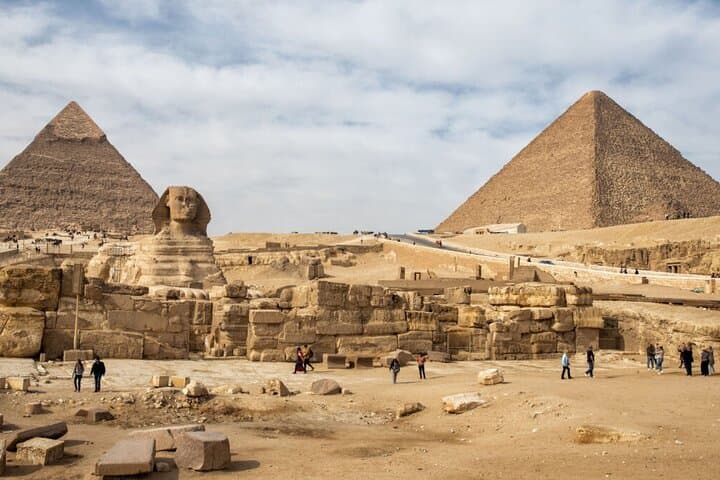

You stand at the edge of the Giza plateau as the city hums beneath the shadow of the Great Pyramid. Dust lifts in thin ribbons while guidebooks and an Egyptologist’s voice map out pharaohs, quarrymen and the river that made them rich. The pulse of Cairo gives way to sleeper-train rattle, then to the slow, forward push of a Nile cruise as the river carries you past palm-lined banks and low, sunbaked villages.
You stand at the edge of the Giza plateau as the city hums beneath the shadow of the Great Pyramid. Dust lifts in thin ribbons while guidebooks and an Egyptologist’s voice map out pharaohs, quarrymen and the river that made them rich. The pulse of Cairo gives way to sleeper-train rattle, then to the slow, forward push of a Nile cruise as the river carries you past palm-lined banks and low, sunbaked villages.
This eight-day itinerary threads key chapters of Pharaonic history: Giza’s monumental funerary architecture, Saqqara’s step pyramid complex, Karnak and Luxor’s temple avenues, the Valley of the Kings’ painted tombs, and Abu Simbel’s colossal façades—relocated stone-by-stone during the Aswan High Dam project in the 1960s. Geology here is simple and stark: Nile silt, soft sandstone temples, and desert plateaus that preserve carvings for millennia.
Culturally you’ll meet temple ritual spaces, modern souks and a living river economy—feluccas, fishermen and market vendors who shaped the Nile’s rhythm. Expect guided walks across temple floors, short climbs up escarpments, and moderate pacing aboard a five-star cruise where meals and transfers are handled.
Practical guidance: travel light with layered clothing for hot days and cool nights, carry photocopies of passport pages, and budget time for security checkpoints and museum queues. Hydrate aggressively and wear closed-toe shoes for uneven temple surfaces. If you’re looking for concentrated history with comfortable logistics and expert interpretation, this route delivers an approachable, deeply physical encounter with ancient Egypt.