THE ADVENTURE COLLECTIVE® · Independent discovery and booking for outdoor travel

Float the Nile between Aswan and Luxor, explore Cairo’s pyramids and the Valley of the Kings, and travel by setting train on an 8-day all-inclusive circuit. This package mixes river days with guided temple visits and urban exploration.
Float the Nile between Aswan and Luxor, explore Cairo’s pyramids and the Valley of the Kings, and travel by setting train on an 8-day all-inclusive circuit. This package mixes river days with guided temple visits and urban exploration.
Morning light slides across the Nile as the cruise slips away from Aswan — the river seems to pull the boat forward, an ancient current that has carried traders, priests and pharaohs for millennia. On this eight-day loop travelers move from Cairo’s urban pulse to the slow, palm-lined rhythm of the Nile, then on to Luxor’s open-air museums and the silent rock-cut tombs of the Valley of the Kings.
Verified experiences and guided adventures in the surrounding area.
Operated by Holiday in Egypt Travels · Cairo, Cairo Governorate
Morning light slides across the Nile as the cruise slips away from Aswan — the river seems to pull the boat forward, an ancient current that has carried traders, priests and pharaohs for millennia. On this eight-day loop travelers move from Cairo’s urban pulse to the slow, palm-lined rhythm of the Nile, then on to Luxor’s open-air museums and the silent rock-cut tombs of the Valley of the Kings.
The route threads through Egypt’s layered history: Giza’s colossal pyramids and the Sphinx from the Old Kingdom; the Egyptian Museum’s Tutankhamen treasures; Philae and Kom Ombo temples that bear Ptolemaic carvings; and Luxor and Karnak, the New Kingdom’s ritual heart. Geology and engineering meet at the Aswan High Dam, where modern hydrology reshaped the river.
Culturally, expect markets, mosque calls, and compact roadside cafés serving ful and koshari; local guides bring temple reliefs and hieroglyphs to life. The cruise portion is low-impact physically but high on logistical movement — setting trains connect Cairo and Aswan, while the five-star cruise provides full board and daily shore excursions.
Practical note: plan for long days of walking on uneven stone and steps in temples; carry sun protection and a refillable bottle for the dry heat. Book admission and train segments in advance to avoid sold-out dates, and carry photocopies of passports (originals required for check-ins). Timing your visit in shoulder seasons keeps daytime temperatures manageable and makes time at outdoor sites more comfortable.
easy.
8 days.
Suitable for travelers in normal, active health; expect repeated short walks and standing during tours, with stair climbs in temples and tombs.
Yes — the package lists full board on the Nile cruise and specified meals in Cairo, with breakfasts in hotels and several lunches and dinners included as per itinerary.
Many nationalities require a visa for Egypt; check entry rules before travel and arrange an e‑visa or obtain one on arrival where eligible.
Expect moderate walking: temple complexes and museums involve stairs and uneven surfaces; the tour is rated suitable for all fitness levels but not wheelchair-friendly in most ancient sites.
The itinerary uses first-class VIP sleeper train segments; seats and berths are standard for overnight travel, and transfers are by private AC vehicle with local representatives assisting.
This corridor holds continuous occupation from Predynastic settlements through Pharaonic, Greco-Roman and Islamic eras; Luxor’s temples are concentrated from the New Kingdom (c. 1550–1070 BCE).
Tour operators work with local authorities to manage visitor numbers at sensitive sites; travelers should avoid touching reliefs, stay on designated paths and limit single-use plastics to reduce impact.
Holiday in Egypt Travels operates guided outdoor trips and adventures with an emphasis on safety, stewardship, and memorable experiences.


Morning light slides across the Nile as the cruise slips away from Aswan — the river seems to pull the boat forward, an ancient current that has carried traders, priests and pharaohs for millennia. On this eight-day loop travelers move from Cairo’s urban pulse to the slow, palm-lined rhythm of the Nile, then on to Luxor’s open-air museums and the silent rock-cut tombs of the Valley of the Kings.
Morning light slides across the Nile as the cruise slips away from Aswan — the river seems to pull the boat forward, an ancient current that has carried traders, priests and pharaohs for millennia. On this eight-day loop travelers move from Cairo’s urban pulse to the slow, palm-lined rhythm of the Nile, then on to Luxor’s open-air museums and the silent rock-cut tombs of the Valley of the Kings.
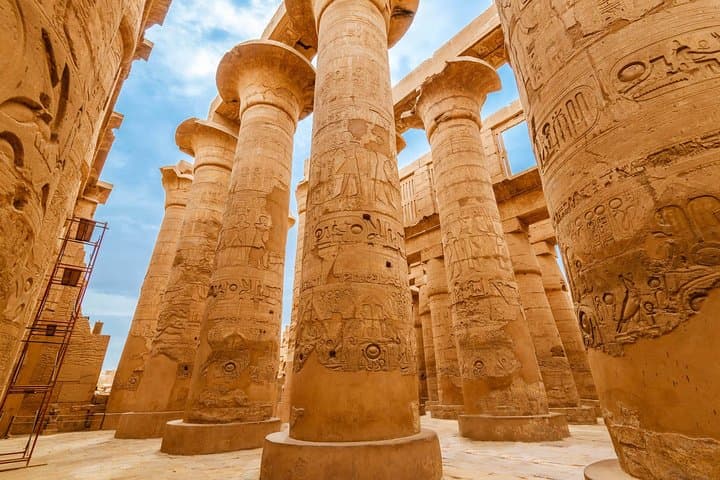
The route threads through Egypt’s layered history: Giza’s colossal pyramids and the Sphinx from the Old Kingdom; the Egyptian Museum’s Tutankhamen treasures; Philae and Kom Ombo temples that bear Ptolemaic carvings; and Luxor and Karnak, the New Kingdom’s ritual heart. Geology and engineering meet at the Aswan High Dam, where modern hydrology reshaped the river.
Culturally, expect markets, mosque calls, and compact roadside cafés serving ful and koshari; local guides bring temple reliefs and hieroglyphs to life. The cruise portion is low-impact physically but high on logistical movement — setting trains connect Cairo and Aswan, while the five-star cruise provides full board and daily shore excursions.
Practical note: plan for long days of walking on uneven stone and steps in temples; carry sun protection and a refillable bottle for the dry heat. Book admission and train segments in advance to avoid sold-out dates, and carry photocopies of passports (originals required for check-ins). Timing your visit in shoulder seasons keeps daytime temperatures manageable and makes time at outdoor sites more comfortable.