THE ADVENTURE COLLECTIVE® · Independent discovery and booking for outdoor travel

Experience eight days of Egypt’s essentials: Giza’s pyramids, a Luxor hot-air balloon at sunrise, a three-night Nile cruise, and the monumental temples of Abu Simbel. This guided private tour blends history, river travel, and early-morning adventure for a compact, well-planned itinerary.
Experience eight days of Egypt’s essentials: Giza’s pyramids, a Luxor hot-air balloon at sunrise, a three-night Nile cruise, and the monumental temples of Abu Simbel. This guided private tour blends history, river travel, and early-morning adventure for a compact, well-planned itinerary.
The sun lifts over the Nile and a thin mist clings to the river as your balloon eases skyward — Luxor’s monuments shrink into a grid of stone and palm, while the cruise below slips south like a slow-moving town. Over eight days you move from Cairo’s stone-strewn plateaus to the calm, reed-lined banks between Luxor and Aswan, ending with the carved colossi at Abu Simbel.
Verified experiences and guided adventures in the surrounding area.
Operated by Here Egypt Tours · Cairo, Cairo Governorate
The sun lifts over the Nile and a thin mist clings to the river as your balloon eases skyward — Luxor’s monuments shrink into a grid of stone and palm, while the cruise below slips south like a slow-moving town. Over eight days you move from Cairo’s stone-strewn plateaus to the calm, reed-lined banks between Luxor and Aswan, ending with the carved colossi at Abu Simbel.
This route threads millennia: Giza’s pyramids and the Sphinx mark Old Kingdom ambition; Karnak and Luxor map New Kingdom ritual; Abu Simbel speaks to imperial showmanship and modern engineering after its 1960s relocation. Geologically the Nile cuts a low, fertile corridor through desert escarpments — minimal elevation change along the river, steeper cliffs on the west bank near the Valley of the Kings.
Culturally you’ll see layers of Pharaonic, Coptic and Nubian life: market chatter, tea on the sun deck, and small riverside villages where feluccas bob. Practicalities shape the experience: expect early starts (hot-air-balloon pickups before dawn), moderate walking on uneven temple stone and steps, and long transfer segments by train, coach or boat — surface travel between Cairo and Luxor is roughly 500–650 km (310–405 miles).
Bring sun protection and sturdy shoes, plan for early-morning cold then strong daytime heat, and allow time to acclimate to dust and crowds. Hydrate, carry photocopies of travel documents, and budget tips for guides and boat staff. With planned transfers, guided Egyptology commentary, and three nights aboard a five-star Nile cruiser, this itinerary pairs thoughtful logistics with the sensory reward of archaeological spectacle and the Nile’s steady pull.
moderate.
8 days.
Moderate fitness for multiple days of walking, stairs and early starts; able to manage 1–3 miles of walking on uneven surfaces per day.
Pickups typically run before sunrise — often around 4:00–5:00 AM depending on season — to catch stable winds and morning light.
Yes — the itinerary includes three nights aboard a five-star Nile cruise that sails between Luxor and Aswan with scheduled stops at Edfu and Kom Ombo.
Yes — Abu Simbel is usually done as an early morning excursion from Aswan (departures as early as 4–5 AM) to avoid heat and crowds; it's a long but common day trip.
The tour includes door-to-door transfers, qualified drivers, and first-class or sleeping-train tickets on scheduled segments as described in the itinerary.
This route tracks core periods of Pharaonic power — from the pyramid builders at Giza to New Kingdom temples in Luxor and the Ramses-era monuments at Abu Simbel — and reflects modern conservation efforts like the Abu Simbel relocation project in the 1960s.
High visitation strains fragile sites; stick to marked paths, avoid touching reliefs, and use local guides who support conservation fees and responsible tourism initiatives.
Here Egypt Tours operates guided outdoor trips and adventures with an emphasis on safety, stewardship, and memorable experiences.
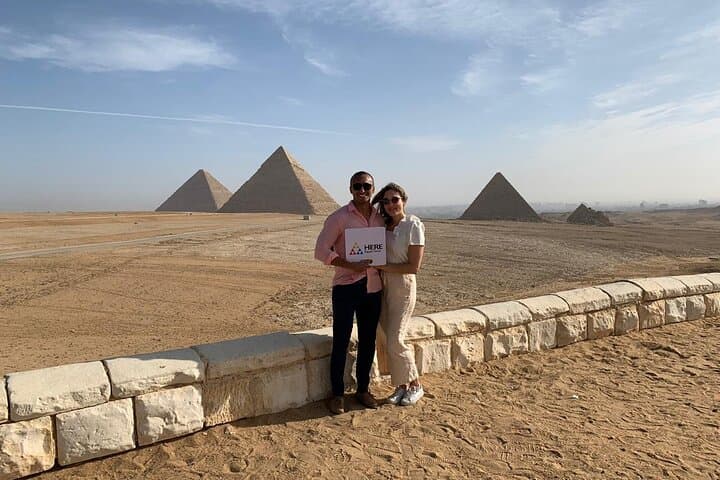


The sun lifts over the Nile and a thin mist clings to the river as your balloon eases skyward — Luxor’s monuments shrink into a grid of stone and palm, while the cruise below slips south like a slow-moving town. Over eight days you move from Cairo’s stone-strewn plateaus to the calm, reed-lined banks between Luxor and Aswan, ending with the carved colossi at Abu Simbel.
The sun lifts over the Nile and a thin mist clings to the river as your balloon eases skyward — Luxor’s monuments shrink into a grid of stone and palm, while the cruise below slips south like a slow-moving town. Over eight days you move from Cairo’s stone-strewn plateaus to the calm, reed-lined banks between Luxor and Aswan, ending with the carved colossi at Abu Simbel.
This route threads millennia: Giza’s pyramids and the Sphinx mark Old Kingdom ambition; Karnak and Luxor map New Kingdom ritual; Abu Simbel speaks to imperial showmanship and modern engineering after its 1960s relocation. Geologically the Nile cuts a low, fertile corridor through desert escarpments — minimal elevation change along the river, steeper cliffs on the west bank near the Valley of the Kings.
Culturally you’ll see layers of Pharaonic, Coptic and Nubian life: market chatter, tea on the sun deck, and small riverside villages where feluccas bob. Practicalities shape the experience: expect early starts (hot-air-balloon pickups before dawn), moderate walking on uneven temple stone and steps, and long transfer segments by train, coach or boat — surface travel between Cairo and Luxor is roughly 500–650 km (310–405 miles).
Bring sun protection and sturdy shoes, plan for early-morning cold then strong daytime heat, and allow time to acclimate to dust and crowds. Hydrate, carry photocopies of travel documents, and budget tips for guides and boat staff. With planned transfers, guided Egyptology commentary, and three nights aboard a five-star Nile cruiser, this itinerary pairs thoughtful logistics with the sensory reward of archaeological spectacle and the Nile’s steady pull.