THE ADVENTURE COLLECTIVE® · Independent discovery and booking for outdoor travel

Walk the old caravan routes from Marrakech to the vast dunes of Erg Chigaga on an eight‑day camel trek led by Sahrawi guides. Expect long dunescapes, rustic camp nights, and a steady desert tempo that reconnects you with slow travel.
Walk the old caravan routes from Marrakech to the vast dunes of Erg Chigaga on an eight‑day camel trek led by Sahrawi guides. Expect long dunescapes, rustic camp nights, and a steady desert tempo that reconnects you with slow travel.
Dawn slides across the dunes like a slow hand — the caravan wakes in a line of silhouettes, camels shifting, guides stoking a small fire. You feel the sand give underfoot, then underfoot again as the herd begins its steady rhythm: two hours in the cool morning, a siesta, and another march as the light softens.
Verified experiences and guided adventures in the surrounding area.
Operated by Desertbrise Travel · M'Hamid El Ghizlane, Drâa‑Tafilalet
Dawn slides across the dunes like a slow hand — the caravan wakes in a line of silhouettes, camels shifting, guides stoking a small fire. You feel the sand give underfoot, then underfoot again as the herd begins its steady rhythm: two hours in the cool morning, a siesta, and another march as the light softens.
This route follows old trans‑Saharan caravan corridors from the Atlas foothills through the palm-lined Draa Valley to the sweeping ergs of southern Morocco. Geologically, the erg fields — including Erg Zahar, Erg Smar and the wide seas of Erg Chigaga — are wind‑built ridges and bowls of mobile sand carved by seasonal gusts. Culturally, the trek is guided by Sahrawi nomads whose tents, songs and camp recipes reflect centuries of desert life.
Expect low elevation gain but demanding terrain: loose sand, dune slopes and salt flats. Daily travel alternates camel hours and short on‑foot explorations; typical Saddle time is 2–3 hours per session with breaks. Nights are under simple nomadic tents or camps; temperatures swing widely after sunset. Logistics include an 8‑day itinerary with pickup in Marrakech via the Tichka Pass and Ait Benhaddou, and return to Marrakech on day eight.
Practical tips: hydrate early and often, layer for big diurnal swings, use closed-toe shoes for stony approaches to dunes, and follow guides’ instructions on mounting and dismounting camels. Respect private nomad spaces, pack out non‑biodegradable waste, and plan for basic facilities — desert camps are rustic but attentive to safety. The reward is vast silence, cathedral dunes, and a measured pace that makes time feel negotiable.
moderate.
8 days.
Suitable for travelers with reasonable endurance; expect long saddle hours and short walks in soft sand, so core and leg strength help.
The trek is rated moderate — camels do most of the load‑carrying but you’ll spend several hours riding each day and occasionally walk in soft sand; basic fitness and no major mobility issues are required.
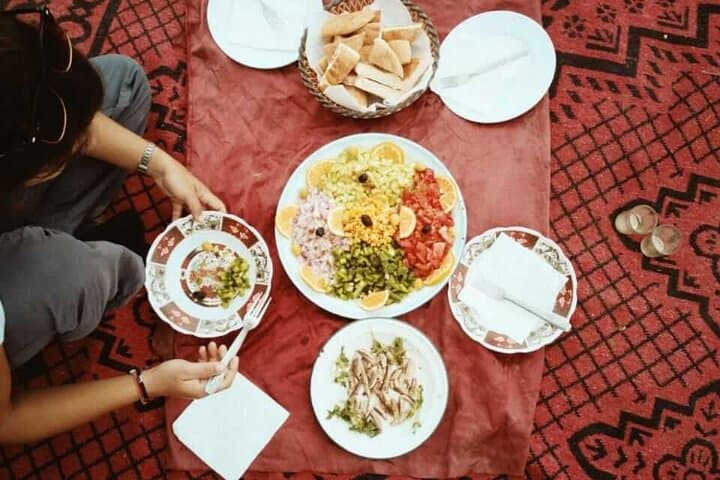
Camps are nomadic‑style with simple tents, mattresses and communal meals; toilet facilities are basic and showers are infrequent or cold.
The operator advises against travel for pregnant guests; children can join if supervised but long saddle hours may be uncomfortable for young kids.
Carry only essentials with you; leave non‑essentials in Marrakech accommodations and bring local currency for tips and incidentals.
The route traces former trans‑Saharan caravan corridors used for salt and trade; many nomadic families in the region maintain those migration and hospitality traditions.
The Sahara’s dune systems are fragile — avoid driving across vegetation, pack out waste, limit plastic, and follow guides to protect water sources and wildlife.
Desertbrise Travel operates guided outdoor trips and adventures with an emphasis on safety, stewardship, and memorable experiences.
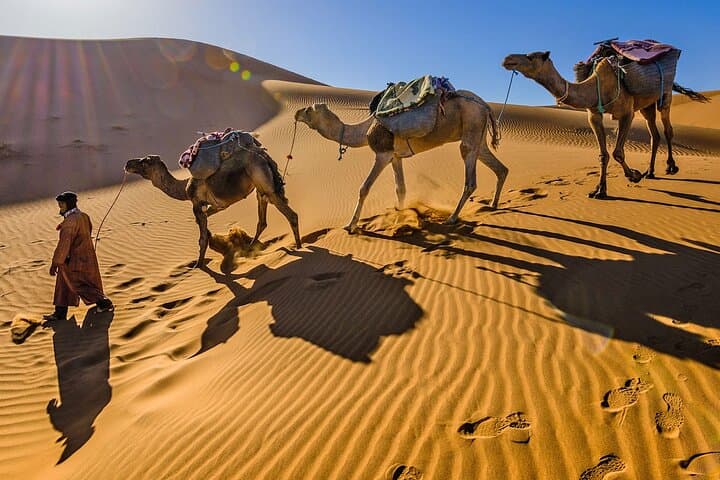
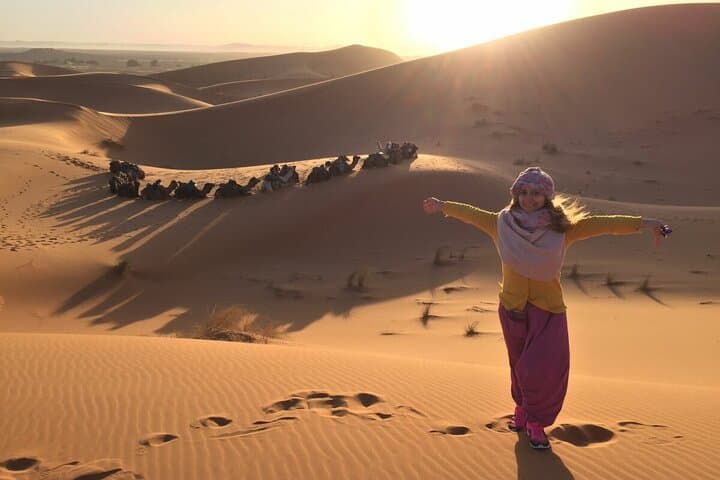
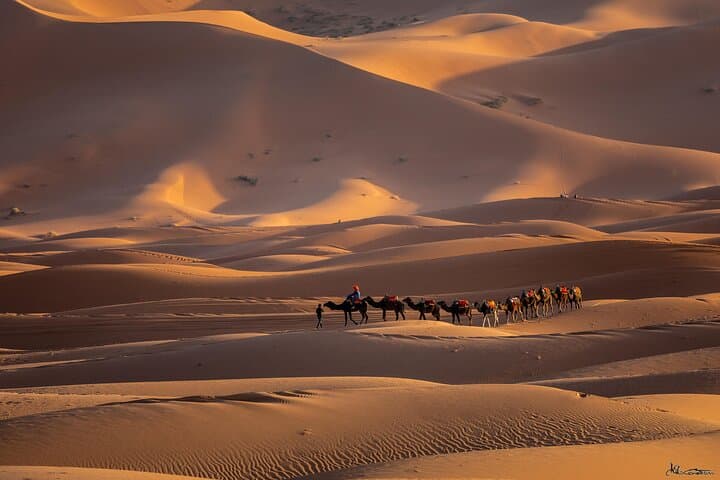
Dawn slides across the dunes like a slow hand — the caravan wakes in a line of silhouettes, camels shifting, guides stoking a small fire. You feel the sand give underfoot, then underfoot again as the herd begins its steady rhythm: two hours in the cool morning, a siesta, and another march as the light softens.
Dawn slides across the dunes like a slow hand — the caravan wakes in a line of silhouettes, camels shifting, guides stoking a small fire. You feel the sand give underfoot, then underfoot again as the herd begins its steady rhythm: two hours in the cool morning, a siesta, and another march as the light softens.
This route follows old trans‑Saharan caravan corridors from the Atlas foothills through the palm-lined Draa Valley to the sweeping ergs of southern Morocco. Geologically, the erg fields — including Erg Zahar, Erg Smar and the wide seas of Erg Chigaga — are wind‑built ridges and bowls of mobile sand carved by seasonal gusts. Culturally, the trek is guided by Sahrawi nomads whose tents, songs and camp recipes reflect centuries of desert life.
Expect low elevation gain but demanding terrain: loose sand, dune slopes and salt flats. Daily travel alternates camel hours and short on‑foot explorations; typical Saddle time is 2–3 hours per session with breaks. Nights are under simple nomadic tents or camps; temperatures swing widely after sunset. Logistics include an 8‑day itinerary with pickup in Marrakech via the Tichka Pass and Ait Benhaddou, and return to Marrakech on day eight.
Practical tips: hydrate early and often, layer for big diurnal swings, use closed-toe shoes for stony approaches to dunes, and follow guides’ instructions on mounting and dismounting camels. Respect private nomad spaces, pack out non‑biodegradable waste, and plan for basic facilities — desert camps are rustic but attentive to safety. The reward is vast silence, cathedral dunes, and a measured pace that makes time feel negotiable.