THE ADVENTURE COLLECTIVE® · Independent discovery and booking for outdoor travel

Ride dromedaries across wind-sculpted dunes, sleep in Berber desert camps and pass ancient kasbahs on this 8-day trek from Marrakech into the Sahara. Expect long desert days, palm-lined wadis and hands-on cultural encounters.
Ride dromedaries across wind-sculpted dunes, sleep in Berber desert camps and pass ancient kasbahs on this 8-day trek from Marrakech into the Sahara. Expect long desert days, palm-lined wadis and hands-on cultural encounters.
You leave Marrakech before dawn, the city’s tile roofs receding as the atlas foothills blur into ochre plains. By late afternoon the caravan appears: slow-stepping dromedaries, the wind shaping sand into ridges that dare you to read their lines. Nights are broad and starlit; the campfire throws warm light on Berber songs while the dunes hold their hush.
Verified experiences and guided adventures in the surrounding area.
Operated by EASYGO TOURS · Zagora, Drâa-Tafilalet
You leave Marrakech before dawn, the city’s tile roofs receding as the atlas foothills blur into ochre plains. By late afternoon the caravan appears: slow-stepping dromedaries, the wind shaping sand into ridges that dare you to read their lines. Nights are broad and starlit; the campfire throws warm light on Berber songs while the dunes hold their hush.
This route follows age-old caravan tracks through the Draa Valley and into M’Hamid’s sands, tracing the trade corridors that connected Marrakesh to sub-Saharan markets. Geologically, the region is where Atlas runoff meets wind-sculpted erg—palm-lined oases punctuate stony plateaus and soft gullies. Local culture is predominantly Amazigh (Berber): you’ll pass ksour (fortified villages) and the mud-brick kasbah of Ait Ben Haddou, a living example of southern Moroccan earthen architecture.
Expect a mix of camel riding and guided walking—short on technical difficulty but long on exposure and heat. Camps are traditional Berber tents with basic mattresses; larger towns provide hotel nights. Water is scarce; plan for strict daily hydration and sun management. Footwear should balance sand comfort and rocky approaches; gaiters help.
Practical notes: travel days include vehicle transfers between Marrakech, Ouarzazate/Ait Ben Haddou, Zagora and M’Hamid; some walking sections range from 3–5 hours. Respect private farmland and local customs—photograph politely and ask before entering oasis groves. For first-time desert travelers this itinerary delivers safe, immersive access to the Sahara’s scale, along with the logistical support of a professional guide and camp crew.
moderate.
7 days.
Good baseline fitness for multiple 3–5 hour walking days and mounting/dismounting camels; stamina for heat exposure required.
The trip is rated moderate: camels carry most gear and walking sections are generally 3–5 hours on mixed terrain—good stamina and basic mobility are sufficient.
Accommodation alternates between 3 nights in Marrakech hotels and 4 nights in Berber tents at desert camps with mattresses and communal meals as described in the itinerary.
Yes—camels used on tourist treks are accustomed to riders; guides show mounting/dismounting technique and supervise during rides.
Visa requirements depend on your nationality; check with the Moroccan consulate or official government sources before booking.
The Draa route follows centuries-old caravan lines and is dotted with ksour and kasbahs that served as trading and defensive hubs between the Sahara and northern cities.
Water scarcity and fragile dune ecosystems mean visitors should avoid off-track driving, use established campsites and minimize single-use plastics to reduce impact.
EASYGO TOURS operates guided outdoor trips and adventures with an emphasis on safety, stewardship, and memorable experiences.
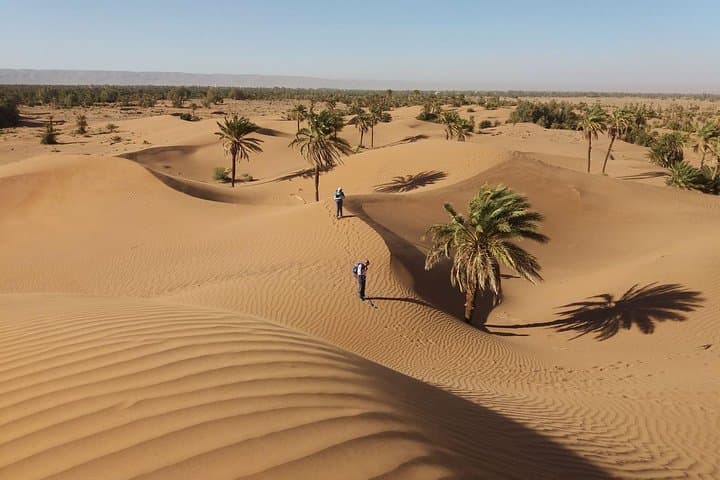
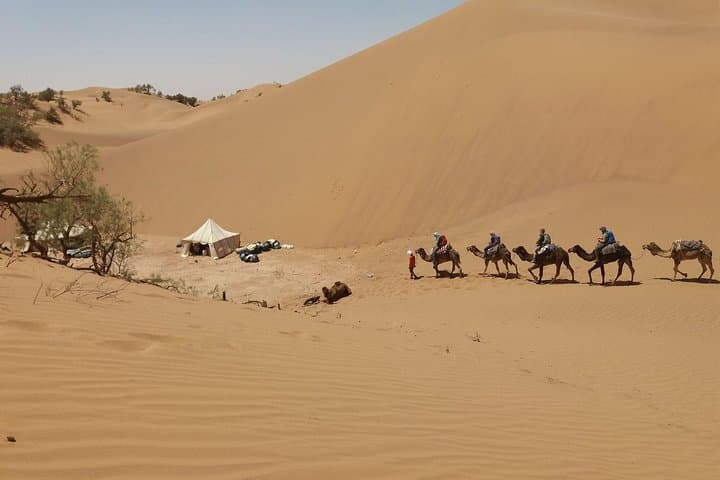
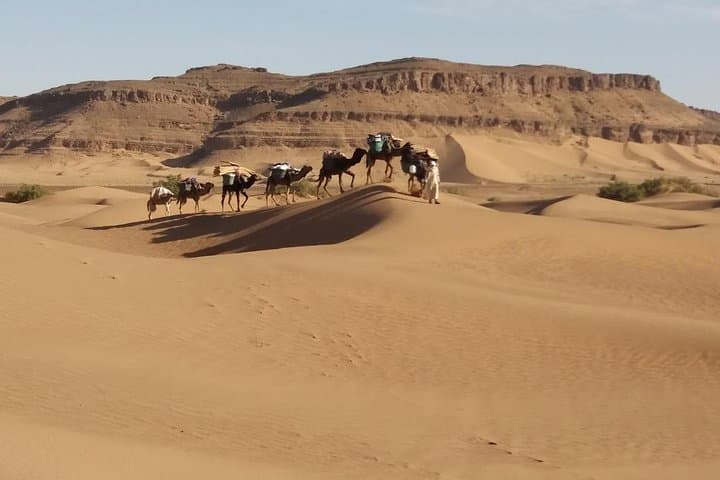
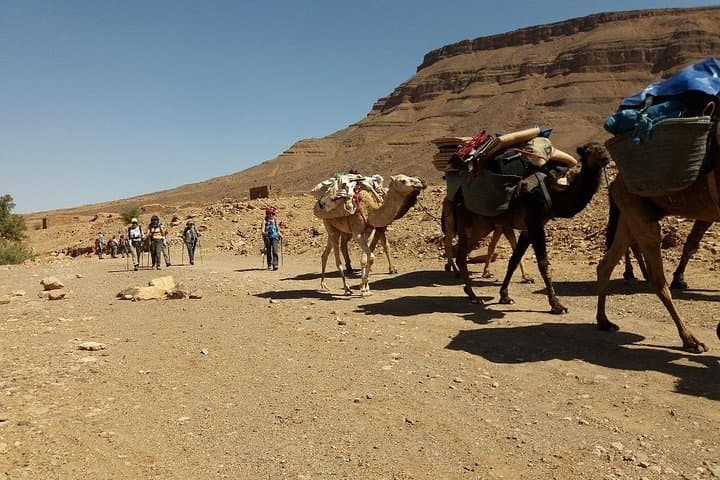
You leave Marrakech before dawn, the city’s tile roofs receding as the atlas foothills blur into ochre plains. By late afternoon the caravan appears: slow-stepping dromedaries, the wind shaping sand into ridges that dare you to read their lines. Nights are broad and starlit; the campfire throws warm light on Berber songs while the dunes hold their hush.
You leave Marrakech before dawn, the city’s tile roofs receding as the atlas foothills blur into ochre plains. By late afternoon the caravan appears: slow-stepping dromedaries, the wind shaping sand into ridges that dare you to read their lines. Nights are broad and starlit; the campfire throws warm light on Berber songs while the dunes hold their hush.
This route follows age-old caravan tracks through the Draa Valley and into M’Hamid’s sands, tracing the trade corridors that connected Marrakesh to sub-Saharan markets. Geologically, the region is where Atlas runoff meets wind-sculpted erg—palm-lined oases punctuate stony plateaus and soft gullies. Local culture is predominantly Amazigh (Berber): you’ll pass ksour (fortified villages) and the mud-brick kasbah of Ait Ben Haddou, a living example of southern Moroccan earthen architecture.
Expect a mix of camel riding and guided walking—short on technical difficulty but long on exposure and heat. Camps are traditional Berber tents with basic mattresses; larger towns provide hotel nights. Water is scarce; plan for strict daily hydration and sun management. Footwear should balance sand comfort and rocky approaches; gaiters help.
Practical notes: travel days include vehicle transfers between Marrakech, Ouarzazate/Ait Ben Haddou, Zagora and M’Hamid; some walking sections range from 3–5 hours. Respect private farmland and local customs—photograph politely and ask before entering oasis groves. For first-time desert travelers this itinerary delivers safe, immersive access to the Sahara’s scale, along with the logistical support of a professional guide and camp crew.