THE ADVENTURE COLLECTIVE® · Independent discovery and booking for outdoor travel

Explore London’s animal stories on a three-hour guided walk from Embankment to Hyde Park. Discover secrets behind Trafalgar’s lions, St James’s pelicans, and wartime animal lore while walking city streets and park lawns.
Explore London’s animal stories on a three-hour guided walk from Embankment to Hyde Park. Discover secrets behind Trafalgar’s lions, St James’s pelicans, and wartime animal lore while walking city streets and park lawns.
The walk begins under the low grey sky along the Thames, where stone lions on Trafalgar Square stare down at the passing city and pigeons bustle like commuters with purpose. Your guide meets at Embankment Station by the Camel Memorial, and the river’s current—visible, insistent—seems to pull you into a different London: one told through animals on plaques, statues and park ponds.
Verified experiences and guided adventures in the surrounding area.
Operated by Pigeon Tours · London, England
The walk begins under the low grey sky along the Thames, where stone lions on Trafalgar Square stare down at the passing city and pigeons bustle like commuters with purpose. Your guide meets at Embankment Station by the Camel Memorial, and the river’s current—visible, insistent—seems to pull you into a different London: one told through animals on plaques, statues and park ponds.
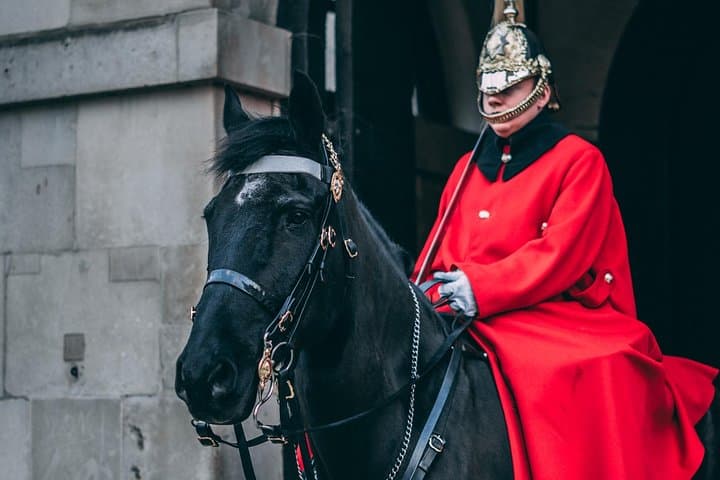
This three-hour urban ramble threads history and folklore across central London. You’ll hear how wartime animal stories shaped public sentiment in the 20th century, learn medieval and Tudor-era links between royal parks and hunting grounds, and find out why a park once had crocodiles in local lore. The route follows Whitehall past Horse Guards and 10 Downing Street—where famous mouser cats have their own neighborhood reputations—then softens into St James’s Park with pelicans and swans performing an old, slow choreography.
The geology is polite: London clay underfoot, flat paved streets and lawns that were once marsh and hunting forest. Culture here is civic and commemorative—animals are woven into monuments, memorials and municipal gardens.
Practical guidance: expect roughly 2–3 miles of walking on pavement and park paths with minimal elevation; bring a waterproof layer, comfortable shoes, and a refillable water bottle. Tours run rain or shine; wear layers for sudden wind off the Thames and arrive 10 minutes early to locate the Camel Memorial. The pace is steady but accommodating—perfect for curious walkers who prefer stories to speed.
moderate.
3 hours.
Suitable for walkers with a moderate level of fitness who can cover 2–3 miles at an easy-to-steady pace
The guide meets at Embankment Station by the Camel Memorial—arrive 10 minutes early to find the group.
The tour listing notes wheelchair accessibility, but contact the operator ahead to confirm route adjustments and assistance needs.
Yes—families with older children who can walk for three hours will enjoy the stories and park wildlife; younger children may need breaks.
The tour runs rain or shine; bring a rain jacket. For heavy disruptions check the cancellation policy which typically requires 24-hour notice for refunds.
Animals have been part of London’s public life for centuries—from royal hunting grounds to commemorative sculptures—shaping civic spaces and wartime memory.
Many parks on the route are managed for biodiversity; stick to paths, avoid feeding wildlife, and follow local signage to reduce disturbance.
Pigeon Tours operates guided outdoor trips and adventures with an emphasis on safety, stewardship, and memorable experiences.

The walk begins under the low grey sky along the Thames, where stone lions on Trafalgar Square stare down at the passing city and pigeons bustle like commuters with purpose. Your guide meets at Embankment Station by the Camel Memorial, and the river’s current—visible, insistent—seems to pull you into a different London: one told through animals on plaques, statues and park ponds.
The walk begins under the low grey sky along the Thames, where stone lions on Trafalgar Square stare down at the passing city and pigeons bustle like commuters with purpose. Your guide meets at Embankment Station by the Camel Memorial, and the river’s current—visible, insistent—seems to pull you into a different London: one told through animals on plaques, statues and park ponds.
This three-hour urban ramble threads history and folklore across central London. You’ll hear how wartime animal stories shaped public sentiment in the 20th century, learn medieval and Tudor-era links between royal parks and hunting grounds, and find out why a park once had crocodiles in local lore. The route follows Whitehall past Horse Guards and 10 Downing Street—where famous mouser cats have their own neighborhood reputations—then softens into St James’s Park with pelicans and swans performing an old, slow choreography.
The geology is polite: London clay underfoot, flat paved streets and lawns that were once marsh and hunting forest. Culture here is civic and commemorative—animals are woven into monuments, memorials and municipal gardens.
Practical guidance: expect roughly 2–3 miles of walking on pavement and park paths with minimal elevation; bring a waterproof layer, comfortable shoes, and a refillable water bottle. Tours run rain or shine; wear layers for sudden wind off the Thames and arrive 10 minutes early to locate the Camel Memorial. The pace is steady but accommodating—perfect for curious walkers who prefer stories to speed.