THE ADVENTURE COLLECTIVE® · Independent discovery and booking for outdoor travel

Ride seven ziplines above Maui’s North Shore, cross a swinging suspension bridge and learn about Camp Maui’s WWII history. This two-hour guided course uses a continuous-belay system and includes all safety gear.
Ride seven ziplines above Maui’s North Shore, cross a swinging suspension bridge and learn about Camp Maui’s WWII history. This two-hour guided course uses a continuous-belay system and includes all safety gear.
You step off the dirt drive and the trade winds pull at your shirt, the ocean’s silver band visible between stands of ironwood and introduced eucalyptus. The first tower looms above, a lattice of wood and rope that invites a quick breath and a steadying grip; guides clip you in, explain the continuous-belay system, and send you out across the canopy where the forest seems to lean in and dare you forward.
Verified experiences and guided adventures in the surrounding area.
Operated by Northshore Zipline Co. · Haiku, Hawaii
You step off the dirt drive and the trade winds pull at your shirt, the ocean’s silver band visible between stands of ironwood and introduced eucalyptus. The first tower looms above, a lattice of wood and rope that invites a quick breath and a steadying grip; guides clip you in, explain the continuous-belay system, and send you out across the canopy where the forest seems to lean in and dare you forward.
Camp Maui has a layered history: a World War II training and support site that now hosts a small museum with artifacts and interpretive panels. Geologically, the North Shore slopes from the volcanic slopes of Haleakalā toward the sea, giving zipline riders framed views of coastal plain, cultivated taro patches, and gulches carved by tropical runoff. Local culture is present in place names and the museum stories — this isn’t just an adrenaline stop, it’s a short tour through Maui’s wartime imprint and upcountry agricultural life.
Practical details are clear: the course runs seven lines with giant towers, aerial platforms, a swinging suspension bridge and Maui’s continuous-belay system for safety. Tours run roughly two hours; guides provide helmets, harnesses, gloves and raingear if needed. Minimum age is five, weight limits 40–270 lbs; closed-toe shoes required. Check-in is 30 minutes before your slot and they advise following the provided driving directions rather than GPS. Expect short stair climbs, brief hikes between platforms, and windier conditions on higher lines — bring sun protection, water, and a secure camera tether if you want photos. The course balances high-exposure thrills with clear safety protocols, making it a compact, well-run way to see the North Shore from the treetops.
moderate.
2 hours.
You should be comfortable climbing stairs and standing on elevated platforms; no advanced fitness required but basic mobility and balance help.
Participants must be at least five years old and weigh between 40 and 270 pounds; minors need a guardian to sign consent forms.
Light rain is usually fine—raingear is supplied—but tours may be cancelled for heavy rain or unsafe winds with full refunds if cancelled by the operator.
No—guides lead every rider, use a continuous-belay system, and provide instruction; the course suits first-timers and experienced riders alike.
You can bring a secured camera or phone with a reliable tether; unsecured items are not allowed on lines and may be prohibited depending on guide instructions.
Camp Maui served as a World War II training and support site; artifacts and interpretive panels at the on-site museum connect the zipline property to that history.
Operators encourage staying on platforms and paths to protect native understory, and guests are asked to use reef-safe sunscreen and pack out trash to minimize impacts on fragile coastal ecosystems.
Northshore Zipline Co. operates guided outdoor trips and adventures with an emphasis on safety, stewardship, and memorable experiences.
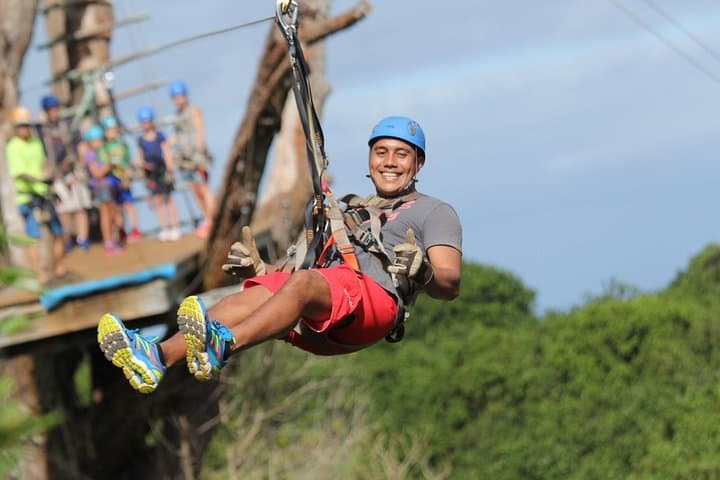
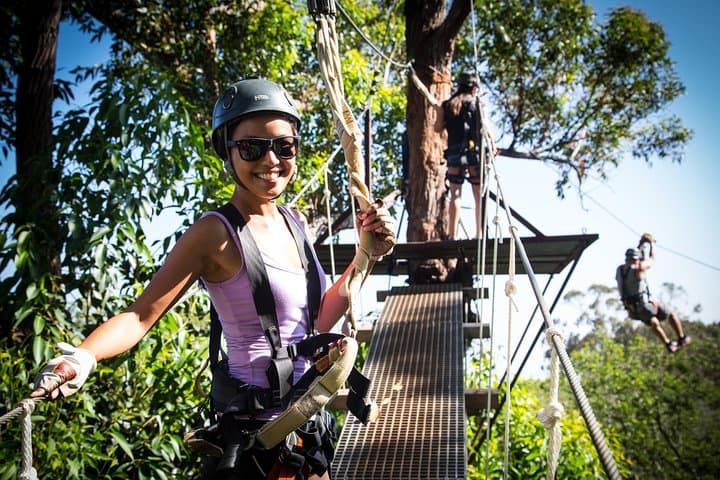
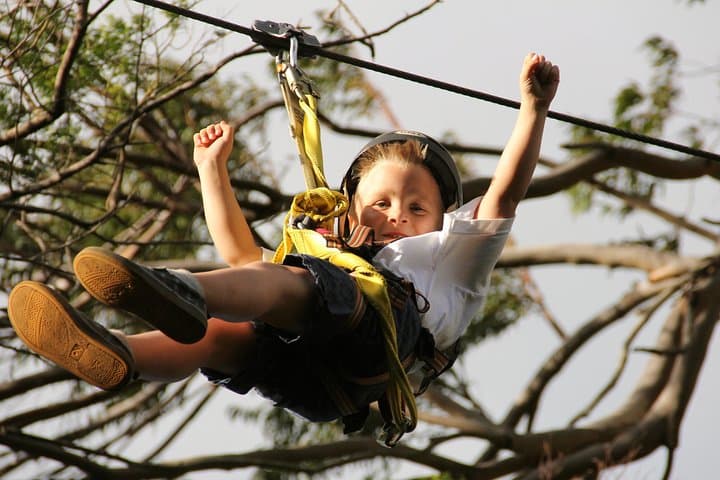
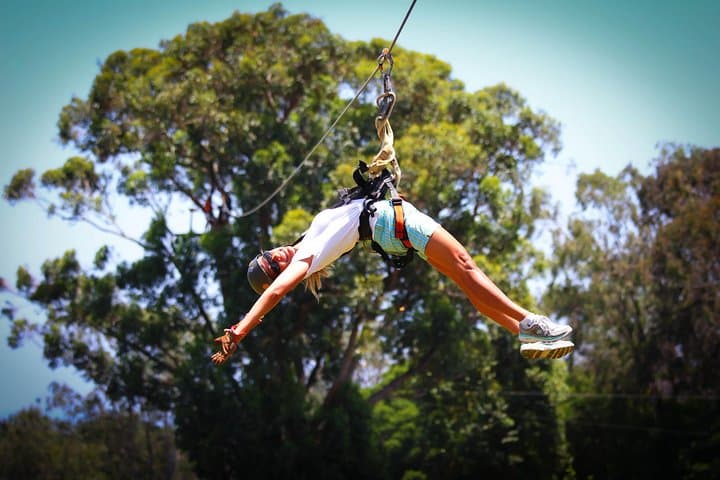
You step off the dirt drive and the trade winds pull at your shirt, the ocean’s silver band visible between stands of ironwood and introduced eucalyptus. The first tower looms above, a lattice of wood and rope that invites a quick breath and a steadying grip; guides clip you in, explain the continuous-belay system, and send you out across the canopy where the forest seems to lean in and dare you forward.
You step off the dirt drive and the trade winds pull at your shirt, the ocean’s silver band visible between stands of ironwood and introduced eucalyptus. The first tower looms above, a lattice of wood and rope that invites a quick breath and a steadying grip; guides clip you in, explain the continuous-belay system, and send you out across the canopy where the forest seems to lean in and dare you forward.
Camp Maui has a layered history: a World War II training and support site that now hosts a small museum with artifacts and interpretive panels. Geologically, the North Shore slopes from the volcanic slopes of Haleakalā toward the sea, giving zipline riders framed views of coastal plain, cultivated taro patches, and gulches carved by tropical runoff. Local culture is present in place names and the museum stories — this isn’t just an adrenaline stop, it’s a short tour through Maui’s wartime imprint and upcountry agricultural life.
Practical details are clear: the course runs seven lines with giant towers, aerial platforms, a swinging suspension bridge and Maui’s continuous-belay system for safety. Tours run roughly two hours; guides provide helmets, harnesses, gloves and raingear if needed. Minimum age is five, weight limits 40–270 lbs; closed-toe shoes required. Check-in is 30 minutes before your slot and they advise following the provided driving directions rather than GPS. Expect short stair climbs, brief hikes between platforms, and windier conditions on higher lines — bring sun protection, water, and a secure camera tether if you want photos. The course balances high-exposure thrills with clear safety protocols, making it a compact, well-run way to see the North Shore from the treetops.