THE ADVENTURE COLLECTIVE® · Independent discovery and booking for outdoor travel

A private day hike from Cusco brings you to the 7 Lagoons at Ausangate: high-altitude lakes, glacial scenery and optional thermal baths in Pacchanta. Expect rocky walking, thin air and sweeping Andean views on a guided, full-day outing.
A private day hike from Cusco brings you to the 7 Lagoons at Ausangate: high-altitude lakes, glacial scenery and optional thermal baths in Pacchanta. Expect rocky walking, thin air and sweeping Andean views on a guided, full-day outing.
Morning light cuts across the high puna as you climb from Pacchanta: wind pushes, ice-polished ridges loom, and seven high-altitude pools sequence like a string of cool mirrors below Ausangate. The trail opens on open grasslands, then tightens into boulder-strewn slopes whose runoff feeds each lake; by the main viewpoint the mountain seems to hold the water in its hand.
Verified experiences and guided adventures in the surrounding area.
Operated by Machupicchu Holiday · Pacchanta, Cusco
Morning light cuts across the high puna as you climb from Pacchanta: wind pushes, ice-polished ridges loom, and seven high-altitude pools sequence like a string of cool mirrors below Ausangate. The trail opens on open grasslands, then tightens into boulder-strewn slopes whose runoff feeds each lake; by the main viewpoint the mountain seems to hold the water in its hand.
Geology here is blunt and recent—glacial scouring and moraine dams create the perched lagoons beneath the Andean massif. Ausangate itself is an apu, a sacred mountain in Andean cosmology, and local Quechua communities have grazed these altiplano slopes for centuries; you’ll pass grazing vicuñas and seasonal shepherd camps that speak to a long pastoral rhythm.
The typical itinerary is practical: an early pickup from Cusco, breakfast in Pacchanta, then a roughly 5-hour round of walking that reaches multiple lakes with steady climbs and rocky stretches. Expect thin air above 4,200–4,800 m, variable weather—sun, wind and sudden sleet can trade places within an hour—and clear, sharp views when skies hold. Guides commonly include lunch, handcrafted walking sticks and round-trip transport; there's an optional soak in Pacchanta’s thermal pools afterward.
For planning: acclimatize in Cusco first, layer for wind and sun, and allow time for slow, deliberate pacing. The route rewards steady effort with reflective water, glacier-bright light, and an intimate sense of high Andean terrain—adventurous but straightforward for those prepared for altitude and rough footing.
moderate.
6–8 hours.
Moderate fitness required: regular walkers who can handle sustained uphill at high altitude will be comfortable.
The route reaches roughly 4,200–4,800 m; altitude can affect anyone—acclimatize, hydrate, and inform your guide if you feel unwell.
The hot springs in Pacchanta are optional and usually have a small additional fee; ask your operator on booking.
Expect a mix of wide puna paths, rocky talus, short steep sections and uneven ground; poles and boots help.
Facilities are limited—basic toilets may exist at Pacchanta village but carry toilet paper and hand sanitizer for trail use.
Ausangate is a sacred Apu in Quechua tradition; the surrounding highlands have been pastoral commons for indigenous communities for centuries.
The high puna is ecologically fragile—stay on trails, pack out waste, and avoid disturbing grazing areas to limit impact.
Machupicchu Holiday operates guided outdoor trips and adventures with an emphasis on safety, stewardship, and memorable experiences.
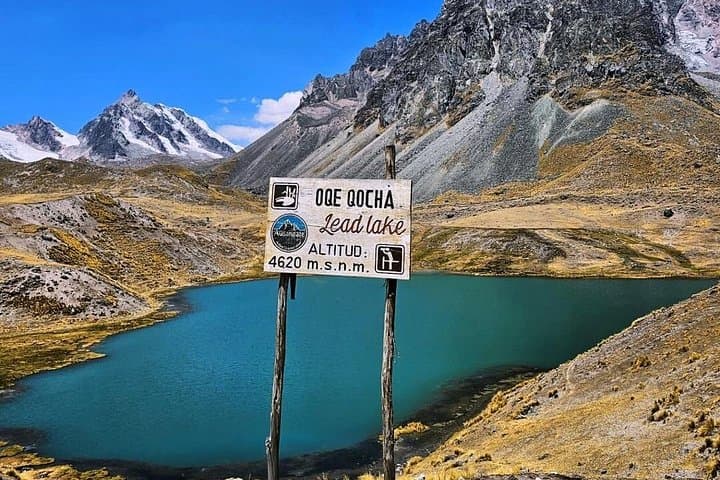
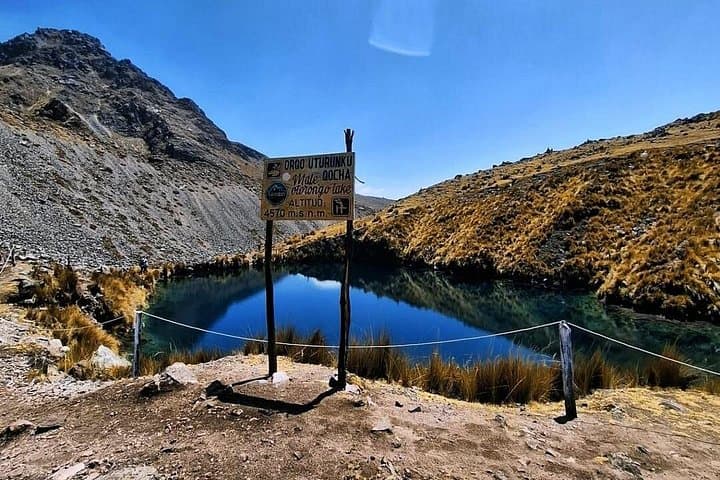
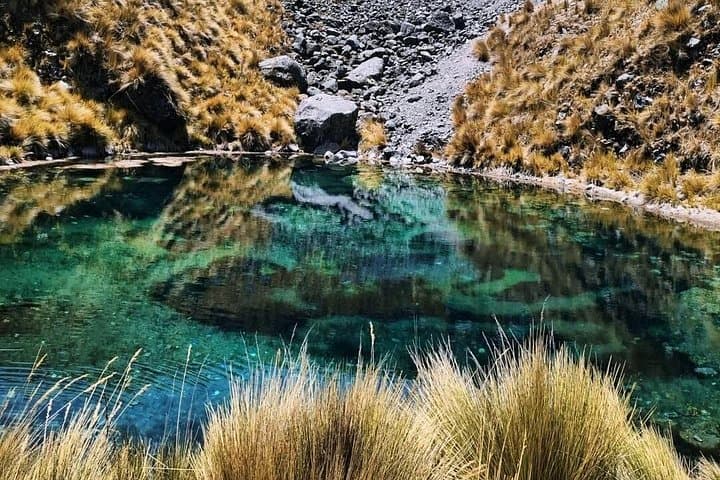
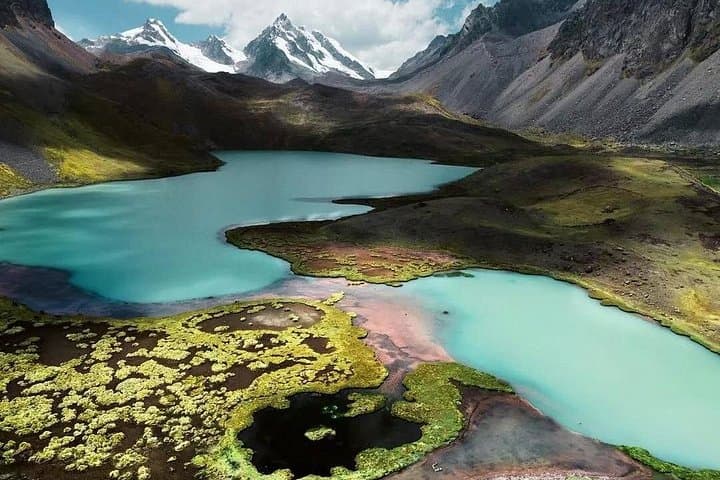
Morning light cuts across the high puna as you climb from Pacchanta: wind pushes, ice-polished ridges loom, and seven high-altitude pools sequence like a string of cool mirrors below Ausangate. The trail opens on open grasslands, then tightens into boulder-strewn slopes whose runoff feeds each lake; by the main viewpoint the mountain seems to hold the water in its hand.
Morning light cuts across the high puna as you climb from Pacchanta: wind pushes, ice-polished ridges loom, and seven high-altitude pools sequence like a string of cool mirrors below Ausangate. The trail opens on open grasslands, then tightens into boulder-strewn slopes whose runoff feeds each lake; by the main viewpoint the mountain seems to hold the water in its hand.
Geology here is blunt and recent—glacial scouring and moraine dams create the perched lagoons beneath the Andean massif. Ausangate itself is an apu, a sacred mountain in Andean cosmology, and local Quechua communities have grazed these altiplano slopes for centuries; you’ll pass grazing vicuñas and seasonal shepherd camps that speak to a long pastoral rhythm.
The typical itinerary is practical: an early pickup from Cusco, breakfast in Pacchanta, then a roughly 5-hour round of walking that reaches multiple lakes with steady climbs and rocky stretches. Expect thin air above 4,200–4,800 m, variable weather—sun, wind and sudden sleet can trade places within an hour—and clear, sharp views when skies hold. Guides commonly include lunch, handcrafted walking sticks and round-trip transport; there's an optional soak in Pacchanta’s thermal pools afterward.
For planning: acclimatize in Cusco first, layer for wind and sun, and allow time for slow, deliberate pacing. The route rewards steady effort with reflective water, glacier-bright light, and an intimate sense of high Andean terrain—adventurous but straightforward for those prepared for altitude and rough footing.