THE ADVENTURE COLLECTIVE® · Independent discovery and booking for outdoor travel

A seven-day private tour from Kusadasi stitches together Turkey’s headline sites — Ephesus, Pamukkale and Cappadocia — with comfortable hotels and a local guide. Expect archaeological treasures, surreal geology and practical travel logistics that make a busy week feel manageable.
A seven-day private tour from Kusadasi stitches together Turkey’s headline sites — Ephesus, Pamukkale and Cappadocia — with comfortable hotels and a local guide. Expect archaeological treasures, surreal geology and practical travel logistics that make a busy week feel manageable.
You step off the minibus in the cool shadow of marble columns and, for a moment, the modern world falls away. Sunlight skims the carved facade of the Library of Celsus, dust motes turning to gold as a guide traces the names and fortunes of a Roman city that once pulsed with merchants and scholars. This is day two of a seven-day circuit that launches in Kusadasi and threads Turkey’s eastern Aegean coast into the high plateaus of Cappadocia, where fairy chimneys puncture a low, ochre skyline.
Verified experiences and guided adventures in the surrounding area.
Operated by Goodman Tours · Kusadasi, Aydın Province
You step off the minibus in the cool shadow of marble columns and, for a moment, the modern world falls away. Sunlight skims the carved facade of the Library of Celsus, dust motes turning to gold as a guide traces the names and fortunes of a Roman city that once pulsed with merchants and scholars. This is day two of a seven-day circuit that launches in Kusadasi and threads Turkey’s eastern Aegean coast into the high plateaus of Cappadocia, where fairy chimneys puncture a low, ochre skyline.
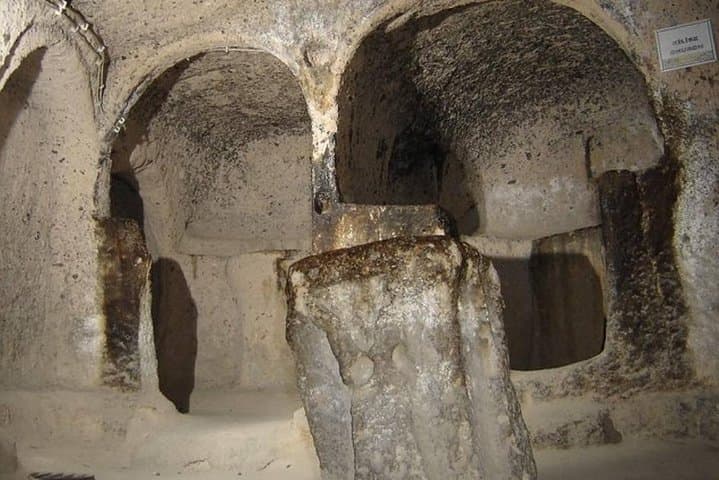
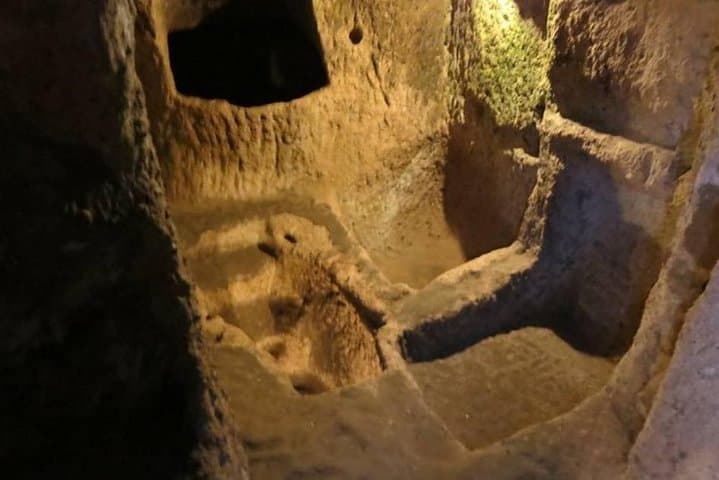
The itinerary reads like a condensed atlas of Anatolia: Ephesus’s marble avenues and the ruins of Artemis give way to the bleached travertines of Pamukkale and the subterranean matrices of Kaymakli. Geology is visible and blunt here — travertine terraces formed by mineral-laden springs, tuffs sculpted by wind and water into conical spires, and soft volcanic rock that humans hollowed into churches and stable towns.
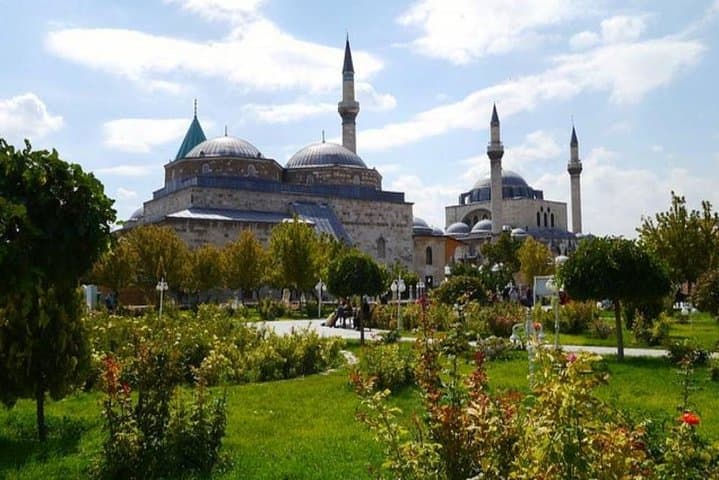
History moves fast on this tour. Ephesus was Rome’s eastern marvel; Hierapolis above Pamukkale was a bustling healing center; Konya and the Silk Road remember caravans and Sultanhani’s restful kervansaray. Modern Turkey asserts itself too — a stop in Ankara at Anit Kabir frames the republic’s 20th-century transformation under Atatürk.
Cultural notes land between stops: in Selçuk local weavers still use plant dyes; in Cappadocia you’ll hear the cadence of Anatolian folk music at an optional folklore evening. Guides here carry not only keys for museum gates but local context — where to try a proper Turkish breakfast, when to bargain in a leather workshop, and why dressing modestly matters at certain tombs and mausoleums.
Practicalities are straightforward. The trip is private, runs seven days, and covers multiple medium-length drives — expect a 2–4 hour ride on Ephesus and Pamukkale days and a longer transfer toward Cappadocia (the operator lists around five hours on that stretch). Accommodation is included for six nights; most site visits allow 1–3 hours on the ground. Fitness: plan for walking on uneven stone, climbing steps at ruins, and a few tight corridors underground at Kaymakli.
To make the most of it: time Ephesus for morning light to avoid afternoon heat, bring slip-resistant shoes for Pamukkale’s terraces (some pools prohibit footwear), and carry a small daypack with water and layers for Cappadocia’s big temperature swings. If hot-air balloons are on your list, book locally in advance; balloons are not part of this package.
Across seven days the landscape presses in close: stone, sky and the slow, human history carved into both. It’s a compact education in what Turkey has been and still is — a country where geology, empire and modern identity meet on the same highway.
moderate.
7 days (multi-day).
Moderate fitness: comfortable walking on uneven terrain and climbing steps; not technical but expect long drives and multiple short hikes.
Many site admissions (Ephesus, Göreme Open-Air Museum, Pamukkale) are included per the itinerary; check with the operator for any optional extras like hot-air ballooning or thermal pool access.
Yes — air-conditioned minibus transfers and hotel pickup/drop-off are included throughout the seven-day tour.
Yes — dietary requirements can be requested at booking; notify the operator in advance so hotels and restaurants can prepare.
No — hot-air balloons are optional and booked locally; they depend on weather and are not covered by the tour price.
Moderate walking on uneven surfaces and staircases is required; travelers should be able to walk for 1–3 hours with breaks across historical sites.
The tour offers a full refund if canceled at least 6 full days before departure, 50% refund if canceled between 2–6 days, and no refund within 2 days of departure.
Ephesus was one of the Eastern Mediterranean’s largest Roman cities; Pamukkale’s thermal springs drew Roman and Byzantine pilgrims and patients to ancient Hierapolis.
Pamukkale is a UNESCO site with strict path rules to protect the travertines—follow signage and avoid walking on closed sections to prevent erosion.
Goodman Tours operates guided outdoor trips and adventures with an emphasis on safety, stewardship, and memorable experiences.
You step off the minibus in the cool shadow of marble columns and, for a moment, the modern world falls away. Sunlight skims the carved facade of the Library of Celsus, dust motes turning to gold as a guide traces the names and fortunes of a Roman city that once pulsed with merchants and scholars. This is day two of a seven-day circuit that launches in Kusadasi and threads Turkey’s eastern Aegean coast into the high plateaus of Cappadocia, where fairy chimneys puncture a low, ochre skyline.
You step off the minibus in the cool shadow of marble columns and, for a moment, the modern world falls away. Sunlight skims the carved facade of the Library of Celsus, dust motes turning to gold as a guide traces the names and fortunes of a Roman city that once pulsed with merchants and scholars. This is day two of a seven-day circuit that launches in Kusadasi and threads Turkey’s eastern Aegean coast into the high plateaus of Cappadocia, where fairy chimneys puncture a low, ochre skyline.
The itinerary reads like a condensed atlas of Anatolia: Ephesus’s marble avenues and the ruins of Artemis give way to the bleached travertines of Pamukkale and the subterranean matrices of Kaymakli. Geology is visible and blunt here — travertine terraces formed by mineral-laden springs, tuffs sculpted by wind and water into conical spires, and soft volcanic rock that humans hollowed into churches and stable towns.
History moves fast on this tour. Ephesus was Rome’s eastern marvel; Hierapolis above Pamukkale was a bustling healing center; Konya and the Silk Road remember caravans and Sultanhani’s restful kervansaray. Modern Turkey asserts itself too — a stop in Ankara at Anit Kabir frames the republic’s 20th-century transformation under Atatürk.
Cultural notes land between stops: in Selçuk local weavers still use plant dyes; in Cappadocia you’ll hear the cadence of Anatolian folk music at an optional folklore evening. Guides here carry not only keys for museum gates but local context — where to try a proper Turkish breakfast, when to bargain in a leather workshop, and why dressing modestly matters at certain tombs and mausoleums.
Practicalities are straightforward. The trip is private, runs seven days, and covers multiple medium-length drives — expect a 2–4 hour ride on Ephesus and Pamukkale days and a longer transfer toward Cappadocia (the operator lists around five hours on that stretch). Accommodation is included for six nights; most site visits allow 1–3 hours on the ground. Fitness: plan for walking on uneven stone, climbing steps at ruins, and a few tight corridors underground at Kaymakli.
To make the most of it: time Ephesus for morning light to avoid afternoon heat, bring slip-resistant shoes for Pamukkale’s terraces (some pools prohibit footwear), and carry a small daypack with water and layers for Cappadocia’s big temperature swings. If hot-air balloons are on your list, book locally in advance; balloons are not part of this package.
Across seven days the landscape presses in close: stone, sky and the slow, human history carved into both. It’s a compact education in what Turkey has been and still is — a country where geology, empire and modern identity meet on the same highway.