THE ADVENTURE COLLECTIVE® · Independent discovery and booking for outdoor travel

Swap Cairo’s bustle for a seven-day desert circuit through Siwa, Bahariya and the White Desert. Visit oasis springs, fossil-fields and sleep beneath sculpted chalk formations on guided 4x4 transfers and camps.
Swap Cairo’s bustle for a seven-day desert circuit through Siwa, Bahariya and the White Desert. Visit oasis springs, fossil-fields and sleep beneath sculpted chalk formations on guided 4x4 transfers and camps.
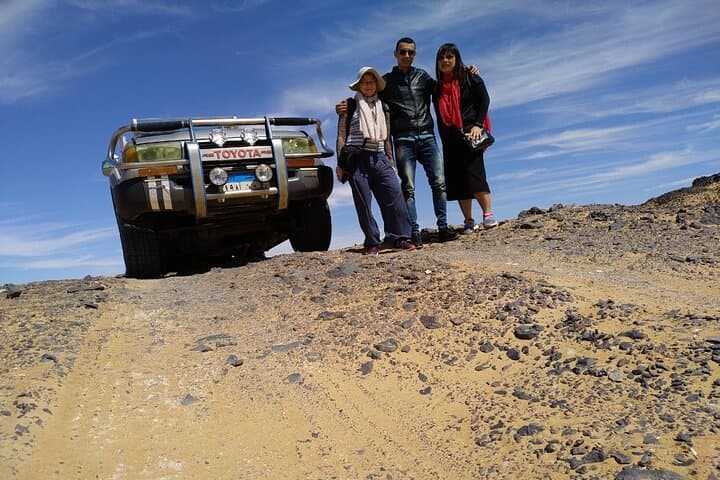
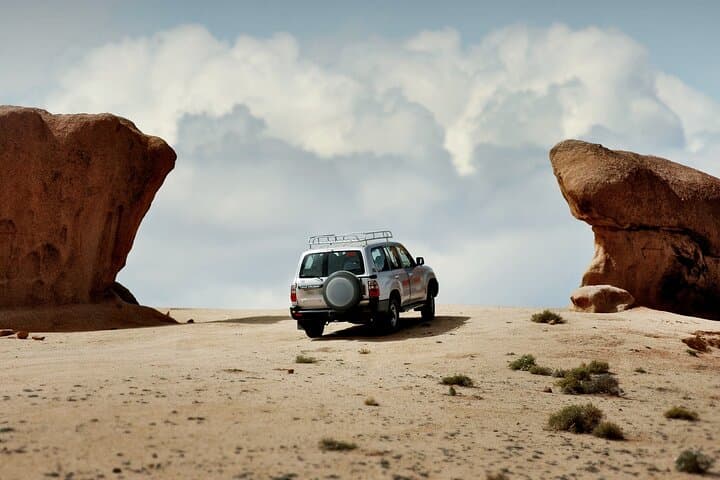
You step out of the 4x4 into a silence that moves — wind polishing chalk into sculpted mushrooms, dunes rolling like a slow tide. The road from Cairo fades behind you as the Mediterranean light at Marsa Matrouh gives way to palm-fringed springs in Siwa, and by night the White Desert lays a field of bright, ghostly alabaster under a dense dome of stars.
Verified experiences and guided adventures in the surrounding area.
Operated by This Is Egypt · Siwa, Matrouh Governorate
You step out of the 4x4 into a silence that moves — wind polishing chalk into sculpted mushrooms, dunes rolling like a slow tide. The road from Cairo fades behind you as the Mediterranean light at Marsa Matrouh gives way to palm-fringed springs in Siwa, and by night the White Desert lays a field of bright, ghostly alabaster under a dense dome of stars.
This seven-day loop visits Siwa’s Old Town (Shali), Cleopatra Spring (Ein Guba), the Amun temple at Umm Ubayda and the Mountain of the Dead, then cuts across the Great Sand Sea to fossil-rich outcrops, cold and hot desert springs (Shiata Lake, Bir Wahid) and the Bahariya area’s Black and White Deserts. Geologically the White Desert is a wind-carved chalk landscape sitting above older black basalt plateaus; fossils in the Great Sand Sea record a time when this region was shallow sea.
Culturally, Siwa is an Amazigh (Siwan) community with distinctive mud-brick architecture and olive groves; the area also hosted ancient oracle sites visited by historical figures including Alexander the Great.
Practicalities: this private, transfer-inclusive itinerary uses paved roads and long 4x4 stretches — expect dusty drives of several hours between stops. Bring sun protection, plenty of water, closed-toe shoes for dunes and a warm layer for cold desert nights. Camps are basic but supplied; permit and passport copy are required for desert travel. Time your visit for cooler months (fall–spring) to avoid extreme summer heat. With planning, this route is a compact way to trade city crowds for raw desert scenery and slow, tactile landscapes.
moderate.
7 days, 6 nights.
Suitable for travelers in average fitness; must manage short hikes on sand, dune climbs and multi-hour vehicle transfers.
You must hold a valid passport; the operator requires a digital passport copy at least 24 hours before departure to arrange permits for desert access.
Most activities are short walks, dune climbs and swims in springs; basic mobility is sufficient but expect walking on soft sand which can be more tiring than flat trails.
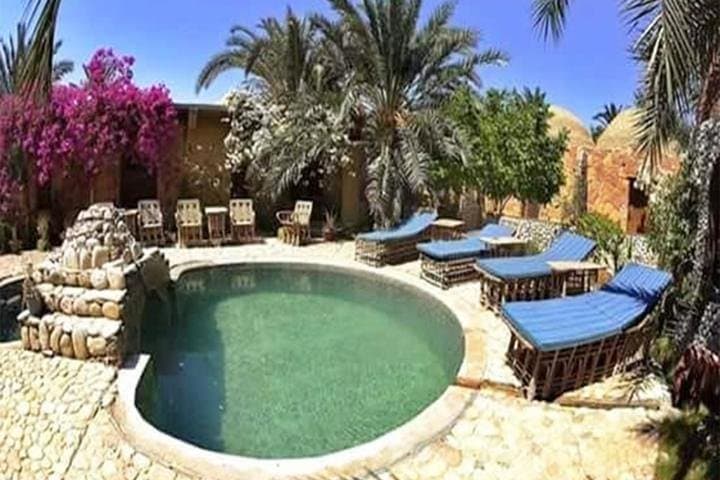
Accommodations range from local hotels in Siwa and Bahariya to basic shared or private tents in White Desert camps; sleeping bags and blankets are typically provided per the itinerary.
Fall through spring (October–April) offers milder daytime temperatures and more comfortable camping; summers can be extremely hot and are less comfortable for extensive daytime activity.
Siwa has long been a crossroad of Amazigh culture and ancient Egyptian worship—the Oracle of Amun in Siwa was famous in antiquity and visited by Alexander the Great.
These are fragile desert ecosystems and protected areas; stick to tracks, pack out trash, minimize campfire use and respect local cultural sites and private lands.
This Is Egypt operates guided outdoor trips and adventures with an emphasis on safety, stewardship, and memorable experiences.
You step out of the 4x4 into a silence that moves — wind polishing chalk into sculpted mushrooms, dunes rolling like a slow tide. The road from Cairo fades behind you as the Mediterranean light at Marsa Matrouh gives way to palm-fringed springs in Siwa, and by night the White Desert lays a field of bright, ghostly alabaster under a dense dome of stars.
You step out of the 4x4 into a silence that moves — wind polishing chalk into sculpted mushrooms, dunes rolling like a slow tide. The road from Cairo fades behind you as the Mediterranean light at Marsa Matrouh gives way to palm-fringed springs in Siwa, and by night the White Desert lays a field of bright, ghostly alabaster under a dense dome of stars.
This seven-day loop visits Siwa’s Old Town (Shali), Cleopatra Spring (Ein Guba), the Amun temple at Umm Ubayda and the Mountain of the Dead, then cuts across the Great Sand Sea to fossil-rich outcrops, cold and hot desert springs (Shiata Lake, Bir Wahid) and the Bahariya area’s Black and White Deserts. Geologically the White Desert is a wind-carved chalk landscape sitting above older black basalt plateaus; fossils in the Great Sand Sea record a time when this region was shallow sea.
Culturally, Siwa is an Amazigh (Siwan) community with distinctive mud-brick architecture and olive groves; the area also hosted ancient oracle sites visited by historical figures including Alexander the Great.
Practicalities: this private, transfer-inclusive itinerary uses paved roads and long 4x4 stretches — expect dusty drives of several hours between stops. Bring sun protection, plenty of water, closed-toe shoes for dunes and a warm layer for cold desert nights. Camps are basic but supplied; permit and passport copy are required for desert travel. Time your visit for cooler months (fall–spring) to avoid extreme summer heat. With planning, this route is a compact way to trade city crowds for raw desert scenery and slow, tactile landscapes.