THE ADVENTURE COLLECTIVE® · Independent discovery and booking for outdoor travel

A seven-day private loop from Siem Reap’s Angkor temples to Phnom Penh’s riverfront—this guided tour mixes monumental archaeology, boat rides on Tonle Sap, and colonial-era city sights. Expect early mornings, steep temple steps, and rich cultural context from an English-speaking guide.
A seven-day private loop from Siem Reap’s Angkor temples to Phnom Penh’s riverfront—this guided tour mixes monumental archaeology, boat rides on Tonle Sap, and colonial-era city sights. Expect early mornings, steep temple steps, and rich cultural context from an English-speaking guide.
Morning light strips across laterite and sandstone as you step into Angkor’s corridors—monoliths of empire that still hold the heat of centuries. Over seven days this private, guided loop moves from the carved faces of Bayon and the five towers of Angkor Wat to the riverside rhythms of Tonle Sap and the colonial avenues of Phnom Penh.
Verified experiences and guided adventures in the surrounding area.
Operated by Asia Travel Links · Siem Reap, Siem Reap Province
Morning light strips across laterite and sandstone as you step into Angkor’s corridors—monoliths of empire that still hold the heat of centuries. Over seven days this private, guided loop moves from the carved faces of Bayon and the five towers of Angkor Wat to the riverside rhythms of Tonle Sap and the colonial avenues of Phnom Penh.
Angkor grew from the Khmer Empire between the 9th–15th centuries; its temples were carved from sandstone and sandstone ruins are now interlaced with roots and moss. Geologically the region sits on a low, alluvial plain; stonework weathers quickly in the tropics so conservation is constant. Phnom Penh tells a different chapter—French-colonial boulevards, royal palaces, and the heavier memory of 20th-century upheaval visible at memorial sites and museums.
Expect flat walking punctuated by steep temple steps and uneven flagstones—daily distances of a few kilometers as you shuttle between complexes. Early starts are standard to avoid midday heat and to catch light on bas-reliefs. Guides will translate iconography, explain the river-carved lingams at Kbal Spean, and point out workshop projects that sustain local craft traditions.
Practical edge: bring breathable, respectful clothing for pagodas (shoulders and knees covered), a sturdy pair of walking shoes with good grip for wet sandstone, and a reusable water bottle—hydration is non-negotiable in the heat. Plan for modest tipping, carry cash for small vendors, and allow time to absorb quieter sites off the main circuits. This itinerary balances monumental archaeology with living culture and easy coastal relaxation at the end, presenting Cambodia’s past and present in clear relief.
easy.
7 days.
Suitable for travelers in general good health who can walk several kilometers per day and manage short steep stair sections.
Yes—Angkor Archaeological Park requires an entrance pass (1, 3 or 7-day options); this tour includes admission where listed.
The tour is rated easy overall but involves several short hikes, many steps and uneven temple surfaces—comfortable walking fitness is recommended.
Cambodian riel and US dollars are widely used; have small bills for market purchases and a modest tip for drivers and guides is customary.
Children can participate, though some temples have steep stairs; travelers with mobility limitations should note many sites lack ramps and terrain can be uneven.
Angkor was the political and spiritual heart of the Khmer Empire from the 9th to 15th centuries; Phnom Penh later grew under French colonial influence and experienced dramatic change during the 20th century.
Entrance fees and park management fund conservation, but visitor care is crucial—avoid touching bas-reliefs, use marked paths, and support community-run projects to keep tourism sustainable.
Asia Travel Links operates guided outdoor trips and adventures with an emphasis on safety, stewardship, and memorable experiences.
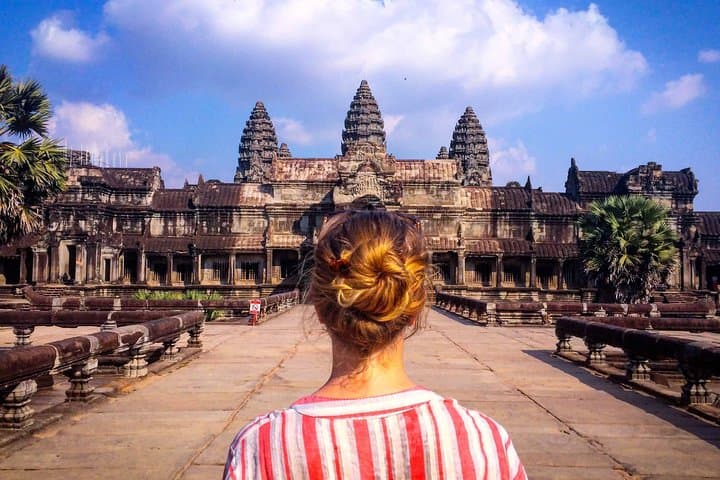
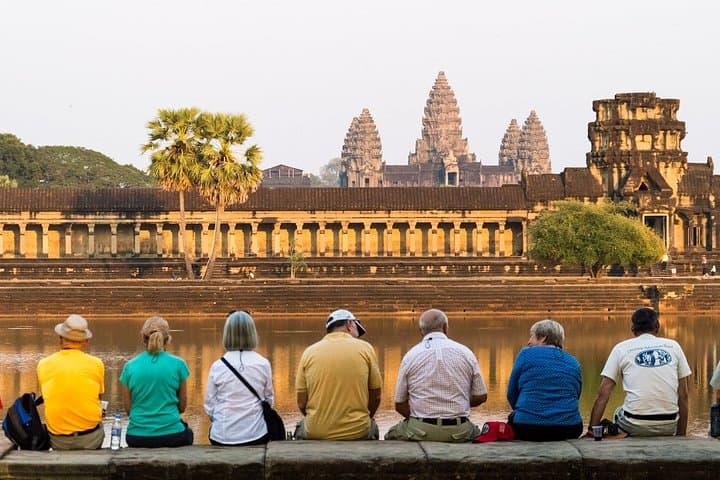
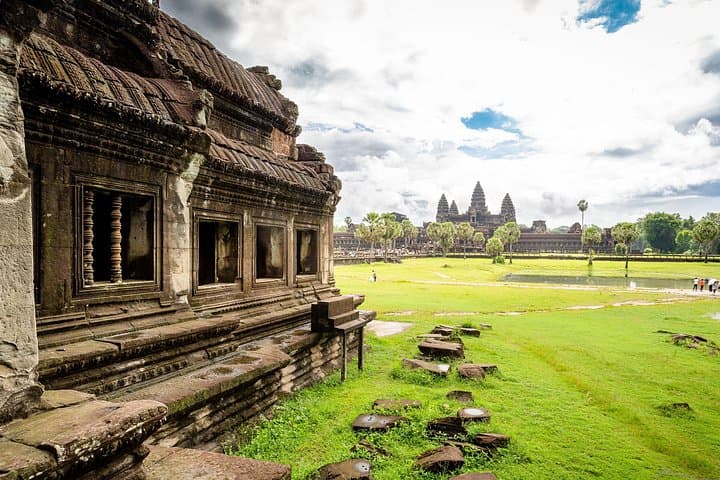
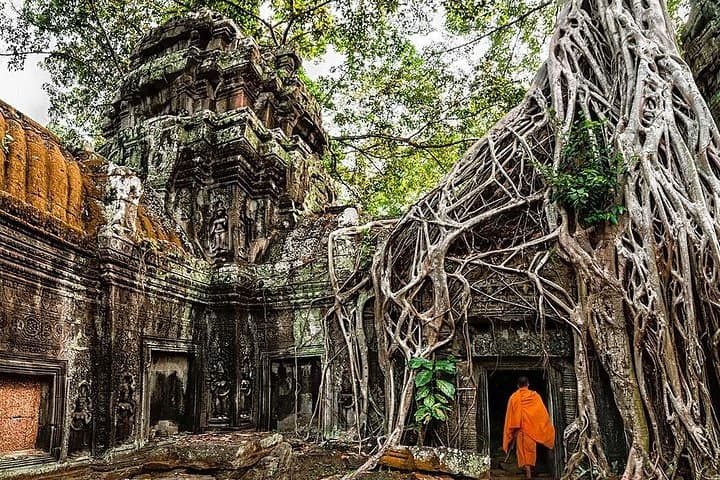
Morning light strips across laterite and sandstone as you step into Angkor’s corridors—monoliths of empire that still hold the heat of centuries. Over seven days this private, guided loop moves from the carved faces of Bayon and the five towers of Angkor Wat to the riverside rhythms of Tonle Sap and the colonial avenues of Phnom Penh.
Morning light strips across laterite and sandstone as you step into Angkor’s corridors—monoliths of empire that still hold the heat of centuries. Over seven days this private, guided loop moves from the carved faces of Bayon and the five towers of Angkor Wat to the riverside rhythms of Tonle Sap and the colonial avenues of Phnom Penh.
Angkor grew from the Khmer Empire between the 9th–15th centuries; its temples were carved from sandstone and sandstone ruins are now interlaced with roots and moss. Geologically the region sits on a low, alluvial plain; stonework weathers quickly in the tropics so conservation is constant. Phnom Penh tells a different chapter—French-colonial boulevards, royal palaces, and the heavier memory of 20th-century upheaval visible at memorial sites and museums.
Expect flat walking punctuated by steep temple steps and uneven flagstones—daily distances of a few kilometers as you shuttle between complexes. Early starts are standard to avoid midday heat and to catch light on bas-reliefs. Guides will translate iconography, explain the river-carved lingams at Kbal Spean, and point out workshop projects that sustain local craft traditions.
Practical edge: bring breathable, respectful clothing for pagodas (shoulders and knees covered), a sturdy pair of walking shoes with good grip for wet sandstone, and a reusable water bottle—hydration is non-negotiable in the heat. Plan for modest tipping, carry cash for small vendors, and allow time to absorb quieter sites off the main circuits. This itinerary balances monumental archaeology with living culture and easy coastal relaxation at the end, presenting Cambodia’s past and present in clear relief.