THE ADVENTURE COLLECTIVE® · Independent discovery and booking for outdoor travel

Cross the Erg Oriental on an eight-day camel trek that pairs dune walks with Bedouin nights and a ferry ride to Djerba. Practical details on fitness, timing, and what to pack help you prepare for real desert conditions.
Cross the Erg Oriental on an eight-day camel trek that pairs dune walks with Bedouin nights and a ferry ride to Djerba. Practical details on fitness, timing, and what to pack help you prepare for real desert conditions.
You crest a dune as the sun drops—wind tastes of warm sand, the horizon a hard band of color, and the dromedaries’ slow steps hush the world. Nights bring a cold clarity: a sky so dense with stars it seems deliberate. This is the Erg Oriental, dunes pushed east from Algeria into Tunisia, where a week-long camel trek traces routes used by nomads and modern guides alike.
Verified experiences and guided adventures in the surrounding area.
Operated by Wüstentour - Tunesien - Douz - Kameltrekking · Douz, Kebili Governorate
You crest a dune as the sun drops—wind tastes of warm sand, the horizon a hard band of color, and the dromedaries’ slow steps hush the world. Nights bring a cold clarity: a sky so dense with stars it seems deliberate. This is the Erg Oriental, dunes pushed east from Algeria into Tunisia, where a week-long camel trek traces routes used by nomads and modern guides alike.
Geology here is simple and vast—wind-blown sand fields sculpted into crescent ridges and sweeping erg seas that shift with each season. Culturally, the region is lived-in: Douz calls itself the "Gate of the Desert," a trading and date-growing center and a staging point for Bedouin camps. Villages and troglodyte (cave) houses dot the route toward Djerba, reflecting Berber and Arab influences shaped by centuries of caravan movement.
Expect slow days of walking on foot and long, seated hours on camelback, punctuated by tribal evenings—tagines cooked over low flame, music, and shared tea. Logistics are straightforward: transfers by 4x4 between camps and a final ferry to Djerba. Physically, this itinerary suits travelers with moderate fitness; saddle time can stress knees and lower back.
Practical tips: time hikes for morning or late afternoon to avoid the peak heat, layer for big night temperature swings, and ration water—even with provided supplies. Respect private homesteads during souk visits, pack out waste, and use reusable containers. With basic preparation, this trek combines simple desert mechanics and rich, human-led hospitality for a clear, unadorned encounter with the Sahara.
moderate.
8 days.
Moderate fitness; able to mount/dismount camels, walk on soft sand for 2–4 hours, and sleep in basic desert conditions.
Camel rides are steady but require balance; expect extended seated periods and some walking—moderate fitness and basic mobility are required.
Yes; the itinerary offers sleeping in Bedouin tents or directly under the stars—bring a warm sleeping bag and a closed-cell mat for insulation.
Spring and fall offer milder daytime temperatures and comfortable nights; summer is hot, winter brings cold nights and possible winds.
Regional meals (breakfast, lunch, dinner) are included; guides supply potable water but bring extra if you prefer higher personal reserves.
Douz has long been a caravan hub on routes across the Sahara; the area shows Berber and Bedouin traditions shaped by centuries of trade and date cultivation.
Dune ecosystems are fragile—avoid trampling vegetation, pack out waste, and minimize night fires; work with local guides who practice low-impact camping.
Wüstentour - Tunesien - Douz - Kameltrekking operates guided outdoor trips and adventures with an emphasis on safety, stewardship, and memorable experiences.
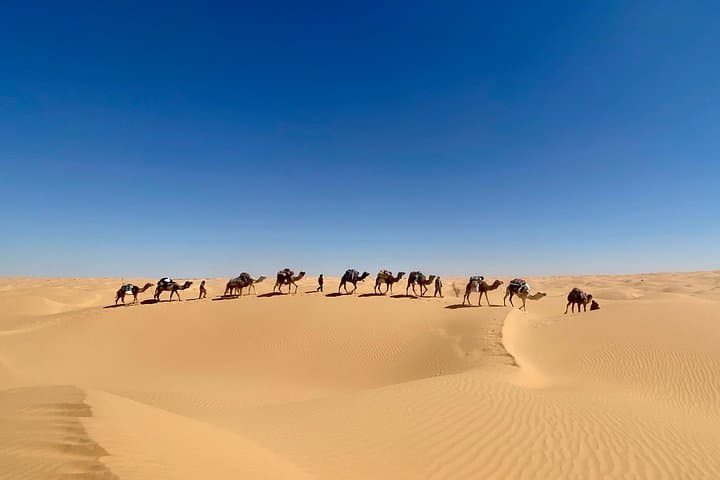
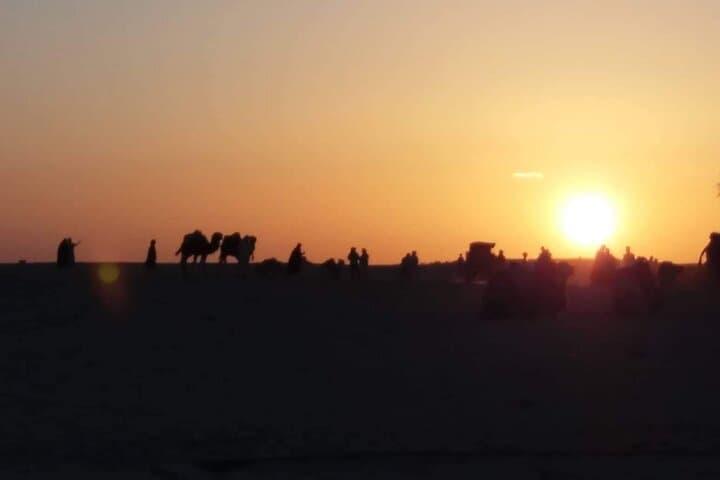
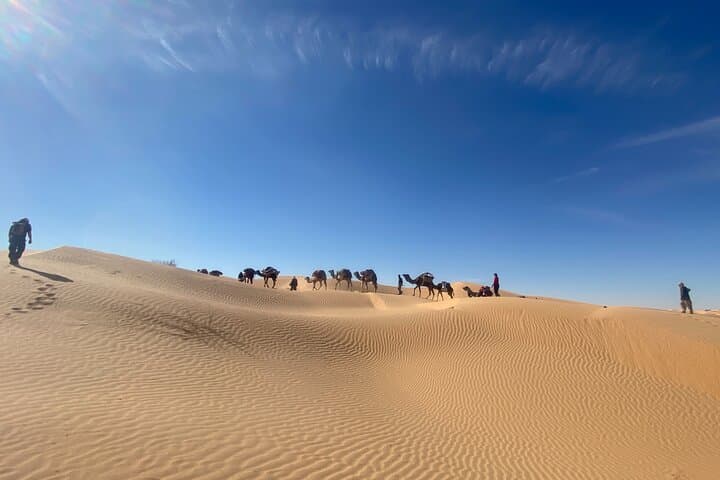
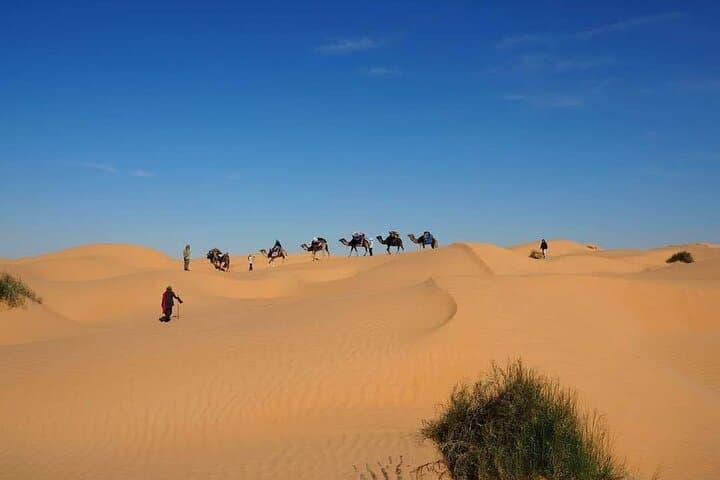
You crest a dune as the sun drops—wind tastes of warm sand, the horizon a hard band of color, and the dromedaries’ slow steps hush the world. Nights bring a cold clarity: a sky so dense with stars it seems deliberate. This is the Erg Oriental, dunes pushed east from Algeria into Tunisia, where a week-long camel trek traces routes used by nomads and modern guides alike.
You crest a dune as the sun drops—wind tastes of warm sand, the horizon a hard band of color, and the dromedaries’ slow steps hush the world. Nights bring a cold clarity: a sky so dense with stars it seems deliberate. This is the Erg Oriental, dunes pushed east from Algeria into Tunisia, where a week-long camel trek traces routes used by nomads and modern guides alike.
Geology here is simple and vast—wind-blown sand fields sculpted into crescent ridges and sweeping erg seas that shift with each season. Culturally, the region is lived-in: Douz calls itself the "Gate of the Desert," a trading and date-growing center and a staging point for Bedouin camps. Villages and troglodyte (cave) houses dot the route toward Djerba, reflecting Berber and Arab influences shaped by centuries of caravan movement.
Expect slow days of walking on foot and long, seated hours on camelback, punctuated by tribal evenings—tagines cooked over low flame, music, and shared tea. Logistics are straightforward: transfers by 4x4 between camps and a final ferry to Djerba. Physically, this itinerary suits travelers with moderate fitness; saddle time can stress knees and lower back.
Practical tips: time hikes for morning or late afternoon to avoid the peak heat, layer for big night temperature swings, and ration water—even with provided supplies. Respect private homesteads during souk visits, pack out waste, and use reusable containers. With basic preparation, this trek combines simple desert mechanics and rich, human-led hospitality for a clear, unadorned encounter with the Sahara.