THE ADVENTURE COLLECTIVE® · Independent discovery and booking for outdoor travel

A seven-day ascent of Kilimanjaro via the Rongai Route climbs from rainforest to summit across moorland, alpine desert and scree. This itinerary balances gradual acclimatization with nightly camps, guided support and the chance to reach Uhuru Peak at dawn.
A seven-day ascent of Kilimanjaro via the Rongai Route climbs from rainforest to summit across moorland, alpine desert and scree. This itinerary balances gradual acclimatization with nightly camps, guided support and the chance to reach Uhuru Peak at dawn.
On the northern flank of Kilimanjaro the trail begins beneath a damp canopy where oak-brown trunks lean close and leaves crackle underfoot. Early hours move through mossed forest and the chatter of blue monkeys; by midday the trees give way to moorland where silver heather bends in the wind and the vast, stony Saddle opens between Mawenzi and Kibo. The mountain’s wind pushes you on—the summit waits, patient and high.
Verified experiences and guided adventures in the surrounding area.
Operated by Jairos Adventure · Moshi, Kilimanjaro Region
On the northern flank of Kilimanjaro the trail begins beneath a damp canopy where oak-brown trunks lean close and leaves crackle underfoot. Early hours move through mossed forest and the chatter of blue monkeys; by midday the trees give way to moorland where silver heather bends in the wind and the vast, stony Saddle opens between Mawenzi and Kibo. The mountain’s wind pushes you on—the summit waits, patient and high.
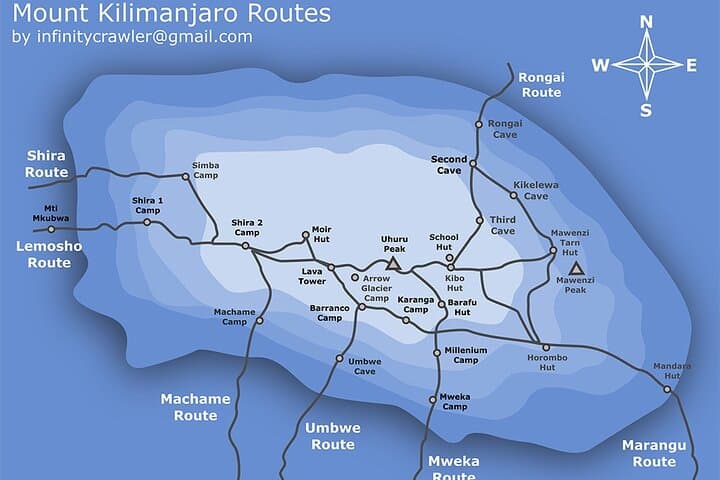
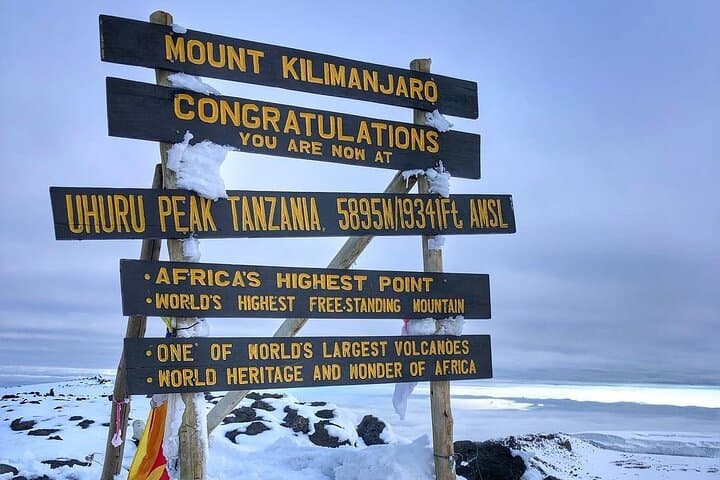
Kilimanjaro is a dormant stratovolcano whose three volcanic cones—Kibo, Mawenzi and Shira—rise from savannah to ice. The Rongai Route approaches from the north, beginning near Nalemoru Gate at about 1,950 m and climbing through rainforest, moorland, alpine desert and scree to Uhuru Peak at 5,895 m. The region sits in the Kilimanjaro National Park (established 1977) and is part of local Chagga cultural lands; villages around Moshi serve trekkers with guides, porters and hospitality.
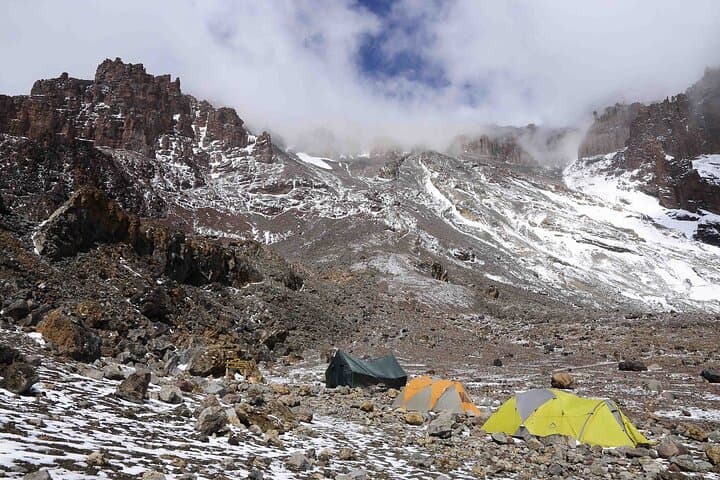
Practical reality: expect roughly 3–6 hours of hiking most days with one long summit push at night (6–10 hours). Elevation gain on this itinerary is about 3,900–4,000 m from gate to summit, so acclimatization days and a steady pace matter. Tents, mattresses, three meals a day and English-speaking guides/porters are standard; bring layered clothing, a warm sleeping bag, solid boots and poles. Hydrate, eat, and sleep early for altitude; discuss preventive options with your doctor. Book through accredited operators in Moshi, aim for the drier windows (Jan–Mar or Jun–Oct) and respect local porter limits and park regulations for a safer, higher-chance summit experience.
challenging.
7 days.
Should be in good cardio condition with experience on multi-day hikes; able to hike 3–6 hours daily and tolerate long, cold summit push.
No technical climbing skills are required, but prior multi-day trekking experience and good fitness improve comfort and summit chances.
Most operators include park fees and camping permits; always confirm with your provider and carry passport ID for registration.
Drier windows (January–March and June–October) offer clearer conditions and higher summit success, though weather can change quickly year-round.
This operator offers a full refund if you cancel at least 24 hours before departure; check booking terms for exact conditions and exceptions.
Kilimanjaro’s volcanic cones record millions of years of activity; Uhuru Peak (5,895 m) is Africa’s highest point and the mountain has been part of local Chagga life for centuries.
Glaciers on Kibo have retreated markedly; choose operators who follow porter welfare standards, practice Leave No Trace and support park conservation fees.
Jairos Adventure operates guided outdoor trips and adventures with an emphasis on safety, stewardship, and memorable experiences.
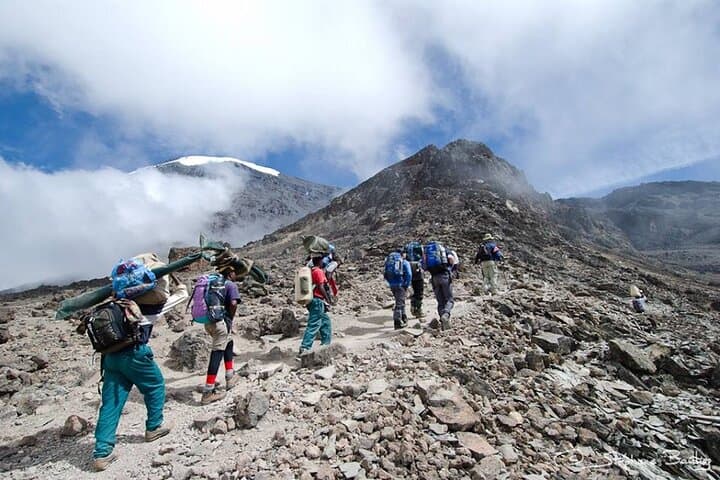
On the northern flank of Kilimanjaro the trail begins beneath a damp canopy where oak-brown trunks lean close and leaves crackle underfoot. Early hours move through mossed forest and the chatter of blue monkeys; by midday the trees give way to moorland where silver heather bends in the wind and the vast, stony Saddle opens between Mawenzi and Kibo. The mountain’s wind pushes you on—the summit waits, patient and high.
On the northern flank of Kilimanjaro the trail begins beneath a damp canopy where oak-brown trunks lean close and leaves crackle underfoot. Early hours move through mossed forest and the chatter of blue monkeys; by midday the trees give way to moorland where silver heather bends in the wind and the vast, stony Saddle opens between Mawenzi and Kibo. The mountain’s wind pushes you on—the summit waits, patient and high.
Kilimanjaro is a dormant stratovolcano whose three volcanic cones—Kibo, Mawenzi and Shira—rise from savannah to ice. The Rongai Route approaches from the north, beginning near Nalemoru Gate at about 1,950 m and climbing through rainforest, moorland, alpine desert and scree to Uhuru Peak at 5,895 m. The region sits in the Kilimanjaro National Park (established 1977) and is part of local Chagga cultural lands; villages around Moshi serve trekkers with guides, porters and hospitality.
Practical reality: expect roughly 3–6 hours of hiking most days with one long summit push at night (6–10 hours). Elevation gain on this itinerary is about 3,900–4,000 m from gate to summit, so acclimatization days and a steady pace matter. Tents, mattresses, three meals a day and English-speaking guides/porters are standard; bring layered clothing, a warm sleeping bag, solid boots and poles. Hydrate, eat, and sleep early for altitude; discuss preventive options with your doctor. Book through accredited operators in Moshi, aim for the drier windows (Jan–Mar or Jun–Oct) and respect local porter limits and park regulations for a safer, higher-chance summit experience.