THE ADVENTURE COLLECTIVE® · Independent discovery and booking for outdoor travel

A relaxed seven-day rail loop through Puglia that links Bari, Trani, Polignano a Mare, Monopoli, Lecce and Ostuni. Expect short regional trains, guided town walks, limestone cliffs and authentic street food.
A relaxed seven-day rail loop through Puglia that links Bari, Trani, Polignano a Mare, Monopoli, Lecce and Ostuni. Expect short regional trains, guided town walks, limestone cliffs and authentic street food.
The station platform smells of diesel and fresh espresso as a regional train eases out of Bari, sunlight striking the Adriatic in a bright line. Over seven days you’ll trade the rush of a single city for small, whitewashed towns, cliffside terraces and low limestone headlands—each stop a contained world reachable by short, scenic rail hops.
Verified experiences and guided adventures in the surrounding area.
Operated by TURISTI IN PUGLIA INCOMING · Bari, Puglia
The station platform smells of diesel and fresh espresso as a regional train eases out of Bari, sunlight striking the Adriatic in a bright line. Over seven days you’ll trade the rush of a single city for small, whitewashed towns, cliffside terraces and low limestone headlands—each stop a contained world reachable by short, scenic rail hops.
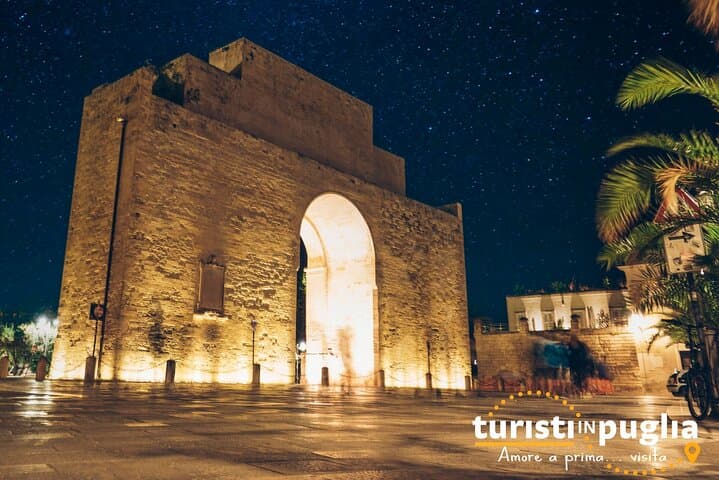
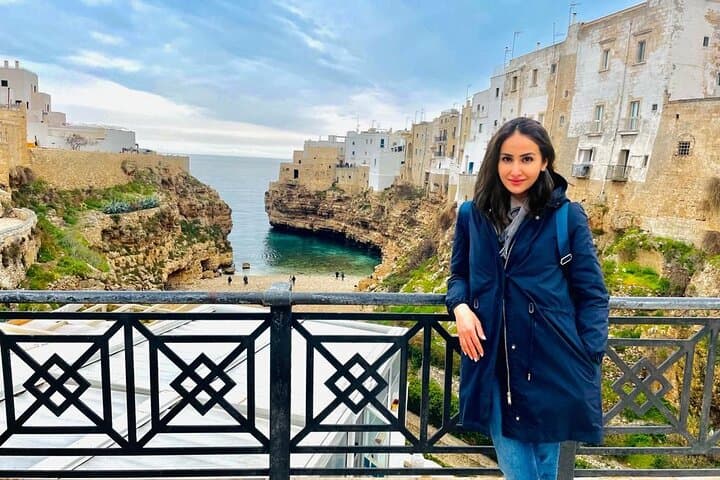
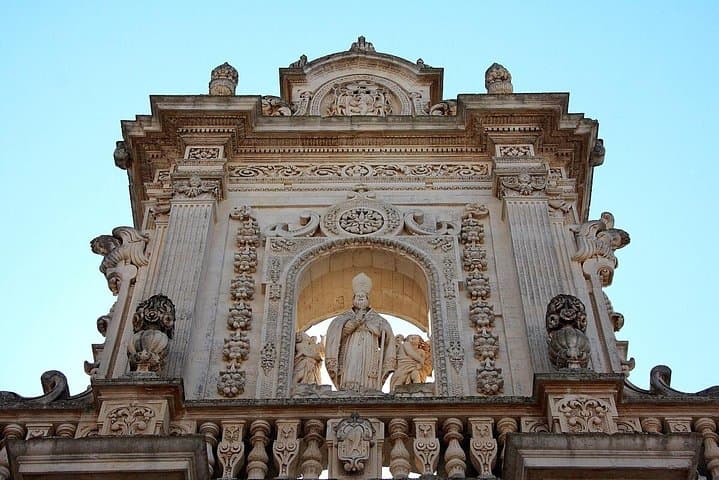
This route follows history across Apulia: Norman-Swabian fortresses in Bari and Trani, the Romanesque basilicas that shaped medieval trade, and Lecce’s ornate Baroque façades carved from local soft limestone. The coastline is karst and calcarenite—cliffs and tiny coves—while inland olive groves and dry-stone walls mark centuries of farming culture. Local life centers on piazzas, fish markets and the slow ritual of street food: orecchiette made by hand, panzerotti and sgagliozze at market stalls.
Expect guided walking tours of 1–2 hours in each town, interleaved with regional trains that typically run 40–90 minutes between stops. Terrain is overwhelmingly flat to rolling, but historic centers have narrow alleys and steps—bring steady shoes. Travel light; B&Bs are centrally located near stations, making luggage transfers manageable but not always assisted.
Practical edge: validate train timetables the night before, book any optional half-day excursions (Matera, Castel del Monte, Alberobello) in advance, and schedule hot-weather travel for mornings and late afternoons. Hydrate on long platform waits, carry a small daypack for purchases, and keep some cash for local vendors. This itinerary is ideal for travelers who want cultural depth delivered by low-stress rail travel.
easy.
7 days.
Suitable for travelers in light to moderate fitness who can handle repeated 1–2 hour walking tours and short platform transfers.
The itinerary uses regional trains; tickets are typically purchased in advance or on the day—confirm whether the operator provides rail passes or you should buy single tickets.
Guided town walks are usually 1–2 hours with free afternoons; expect short stretches on uneven surfaces and steps inside historic centers.
The tour is described as physically easy but historic centers have narrow alleys and stairs; not recommended for travelers with serious spinal or mobility problems without advance arrangements.
Yes, the operator notes optional half-day excursions (Matera, Alberobello, Castel del Monte) for an extra fee—book these in advance to guarantee availability.
Apulia has been a crossroads—Greek, Roman and Norman layers remain visible in basilicas, seaside fortresses and town plans, while Lecce’s Baroque rose from local stone-carving traditions.
Coastal karst and marine habitats are sensitive—stay on marked paths, avoid removing shells or corals, and support local businesses that follow waste-reduction practices.
TURISTI IN PUGLIA INCOMING operates guided outdoor trips and adventures with an emphasis on safety, stewardship, and memorable experiences.
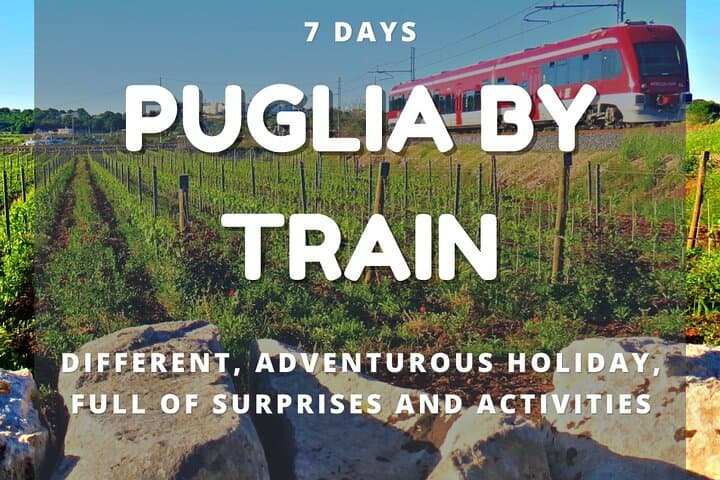
The station platform smells of diesel and fresh espresso as a regional train eases out of Bari, sunlight striking the Adriatic in a bright line. Over seven days you’ll trade the rush of a single city for small, whitewashed towns, cliffside terraces and low limestone headlands—each stop a contained world reachable by short, scenic rail hops.
The station platform smells of diesel and fresh espresso as a regional train eases out of Bari, sunlight striking the Adriatic in a bright line. Over seven days you’ll trade the rush of a single city for small, whitewashed towns, cliffside terraces and low limestone headlands—each stop a contained world reachable by short, scenic rail hops.
This route follows history across Apulia: Norman-Swabian fortresses in Bari and Trani, the Romanesque basilicas that shaped medieval trade, and Lecce’s ornate Baroque façades carved from local soft limestone. The coastline is karst and calcarenite—cliffs and tiny coves—while inland olive groves and dry-stone walls mark centuries of farming culture. Local life centers on piazzas, fish markets and the slow ritual of street food: orecchiette made by hand, panzerotti and sgagliozze at market stalls.
Expect guided walking tours of 1–2 hours in each town, interleaved with regional trains that typically run 40–90 minutes between stops. Terrain is overwhelmingly flat to rolling, but historic centers have narrow alleys and steps—bring steady shoes. Travel light; B&Bs are centrally located near stations, making luggage transfers manageable but not always assisted.
Practical edge: validate train timetables the night before, book any optional half-day excursions (Matera, Castel del Monte, Alberobello) in advance, and schedule hot-weather travel for mornings and late afternoons. Hydrate on long platform waits, carry a small daypack for purchases, and keep some cash for local vendors. This itinerary is ideal for travelers who want cultural depth delivered by low-stress rail travel.