THE ADVENTURE COLLECTIVE® · Independent discovery and booking for outdoor travel

A privately guided, seven-day loop through Rajasthan’s most iconic cities—Udaipur’s lakes, Chittorgarh’s fortresses, Pushkar’s holy ghats and Jaipur’s palaces. This road-based tour balances short historic walks with comfortable transfers, ideal for travelers who want depth without strenuous trekking.
A privately guided, seven-day loop through Rajasthan’s most iconic cities—Udaipur’s lakes, Chittorgarh’s fortresses, Pushkar’s holy ghats and Jaipur’s palaces. This road-based tour balances short historic walks with comfortable transfers, ideal for travelers who want depth without strenuous trekking.
Morning light slides across Lake Pichhola as your private car eases out of Udaipur, the city of palaces still smelling faintly of incense and frying spices. Over seven days you move from the lake-ruled valleys of Mewar into the weathered ramparts of Chittorgarh, cross the scrubby plains to Pushkar’s holy ghats, and finish among Jaipur’s pink sandstone boulevards—each city a different chapter in Rajasthan’s living history.
Verified experiences and guided adventures in the surrounding area.
Operated by Jee Tours · Udaipur, Rajasthan
Morning light slides across Lake Pichhola as your private car eases out of Udaipur, the city of palaces still smelling faintly of incense and frying spices. Over seven days you move from the lake-ruled valleys of Mewar into the weathered ramparts of Chittorgarh, cross the scrubby plains to Pushkar’s holy ghats, and finish among Jaipur’s pink sandstone boulevards—each city a different chapter in Rajasthan’s living history.
This route threads cultural and architectural milestones: the multi-century City Palace complex in Udaipur, the heroic Vijay Stambh and Jain Kirti Stambh at Chittorgarh, the singular Brahma Temple and sacred Pushkar Lake, and Jaipur’s Amber Fort, Jantar Mantar and Hawa Mahal. Geologically you travel the low, ancient folds of the Aravalli Range—granite ridges that shaped fortress placement and trade routes for centuries. Expect bazaars of carved wood, block-printed textiles, and markets where artisans still hammer metal by hand.
Practical guidance: the itinerary is road-heavy but gentle—Udaipur to Chittorgarh ~120 km (≈2 hrs), Chittorgarh to Pushkar ~220 km (≈4 hrs), Pushkar to Jaipur ~150 km (≈3 hrs). Walking at forts involves uneven stone steps and short steep ramps; plan for 30–90 minutes on-site at major sights. Dress modestly for temples, carry a refillable water bottle, and use sun protection — Rajasthan’s sun is strong year-round. Accommodation is typically 3-star hotel with breakfasts included if selected; a local guide can add valuable historical context. Time visits early or late in the day to avoid peak heat and to catch the most dramatic light on fort walls and lakes.
easy.
7 days.
Suitable for travelers with basic mobility; mostly car travel with short to moderate walks around sites.
Some options include entry tickets and a professional local guide if that add-on is selected — check the booking inclusions before purchase.
Expect several road transfers: Udaipur→Chittorgarh ~120 km (≈2 hrs), Chittorgarh→Pushkar ~220 km (≈4 hrs), Pushkar→Jaipur ~150 km (≈3 hrs), with shorter transfers within cities.
Yes — the tour is rated easy and mostly car-based; however, forts and palaces have uneven steps that may challenge some mobility issues.
Remove shoes at many temple entrances, dress conservatively (shoulders and knees covered), and avoid loud behavior or photography where prohibited.
These towns reflect the legacy of the Rajput kingdoms of Mewar and Amber; fortified hilltops were chosen for visibility and water catchment, shaping local settlement patterns.
Tourism pressure concentrates at lakes and forts; carry out waste, prioritize refillable bottles, and follow local rules at heritage sites to reduce wear and erosion.
Jee Tours operates guided outdoor trips and adventures with an emphasis on safety, stewardship, and memorable experiences.

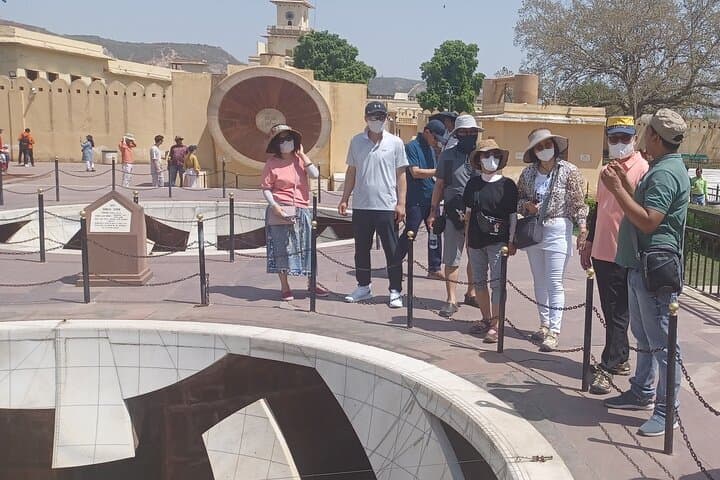


Morning light slides across Lake Pichhola as your private car eases out of Udaipur, the city of palaces still smelling faintly of incense and frying spices. Over seven days you move from the lake-ruled valleys of Mewar into the weathered ramparts of Chittorgarh, cross the scrubby plains to Pushkar’s holy ghats, and finish among Jaipur’s pink sandstone boulevards—each city a different chapter in Rajasthan’s living history.
Morning light slides across Lake Pichhola as your private car eases out of Udaipur, the city of palaces still smelling faintly of incense and frying spices. Over seven days you move from the lake-ruled valleys of Mewar into the weathered ramparts of Chittorgarh, cross the scrubby plains to Pushkar’s holy ghats, and finish among Jaipur’s pink sandstone boulevards—each city a different chapter in Rajasthan’s living history.
This route threads cultural and architectural milestones: the multi-century City Palace complex in Udaipur, the heroic Vijay Stambh and Jain Kirti Stambh at Chittorgarh, the singular Brahma Temple and sacred Pushkar Lake, and Jaipur’s Amber Fort, Jantar Mantar and Hawa Mahal. Geologically you travel the low, ancient folds of the Aravalli Range—granite ridges that shaped fortress placement and trade routes for centuries. Expect bazaars of carved wood, block-printed textiles, and markets where artisans still hammer metal by hand.
Practical guidance: the itinerary is road-heavy but gentle—Udaipur to Chittorgarh ~120 km (≈2 hrs), Chittorgarh to Pushkar ~220 km (≈4 hrs), Pushkar to Jaipur ~150 km (≈3 hrs). Walking at forts involves uneven stone steps and short steep ramps; plan for 30–90 minutes on-site at major sights. Dress modestly for temples, carry a refillable water bottle, and use sun protection — Rajasthan’s sun is strong year-round. Accommodation is typically 3-star hotel with breakfasts included if selected; a local guide can add valuable historical context. Time visits early or late in the day to avoid peak heat and to catch the most dramatic light on fort walls and lakes.