THE ADVENTURE COLLECTIVE® · Independent discovery and booking for outdoor travel

Traverse Morocco in seven days: from Casablanca’s Atlantic edge to Marrakech’s medina, over the High Atlas to Aït Ben Haddou, and beneath desert stars in Merzouga before the living maze of Fes. Expect long drives, dramatic terrain shifts and a night under the dunes.
Traverse Morocco in seven days: from Casablanca’s Atlantic edge to Marrakech’s medina, over the High Atlas to Aït Ben Haddou, and beneath desert stars in Merzouga before the living maze of Fes. Expect long drives, dramatic terrain shifts and a night under the dunes.
Morning air in Casablanca tastes of sea and diesel; the driver slides the door shut and the atlas of Morocco opens across seven days. The first day's highway run drops you into Marrakech’s pulse—Jemaa el Fna’s call to vendors and the shaded alleys of the medina give way to the High Atlas, whose Tizi n’Tichka pass pitches the road into rocky folds. Aït Ben Haddou perches in ochre light, its UNESCO kasbah a cinematic silhouette, then the road loses itself in palm-lined Skoura before the Dades Valley tightens into red cliffs.
Verified experiences and guided adventures in the surrounding area.
Operated by Gboo Morocco Tours · Casablanca, Casablanca-Settat
Morning air in Casablanca tastes of sea and diesel; the driver slides the door shut and the atlas of Morocco opens across seven days. The first day's highway run drops you into Marrakech’s pulse—Jemaa el Fna’s call to vendors and the shaded alleys of the medina give way to the High Atlas, whose Tizi n’Tichka pass pitches the road into rocky folds. Aït Ben Haddou perches in ochre light, its UNESCO kasbah a cinematic silhouette, then the road loses itself in palm-lined Skoura before the Dades Valley tightens into red cliffs.
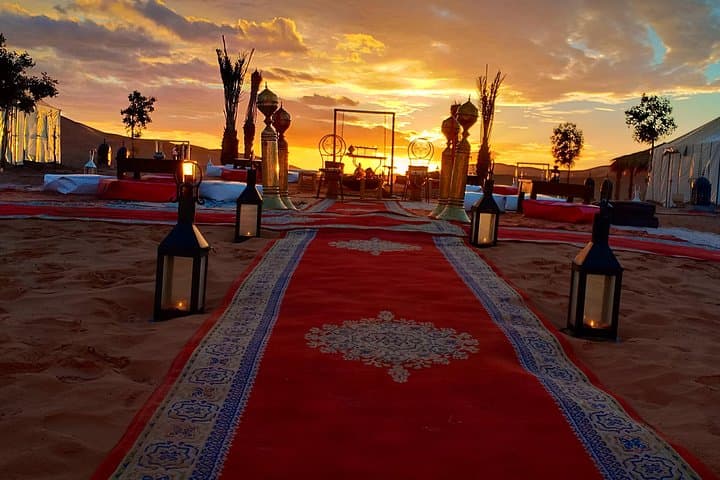
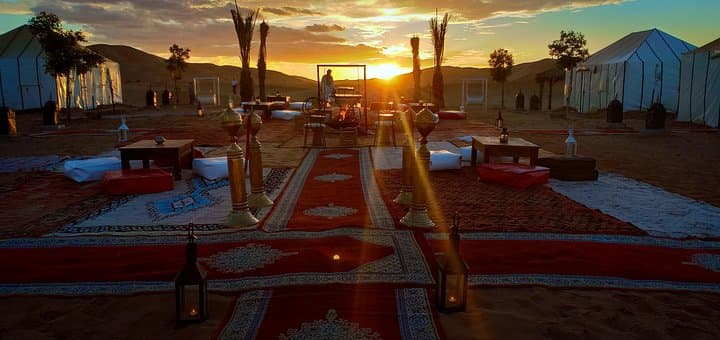
Todra Gorge slices 300m walls where climbers test their ropes and Berber villages cling to irrigation lines fed by Atlas snowmelt. By afternoon the sand begins to edge the map: Merzouga’s Erg Chebbi dunes demand a different pace. A camel train moves slow as time; a night in a Berber camp strips travel to essentials—stars, wind, and the furnace-cool of desert dawn. Northbound, the Ziz palm groves and cedar forests near Ifrane frame a final cultural arc: Fes’ living medina, medieval tanneries and medersas that speak to centuries of trade and craft.
Practical edge: plan for long drives and uneven surfaces—walkable shoes, sun protection and a small daypack make transitions easier. Hydrate on bumpy roads; keep cash for remote stops. Sunrise in the Sahara is non-negotiable—set an early alarm. Expect simple desert accommodation and private transfers in a climate of large temperature swings between day and night.
moderate.
7 days.
Moderate fitness: able to handle several hours of walking, short hikes, and long vehicle transfers
Yes—camel handlers are experienced and lead short, slow rides across dunes; inform guides of mobility or health issues beforehand.
Several long transfers are scheduled—expect full travel days between Marrakech, the Atlas, and Merzouga; the itinerary balances drives with guided stops.
Accommodations range from 3-star riads and hotels to luxury or traditional desert camps; breakfasts are included, with some dinners provided as noted.
This tour is sold as all sales final—there are no refunds for cancellations, so confirm travel plans and insurance before booking.
This route follows ancient caravan and trade corridors; ksars like Aït Ben Haddou grew where brick and riverine palm oases met long-distance commerce.
Dune ecosystems are fragile—avoid driving on dunes, stick to established tracks and conserve water; support locally managed camps and guides.
Gboo Morocco Tours operates guided outdoor trips and adventures with an emphasis on safety, stewardship, and memorable experiences.


Morning air in Casablanca tastes of sea and diesel; the driver slides the door shut and the atlas of Morocco opens across seven days. The first day's highway run drops you into Marrakech’s pulse—Jemaa el Fna’s call to vendors and the shaded alleys of the medina give way to the High Atlas, whose Tizi n’Tichka pass pitches the road into rocky folds. Aït Ben Haddou perches in ochre light, its UNESCO kasbah a cinematic silhouette, then the road loses itself in palm-lined Skoura before the Dades Valley tightens into red cliffs.
Morning air in Casablanca tastes of sea and diesel; the driver slides the door shut and the atlas of Morocco opens across seven days. The first day's highway run drops you into Marrakech’s pulse—Jemaa el Fna’s call to vendors and the shaded alleys of the medina give way to the High Atlas, whose Tizi n’Tichka pass pitches the road into rocky folds. Aït Ben Haddou perches in ochre light, its UNESCO kasbah a cinematic silhouette, then the road loses itself in palm-lined Skoura before the Dades Valley tightens into red cliffs.
Todra Gorge slices 300m walls where climbers test their ropes and Berber villages cling to irrigation lines fed by Atlas snowmelt. By afternoon the sand begins to edge the map: Merzouga’s Erg Chebbi dunes demand a different pace. A camel train moves slow as time; a night in a Berber camp strips travel to essentials—stars, wind, and the furnace-cool of desert dawn. Northbound, the Ziz palm groves and cedar forests near Ifrane frame a final cultural arc: Fes’ living medina, medieval tanneries and medersas that speak to centuries of trade and craft.
Practical edge: plan for long drives and uneven surfaces—walkable shoes, sun protection and a small daypack make transitions easier. Hydrate on bumpy roads; keep cash for remote stops. Sunrise in the Sahara is non-negotiable—set an early alarm. Expect simple desert accommodation and private transfers in a climate of large temperature swings between day and night.