THE ADVENTURE COLLECTIVE® · Independent discovery and booking for outdoor travel

A seven-day circuit from Windhoek into the red dunes of Sossusvlei, across the Atlantic coast at Walvis Bay and Swakopmund, and up to Etosha’s game-rich pans. Expect early starts, long drives, dramatic dunes and prime waterhole wildlife viewing.
A seven-day circuit from Windhoek into the red dunes of Sossusvlei, across the Atlantic coast at Walvis Bay and Swakopmund, and up to Etosha’s game-rich pans. Expect early starts, long drives, dramatic dunes and prime waterhole wildlife viewing.
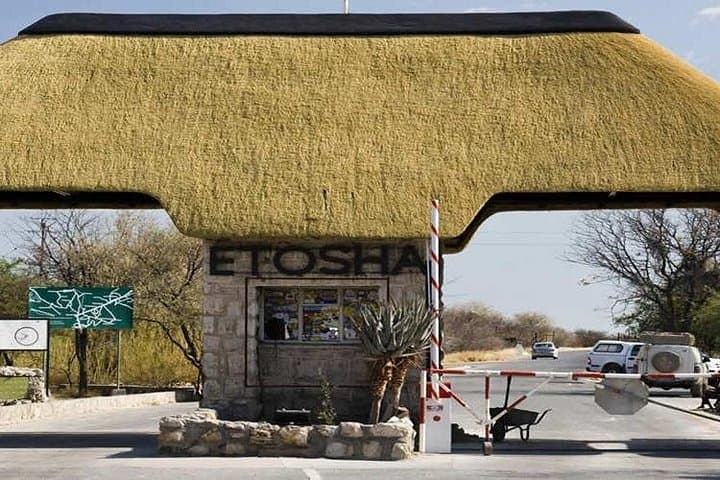
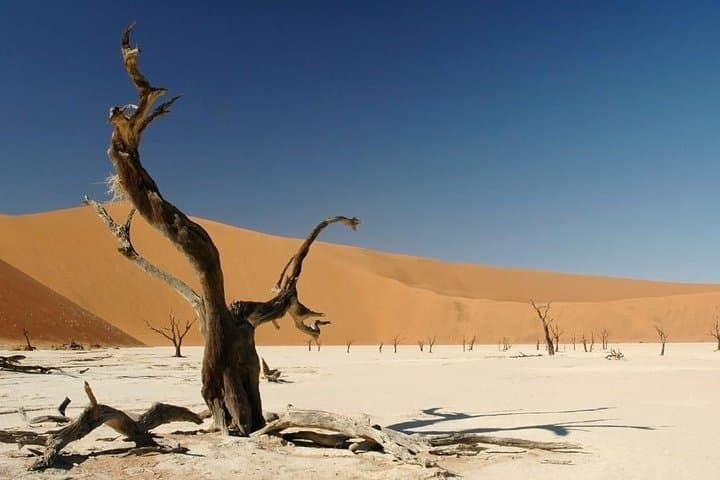
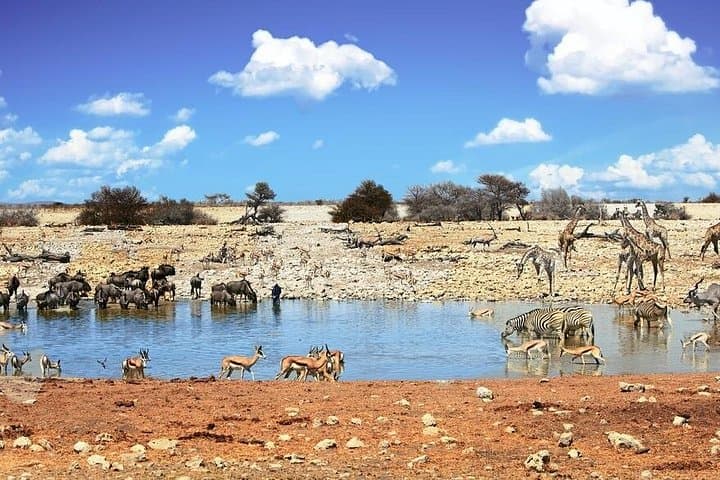
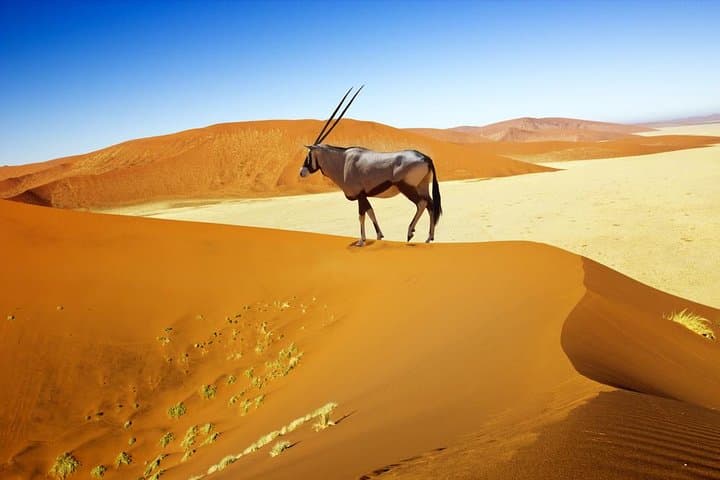
You stand at the lip of Dune 45 as first light carves the desert into gold and shadow; the sand gives and holds beneath your boots while the Namib’s silence seems to push you forward. Over seven days this lodge-based circuit moves from Windhoek’s high central plateau down through the ancient Namib, along the Atlantic coast to Walvis Bay and Swakopmund, then north into Etosha’s salt-pan world where waterholes dictate the day.
Verified experiences and guided adventures in the surrounding area.
Operated by Discovery Transfer and Tours Namibia · Windhoek, Khomas
You stand at the lip of Dune 45 as first light carves the desert into gold and shadow; the sand gives and holds beneath your boots while the Namib’s silence seems to push you forward. Over seven days this lodge-based circuit moves from Windhoek’s high central plateau down through the ancient Namib, along the Atlantic coast to Walvis Bay and Swakopmund, then north into Etosha’s salt-pan world where waterholes dictate the day.
The Namib is one of the planet’s oldest deserts—wind and time have shaped dunes like living ridgelines—while Etosha’s pan is a remnant seabed, a white flat where wildlife gathers at scarce water. Swakopmund carries German-era architecture and a compact coastal culture built on fishing, shipping and adventure tourism; Cape Cross records maritime history and the robust Cape fur seal colonies that command the shoreline.
Expect long but scenic drives (Windhoek–Sossusvlei and Sossusvlei–Walvis Bay each run several hours), early starts for dunes and dawn/dusk game drives in Etosha for the best sightings. Terrain alternates hardpacked gravel, sections of corrugated C-road and deep sand around the dunes—Big Daddy rises a few hundred meters from the valley floor. Practical prep: layered clothing for hot days and cold nights, reliable sun protection, 2–3 liters of water per person while hiking dunes, and binoculars for waterhole watching. Travel light on optional coastal activities in Swakopmund; plan rest between long transfers. Follow park rules, keep distance from wildlife, and time your photography for low-angle light to capture the desert’s scale and Etosha’s drama.
moderate.
7 days.
Suitable for travelers in general good health; requires ability to walk on soft sand and endure long vehicle transfers.
For this lodge-based tour you travel in a guided vehicle; guests do not need to drive a 4x4 themselves, though deep-sand excursions require experienced drivers and are handled by the guide.
Dry months (May–October) concentrate animals at waterholes, improving sightings; shoulder seasons offer greener scenery and newborns but more dispersed wildlife.
No—this itinerary uses road transfers and guided drives; long-distance transfers are by vehicle as part of the tour.
Mid-range lodges and hotels are used, often inside or close to parks; expect private rooms, included meals per the itinerary and communal dining areas.
The Namib has been arid for tens of millions of years; German colonial settlements shaped coastal towns like Swakopmund and left maritime relics including shipwrecks and the Cape Cross marking historical sealing activity.
Etosha manages visitor access around waterholes to reduce disturbance; visitors should follow park rules, avoid feeding wildlife and use lodges that support local conservation and community initiatives.
Discovery Transfer and Tours Namibia operates guided outdoor trips and adventures with an emphasis on safety, stewardship, and memorable experiences.
You stand at the lip of Dune 45 as first light carves the desert into gold and shadow; the sand gives and holds beneath your boots while the Namib’s silence seems to push you forward. Over seven days this lodge-based circuit moves from Windhoek’s high central plateau down through the ancient Namib, along the Atlantic coast to Walvis Bay and Swakopmund, then north into Etosha’s salt-pan world where waterholes dictate the day.
You stand at the lip of Dune 45 as first light carves the desert into gold and shadow; the sand gives and holds beneath your boots while the Namib’s silence seems to push you forward. Over seven days this lodge-based circuit moves from Windhoek’s high central plateau down through the ancient Namib, along the Atlantic coast to Walvis Bay and Swakopmund, then north into Etosha’s salt-pan world where waterholes dictate the day.
The Namib is one of the planet’s oldest deserts—wind and time have shaped dunes like living ridgelines—while Etosha’s pan is a remnant seabed, a white flat where wildlife gathers at scarce water. Swakopmund carries German-era architecture and a compact coastal culture built on fishing, shipping and adventure tourism; Cape Cross records maritime history and the robust Cape fur seal colonies that command the shoreline.
Expect long but scenic drives (Windhoek–Sossusvlei and Sossusvlei–Walvis Bay each run several hours), early starts for dunes and dawn/dusk game drives in Etosha for the best sightings. Terrain alternates hardpacked gravel, sections of corrugated C-road and deep sand around the dunes—Big Daddy rises a few hundred meters from the valley floor. Practical prep: layered clothing for hot days and cold nights, reliable sun protection, 2–3 liters of water per person while hiking dunes, and binoculars for waterhole watching. Travel light on optional coastal activities in Swakopmund; plan rest between long transfers. Follow park rules, keep distance from wildlife, and time your photography for low-angle light to capture the desert’s scale and Etosha’s drama.