THE ADVENTURE COLLECTIVE® · Independent discovery and booking for outdoor travel

Experience Morocco’s imperial cities, High Atlas passes and Erg Chebbi dunes in seven days. This private loop pairs medina walks, Roman ruins and a desert bivouac—ideal for travelers who want culture and landscape in one trip.
Experience Morocco’s imperial cities, High Atlas passes and Erg Chebbi dunes in seven days. This private loop pairs medina walks, Roman ruins and a desert bivouac—ideal for travelers who want culture and landscape in one trip.
The sun slides behind the orange spine of Erg Chebbi and the dunes push a slow, living shadow across your feet as you settle into a nomadic bivouac. Camels sway like living carts on the dune crest; the sky fills with stars so bright the Milky Way seems close enough to touch.
Verified experiences and guided adventures in the surrounding area.
Operated by Planet of Morocco · Marrakech, Marrakech-Safi
The sun slides behind the orange spine of Erg Chebbi and the dunes push a slow, living shadow across your feet as you settle into a nomadic bivouac. Camels sway like living carts on the dune crest; the sky fills with stars so bright the Milky Way seems close enough to touch.
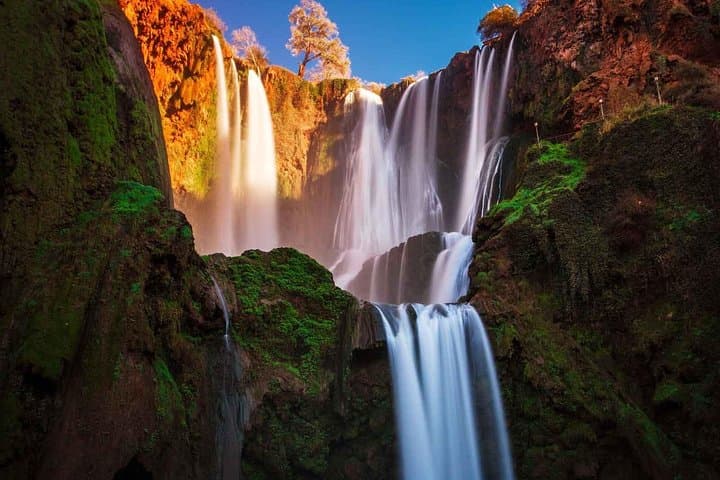
This seven-day route threads Morocco's contrasts: Atlantic port cities and imperial medinas, the cedar stands of the Middle Atlas, the Tizi n'Tichka pass at 2,260 m, and the Sahara's rolling sand. Along the way you encounter Roman ruins at Volubilis, centuries-old kasbahs such as Aït Benhaddou (UNESCO), and narrow river-carved gorges at Todra and Dades.
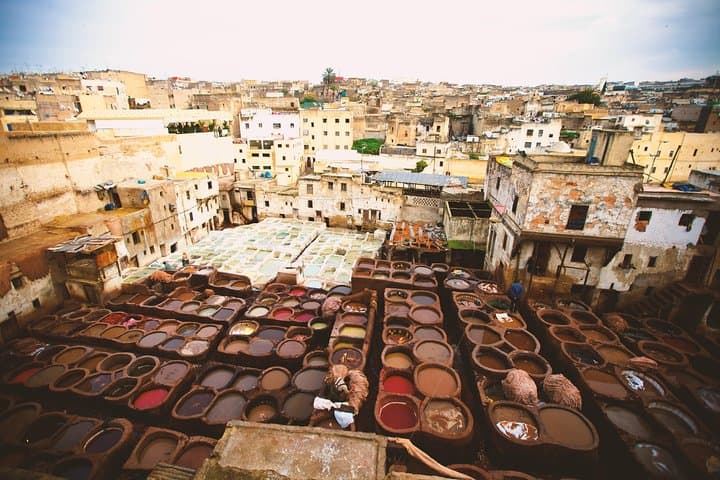
Geologically, the journey moves from coastal plains to folded Atlas ranges and finally to wind-sculpted Erg Chebbi dunes formed by Saharan sands crossing the High Atlas. Culturally, expect a mix of Arab and Amazigh (Berber) traditions: guided medina walks in Fes, market bargaining, local mint tea rituals, and nights under canvas in a desert camp led by local hosts.
Practical side: this is a road-heavy itinerary with several full driving days (typical segments 3–8 hours). Pack for big temperature swings—hot days in the Sahara, cold nights at altitude—sturdy shoes for medina cobbles and short canyon walks, sun protection, and cash for small towns. If you want quieter photo stops, ask for early departures at towns like Ifrane or the Todra Gorge. The route is private and accessible to most fitness levels, but expect uneven ground in medinas and the desert bivouac overnight.
moderate.
7 days.
Suitable for travelers in average fitness; mostly vehicle transfers with short guided walks and a camel approach to the bivouac.
Yes — the itinerary is offered as a private tour with transport and a local driver/guide included.
Breakfast and several dinners are included per itinerary; carry snacks or additional cash for lunches and market meals.
Yes — a short camel trek to and from the Erg Chebbi bivouac is part of the desert night experience.
Many stages are wheelchair- and stroller-accessible, but the desert bivouac, medina alleys and canyon walks involve uneven surfaces and are not fully accessible.
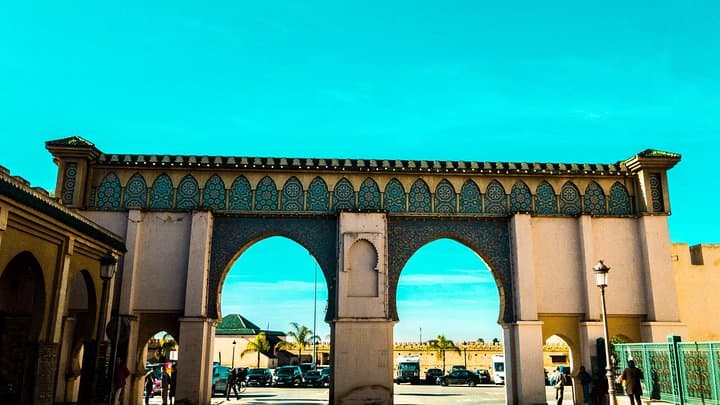
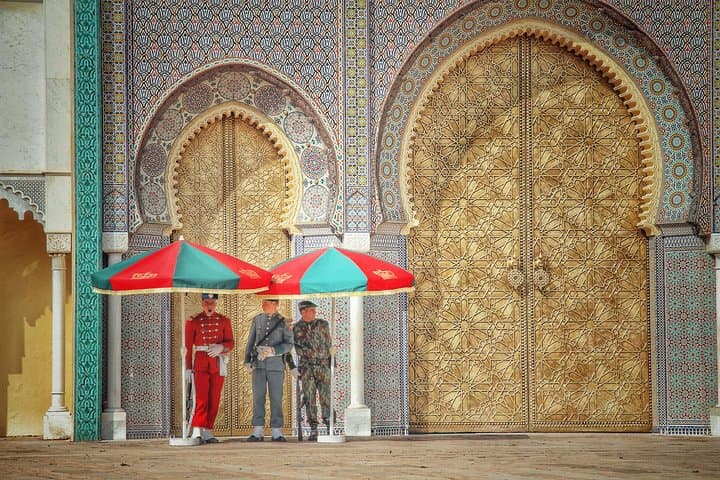
The route links Morocco’s imperial cities—Rabat, Meknes, Fes and Marrakech—reflecting Roman, Almohad and Alaouite layers visible in Volubilis, medieval madrasas and fortified kasbahs.
Respect protected areas by staying on paths in gorges and limiting campfire use in desert zones; support local guides and community-run accommodations to keep tourism sustainable.
Planet of Morocco operates guided outdoor trips and adventures with an emphasis on safety, stewardship, and memorable experiences.
The sun slides behind the orange spine of Erg Chebbi and the dunes push a slow, living shadow across your feet as you settle into a nomadic bivouac. Camels sway like living carts on the dune crest; the sky fills with stars so bright the Milky Way seems close enough to touch.
The sun slides behind the orange spine of Erg Chebbi and the dunes push a slow, living shadow across your feet as you settle into a nomadic bivouac. Camels sway like living carts on the dune crest; the sky fills with stars so bright the Milky Way seems close enough to touch.
This seven-day route threads Morocco's contrasts: Atlantic port cities and imperial medinas, the cedar stands of the Middle Atlas, the Tizi n'Tichka pass at 2,260 m, and the Sahara's rolling sand. Along the way you encounter Roman ruins at Volubilis, centuries-old kasbahs such as Aït Benhaddou (UNESCO), and narrow river-carved gorges at Todra and Dades.
Geologically, the journey moves from coastal plains to folded Atlas ranges and finally to wind-sculpted Erg Chebbi dunes formed by Saharan sands crossing the High Atlas. Culturally, expect a mix of Arab and Amazigh (Berber) traditions: guided medina walks in Fes, market bargaining, local mint tea rituals, and nights under canvas in a desert camp led by local hosts.
Practical side: this is a road-heavy itinerary with several full driving days (typical segments 3–8 hours). Pack for big temperature swings—hot days in the Sahara, cold nights at altitude—sturdy shoes for medina cobbles and short canyon walks, sun protection, and cash for small towns. If you want quieter photo stops, ask for early departures at towns like Ifrane or the Todra Gorge. The route is private and accessible to most fitness levels, but expect uneven ground in medinas and the desert bivouac overnight.