THE ADVENTURE COLLECTIVE® · Independent discovery and booking for outdoor travel

Traverse Morocco from imperial medinas to wind-sculpted dunes on this private 7-day tour. Expect guided city walks, Roman ruins, cedar forests, and an overnight camel trek into Erg Chebbi.
Traverse Morocco from imperial medinas to wind-sculpted dunes on this private 7-day tour. Expect guided city walks, Roman ruins, cedar forests, and an overnight camel trek into Erg Chebbi.
A dust-quiet dawn on the Erg Chebbi dunes opens the week: camels stamp soft footprints, and the sand pushes forward like a slow tide as the sun slices the horizon.
Verified experiences and guided adventures in the surrounding area.
Operated by Morocco First Gate · Merzouga, Drâa-Tafilalet
A dust-quiet dawn on the Erg Chebbi dunes opens the week: camels stamp soft footprints, and the sand pushes forward like a slow tide as the sun slices the horizon.
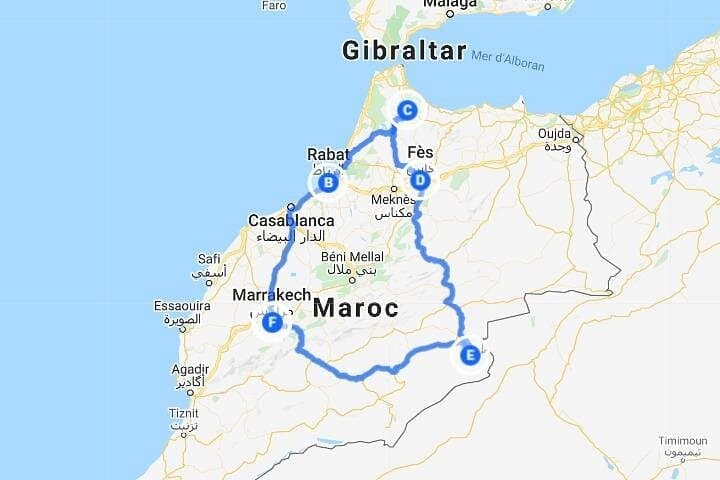
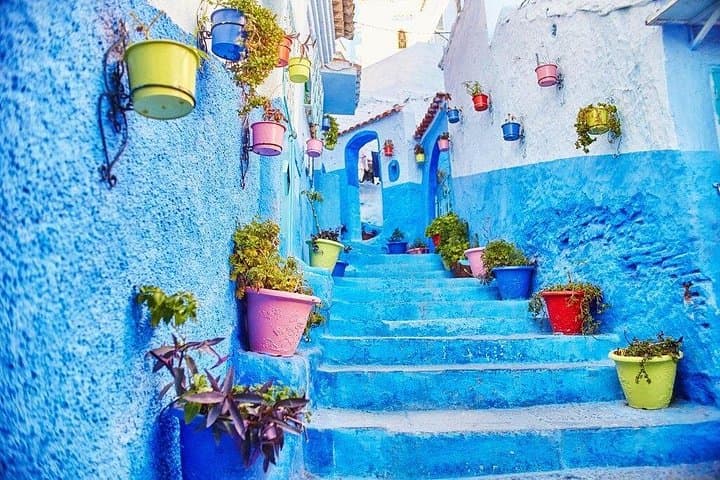
This seven-day loop threads northern cities and southern deserts—Chefchaouen’s blue-washed alleys, the Roman mosaics of Volubilis, the medina labyrinth of Fes, cedar forests of the Middle Atlas, and finally the wind-sculpted dunes outside Merzouga. Geological contrasts are stark: limestone and basalt passes in the Atlas give way to vast Quaternary sand sheets and migrating linear dunes in the Sahara’s edge.
Culture here is layered—Arab, Amazigh (Berber), and Andalusian influences show in kasbah architecture, tadelakt courtyards, and the ritual of mint tea. Ait Benhaddou’s packed-earth kasbahs recall caravan routes and film crews; the Ziz Valley’s palm groves reveal ancient irrigation practices that sustain oases.
Expect long, comfortable transfers by private vehicle punctuated by short guided walks, a one-hour camel ride to an overnight desert camp, and light hikes through Todra Gorge and Dades Valley. Guides handle logistics; travelers should be ready for dusty conditions, temperature swings, and uneven paths.
Practical tips: wear layered clothing for cold desert nights and hot days, bring sun protection and a refillable water bottle, and plan travel insurance for remote sections. Aim for early starts to avoid midday heat and carry small cash for local markets and tipping. This itinerary balances cultural depth with hands-on desert time—ideal for travelers who want both cities and sand without roughing it.
easy.
7 days.
Suitable for travelers in average fitness; long vehicle transfers with short walks and a one-hour camel trek require basic mobility.
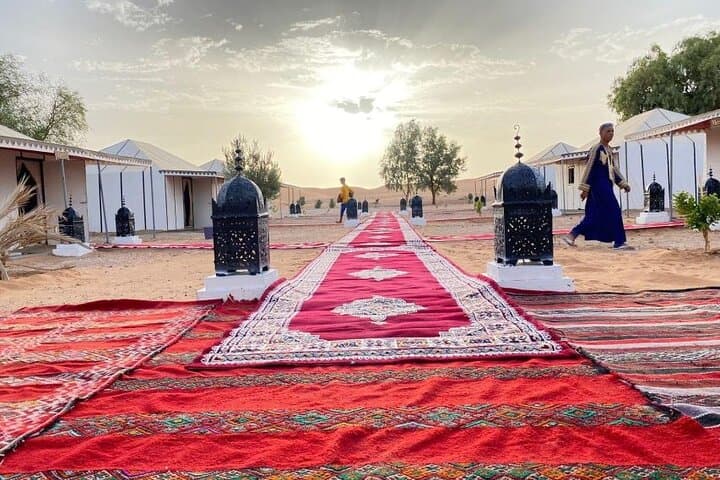
The camel ride to camp is about 1 hour and generally suitable for most adults and older children; lodging at the camp can range from basic to luxury—check options before booking for mobility concerns.
Visa requirements depend on nationality—many countries receive visa-free entry for short tourist stays, but confirm with your embassy before travel.
This itinerary includes several breakfasts and two dinners as listed; other meals are usually you-pay with recommended local restaurants available en route.
Spring (March–May) and fall (September–October) offer the most comfortable balance of daytime warmth and cool nights, with less chance of extreme desert heat.
The route follows historic caravan and imperial connections: Roman Volubilis, medieval Fes, and earthen kasbahs that controlled trans-Saharan trade.
The Sahara’s dunes and oases are fragile—minimize water use, avoid driving on sensitive dunes, and support local guides and community-run accommodations.
Morocco First Gate operates guided outdoor trips and adventures with an emphasis on safety, stewardship, and memorable experiences.
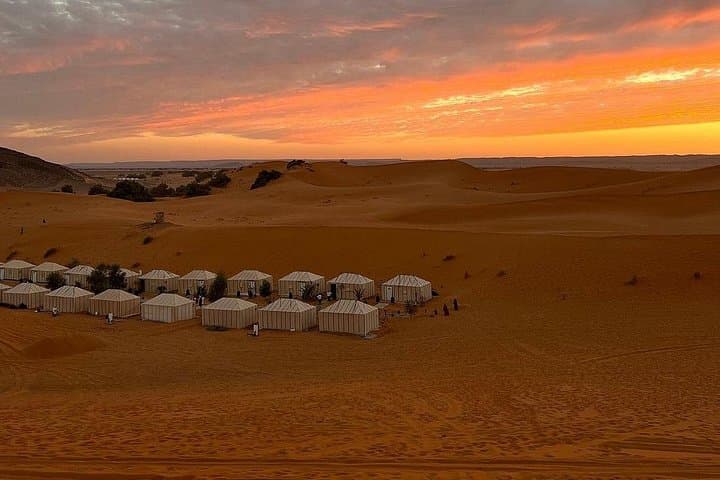
A dust-quiet dawn on the Erg Chebbi dunes opens the week: camels stamp soft footprints, and the sand pushes forward like a slow tide as the sun slices the horizon.
A dust-quiet dawn on the Erg Chebbi dunes opens the week: camels stamp soft footprints, and the sand pushes forward like a slow tide as the sun slices the horizon.
This seven-day loop threads northern cities and southern deserts—Chefchaouen’s blue-washed alleys, the Roman mosaics of Volubilis, the medina labyrinth of Fes, cedar forests of the Middle Atlas, and finally the wind-sculpted dunes outside Merzouga. Geological contrasts are stark: limestone and basalt passes in the Atlas give way to vast Quaternary sand sheets and migrating linear dunes in the Sahara’s edge.
Culture here is layered—Arab, Amazigh (Berber), and Andalusian influences show in kasbah architecture, tadelakt courtyards, and the ritual of mint tea. Ait Benhaddou’s packed-earth kasbahs recall caravan routes and film crews; the Ziz Valley’s palm groves reveal ancient irrigation practices that sustain oases.
Expect long, comfortable transfers by private vehicle punctuated by short guided walks, a one-hour camel ride to an overnight desert camp, and light hikes through Todra Gorge and Dades Valley. Guides handle logistics; travelers should be ready for dusty conditions, temperature swings, and uneven paths.
Practical tips: wear layered clothing for cold desert nights and hot days, bring sun protection and a refillable water bottle, and plan travel insurance for remote sections. Aim for early starts to avoid midday heat and carry small cash for local markets and tipping. This itinerary balances cultural depth with hands-on desert time—ideal for travelers who want both cities and sand without roughing it.