THE ADVENTURE COLLECTIVE® · Independent discovery and booking for outdoor travel

A seven-day private loop from Ulaanbaatar that moves fast enough to see Mongolia’s must-see highlights—Khustain’s wild horses, Karakorum ruins, Orkhon Valley, hot springs and Gobi dunes—yet slow enough for cultural stops with herder families.
A seven-day private loop from Ulaanbaatar that moves fast enough to see Mongolia’s must-see highlights—Khustain’s wild horses, Karakorum ruins, Orkhon Valley, hot springs and Gobi dunes—yet slow enough for cultural stops with herder families.
The engine hums as your minivan threads out of Ulaanbaatar and the city’s blocky skyline thins into a linen sheet of steppe. By midday you’re sliding into Khustain National Park where Przewalski’s horses—short-backed and stubbornly wild—lift their heads like sentries and measure the new arrivals. Over seven days this private loop stitches together ruins and rivers, hot springs and sand, each stop a different voice in the country’s long, honest story.
Verified experiences and guided adventures in the surrounding area.
Operated by Magic Tour Mongolia · Ulaanbaatar, Ulaanbaatar
The engine hums as your minivan threads out of Ulaanbaatar and the city’s blocky skyline thins into a linen sheet of steppe. By midday you’re sliding into Khustain National Park where Przewalski’s horses—short-backed and stubbornly wild—lift their heads like sentries and measure the new arrivals. Over seven days this private loop stitches together ruins and rivers, hot springs and sand, each stop a different voice in the country’s long, honest story.
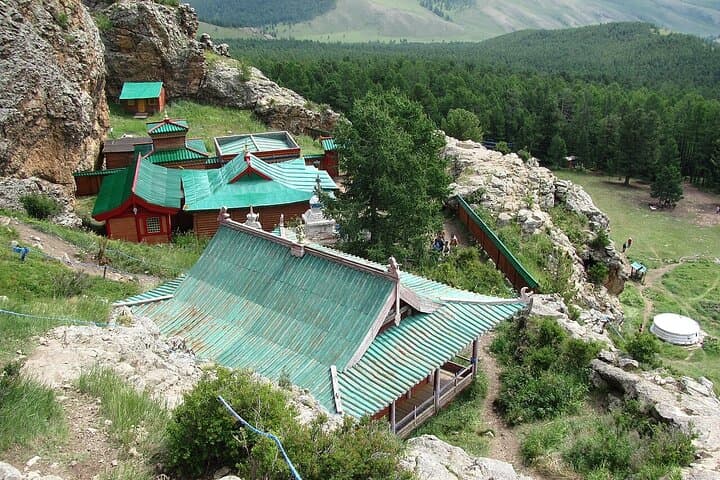
Karakorum, the 13th-century heart of the Mongol Empire, arrives as a wind-swept cluster of foundations and the low, ochre walls of Erdene Zuu monastery. The Orkhon Valley that follows is UNESCO-listed for a reason: the river has shaped human movement here for millennia, carving terraces and feeding the grasses that make mobile life possible. Geological notes are plain—volcanic rock in isolated ridges, alluvial fans out toward the Gobi—but it’s the human imprint that commands attention: nomad camps, Buddhist stupas, and the relics of imperial ambition.
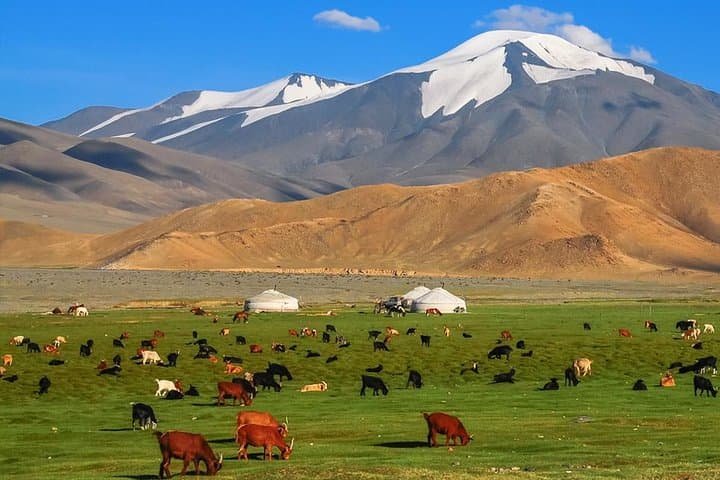
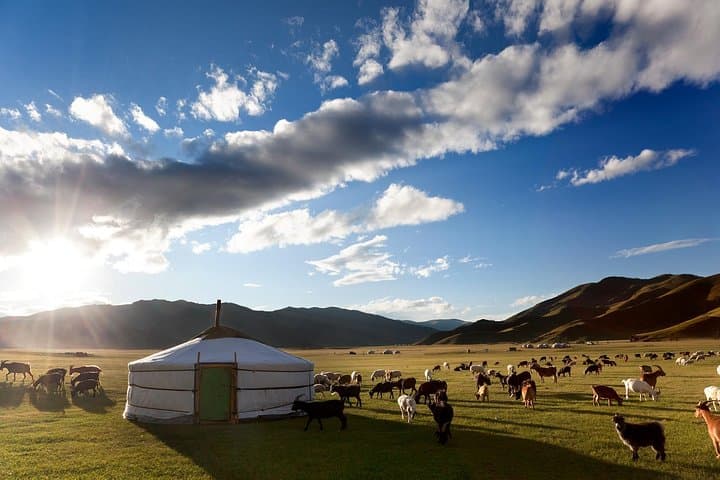
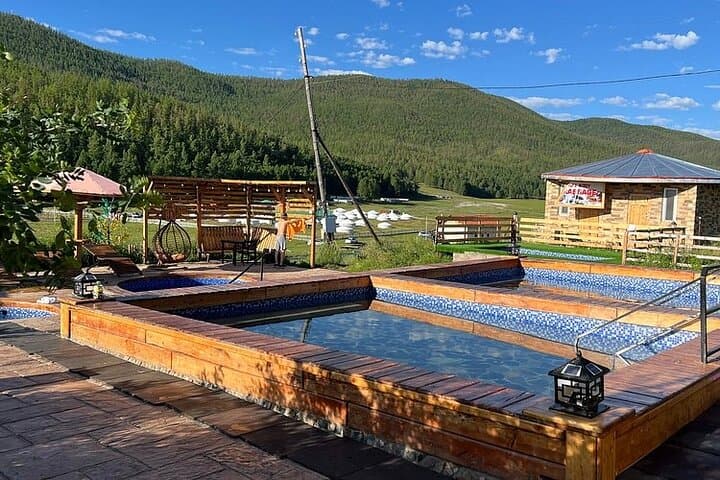
Culturally, this itinerary is a primer. You’ll meet herders over milk tea, learn the economy of a ger (yurt), and see how camels and horses remain tools of labor and identity. At Tsenkher hot springs, steam threads the morning air and local families come with metal buckets to ease sore muscles in a way unchanged for generations.
Practicalities matter here. Distances are long—the itinerary covers hundreds of kilometers of gravel and paved roads—so expect several half-day drives between highlights. Accommodations shift from basic guesthouses to ger camps and a few luxury tent nights; pack for variable warmth after sunset. Hydration, sun protection, and good footwear are non-negotiable: dunes can scorch by day and nights dip cold.
Timing is simple: late spring to early autumn offers the best access to remote tracks and comfortable weather. The tour includes meals, entry fees, and an English-speaking guide, and pickup is available from hotels, airport, or ports. Bring cash for small curios, fuel surcharges payable locally, and modest gifts if you plan to visit families.
On the practical side, this trip is suitable for most fitness levels—days involve easy walks, short horse rides, and moderate hikes on dunes or up to viewpoints. Travel with layers, a reliable camera, and a willingness to adapt to rural rhythms. If you want raw landscape and genuine cultural exchange without marathon trekking, this is a compact, well-paced window into Mongolia’s wild center.
moderate.
7 days.
Suitable for travelers in average fitness; expect multiple half-day drives and short hikes or horse rides.
Pickup is offered from most hotels, the airport, and ports; confirm your pickup point when booking and expect a 20-minute pre-departure window.
Yes—most breakfasts, lunches and dinners during the seven-day itinerary are included; let the operator know dietary restrictions in advance.
Children may join but must be accompanied by an adult; some accommodations are basic and long drives can be tiring for younger travelers.
An English-speaking guide is included; guides typically speak conversational to fluent English and offer cultural context and translation with local hosts.
Khustain National Park is managed to protect Przewalski’s horses and sightings are common, though not guaranteed—wildlife moves on its own schedule.
Yes—comprehensive travel insurance covering medical evacuation, trip interruption and activities is recommended for Mongolia’s remote regions.
Karakorum was Genghis Khan’s 13th-century capital; Erdene Zuu monastery later reused stones from the old city, creating a layered historical site.
Khustain is a protected area for endangered Przewalski’s horses and local operators support low-impact camping and regulated wildlife viewing to reduce disturbance.
Magic Tour Mongolia operates guided outdoor trips and adventures with an emphasis on safety, stewardship, and memorable experiences.
The engine hums as your minivan threads out of Ulaanbaatar and the city’s blocky skyline thins into a linen sheet of steppe. By midday you’re sliding into Khustain National Park where Przewalski’s horses—short-backed and stubbornly wild—lift their heads like sentries and measure the new arrivals. Over seven days this private loop stitches together ruins and rivers, hot springs and sand, each stop a different voice in the country’s long, honest story.
The engine hums as your minivan threads out of Ulaanbaatar and the city’s blocky skyline thins into a linen sheet of steppe. By midday you’re sliding into Khustain National Park where Przewalski’s horses—short-backed and stubbornly wild—lift their heads like sentries and measure the new arrivals. Over seven days this private loop stitches together ruins and rivers, hot springs and sand, each stop a different voice in the country’s long, honest story.
Karakorum, the 13th-century heart of the Mongol Empire, arrives as a wind-swept cluster of foundations and the low, ochre walls of Erdene Zuu monastery. The Orkhon Valley that follows is UNESCO-listed for a reason: the river has shaped human movement here for millennia, carving terraces and feeding the grasses that make mobile life possible. Geological notes are plain—volcanic rock in isolated ridges, alluvial fans out toward the Gobi—but it’s the human imprint that commands attention: nomad camps, Buddhist stupas, and the relics of imperial ambition.
Culturally, this itinerary is a primer. You’ll meet herders over milk tea, learn the economy of a ger (yurt), and see how camels and horses remain tools of labor and identity. At Tsenkher hot springs, steam threads the morning air and local families come with metal buckets to ease sore muscles in a way unchanged for generations.
Practicalities matter here. Distances are long—the itinerary covers hundreds of kilometers of gravel and paved roads—so expect several half-day drives between highlights. Accommodations shift from basic guesthouses to ger camps and a few luxury tent nights; pack for variable warmth after sunset. Hydration, sun protection, and good footwear are non-negotiable: dunes can scorch by day and nights dip cold.
Timing is simple: late spring to early autumn offers the best access to remote tracks and comfortable weather. The tour includes meals, entry fees, and an English-speaking guide, and pickup is available from hotels, airport, or ports. Bring cash for small curios, fuel surcharges payable locally, and modest gifts if you plan to visit families.
On the practical side, this trip is suitable for most fitness levels—days involve easy walks, short horse rides, and moderate hikes on dunes or up to viewpoints. Travel with layers, a reliable camera, and a willingness to adapt to rural rhythms. If you want raw landscape and genuine cultural exchange without marathon trekking, this is a compact, well-paced window into Mongolia’s wild center.