THE ADVENTURE COLLECTIVE® · Independent discovery and booking for outdoor travel

A 7-day crossing of Morocco’s Central High Atlas that culminates on M’Goun (4,071 m). Expect high passes, gorge wading, Berber villages and nights under tents on remote plateaus.
A 7-day crossing of Morocco’s Central High Atlas that culminates on M’Goun (4,071 m). Expect high passes, gorge wading, Berber villages and nights under tents on remote plateaus.
A thin wind moves across the plateau as the first headlamps puncture pre-dawn blue — the massif of M’Goun looms like a folded ridge daring you to climb. On this seven-day traverse, walkers move from the cultivated terraces of Ait Bougmez into the raw bone of the Central High Atlas, crossing passes, camping on windswept plateaus and threading narrow canyon rivers where water insists on slowing your pace.
Verified experiences and guided adventures in the surrounding area.
Operated by Atlas Trips Tours · Azilal, Béni Mellal-Khénifra
A thin wind moves across the plateau as the first headlamps puncture pre-dawn blue — the massif of M’Goun looms like a folded ridge daring you to climb. On this seven-day traverse, walkers move from the cultivated terraces of Ait Bougmez into the raw bone of the Central High Atlas, crossing passes, camping on windswept plateaus and threading narrow canyon rivers where water insists on slowing your pace.
The range is geologically young, carved from uplifted sedimentary rock and folded limestone; valleys here show terraces and alluvial fans shaped by seasonal torrents. Culturally, the route runs through lands long tended by Berber communities: villages with stone houses, seasonal nomad camps on summer pastures and the rose-scented market town of Kelaat M’Gouna, shaped by centuries of trade and irrigation.
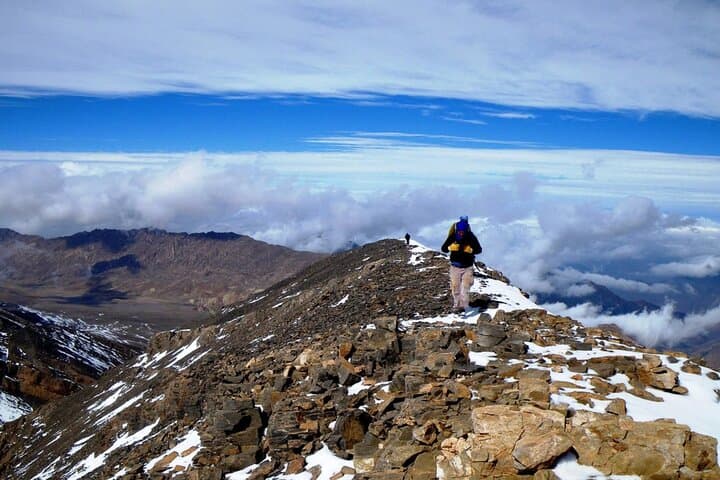
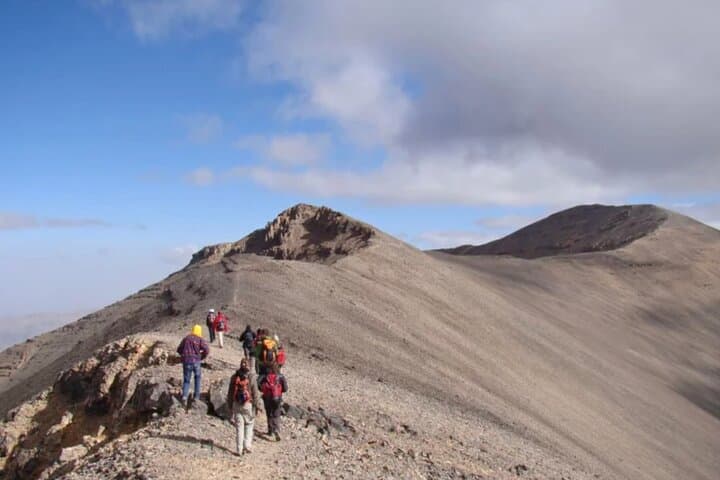
Expect varied terrain: field tracks, steep scree to the summit day, and ankle-deep wading in the M’Goun Gorges. Guides and mule support handle logistics, but the climb to 4,071 m is physical — breath will feel thinner, and weather can change fast.
Practical guidance: start early on summit day, layer for wind and sun, use waterproof footwear for the gorge sections, and carry a basic first-aid kit for blisters and sprains. Hydrate steadily at altitude and respect local customs in villages — a small gift or greeting goes far.
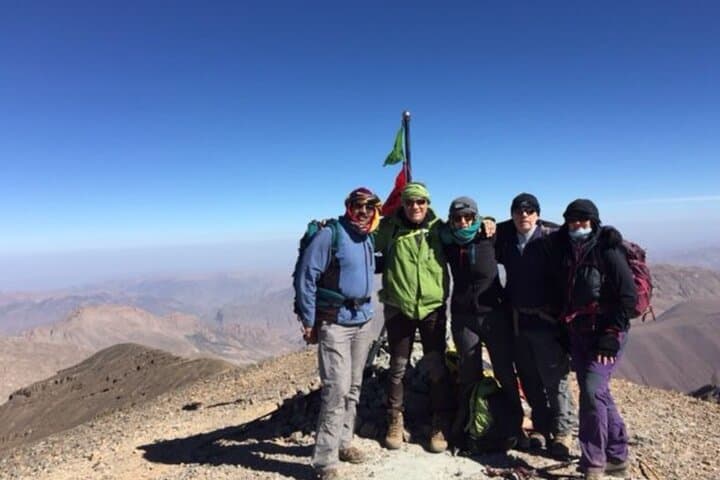
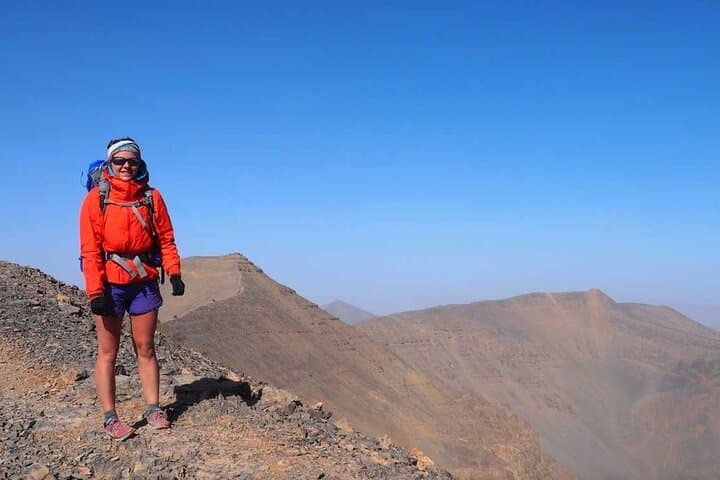
By the end, the plateau’s wide light and the rose valley’s fragrance make the effort tangible — a trip that balances challenge, culture and clear high-mountain views.
challenging.
7 days.
Good aerobic fitness and experience with multi-day hikes; ability to walk 5–9 hours on mixed terrain for consecutive days.
Summit day is the longest and steepest: expect 8–9 hours with ~1,100 m ascent; good pacing, early start and steady hydration are crucial.
No specialized climbing gear is required for the normal route, but sturdy boots and trekking poles are recommended; guides provide route management.
Waterproof boots with good ankle support are best; neoprene socks can help on prolonged wet sections but are optional.
Not strictly, but previous multi-day trekking experience and comfort with long days at elevation make the trip safer and more enjoyable.
The M’Goun massif sits on historic transhumance routes used by Berber communities for seasonal grazing and trade; stone terraces reflect centuries of mountain agriculture.
Stick to existing trails and campsites; water sources are fragile — use biodegradable soap and pack out waste when possible to protect springs and riverine habitat.
Atlas Trips Tours operates guided outdoor trips and adventures with an emphasis on safety, stewardship, and memorable experiences.
A thin wind moves across the plateau as the first headlamps puncture pre-dawn blue — the massif of M’Goun looms like a folded ridge daring you to climb. On this seven-day traverse, walkers move from the cultivated terraces of Ait Bougmez into the raw bone of the Central High Atlas, crossing passes, camping on windswept plateaus and threading narrow canyon rivers where water insists on slowing your pace.
A thin wind moves across the plateau as the first headlamps puncture pre-dawn blue — the massif of M’Goun looms like a folded ridge daring you to climb. On this seven-day traverse, walkers move from the cultivated terraces of Ait Bougmez into the raw bone of the Central High Atlas, crossing passes, camping on windswept plateaus and threading narrow canyon rivers where water insists on slowing your pace.
The range is geologically young, carved from uplifted sedimentary rock and folded limestone; valleys here show terraces and alluvial fans shaped by seasonal torrents. Culturally, the route runs through lands long tended by Berber communities: villages with stone houses, seasonal nomad camps on summer pastures and the rose-scented market town of Kelaat M’Gouna, shaped by centuries of trade and irrigation.
Expect varied terrain: field tracks, steep scree to the summit day, and ankle-deep wading in the M’Goun Gorges. Guides and mule support handle logistics, but the climb to 4,071 m is physical — breath will feel thinner, and weather can change fast.
Practical guidance: start early on summit day, layer for wind and sun, use waterproof footwear for the gorge sections, and carry a basic first-aid kit for blisters and sprains. Hydrate steadily at altitude and respect local customs in villages — a small gift or greeting goes far.
By the end, the plateau’s wide light and the rose valley’s fragrance make the effort tangible — a trip that balances challenge, culture and clear high-mountain views.