THE ADVENTURE COLLECTIVE® · Independent discovery and booking for outdoor travel

Walk from rainforest to glacier on the Machame Route: a 7-day Kilimanjaro itinerary that prioritizes acclimatization and scenery. Expect long days, variable weather and a summit sunrise worth the effort.
Walk from rainforest to glacier on the Machame Route: a 7-day Kilimanjaro itinerary that prioritizes acclimatization and scenery. Expect long days, variable weather and a summit sunrise worth the effort.
The truck eases to a stop at Machame Gate and the mountain announces itself in layers: rainforest drips, the chatter of colobus monkeys, and the bulk of Kibo rising through cloud. Porters move with choreographed efficiency—canvas, gas, and stacked panniers—while guides sort permits and you tighten the straps on boots that will carry you from 1,790 m to Africa’s roof.
Verified experiences and guided adventures in the surrounding area.
Operated by Nyange Adventures. · Moshi, Kilimanjaro Region
The truck eases to a stop at Machame Gate and the mountain announces itself in layers: rainforest drips, the chatter of colobus monkeys, and the bulk of Kibo rising through cloud. Porters move with choreographed efficiency—canvas, gas, and stacked panniers—while guides sort permits and you tighten the straps on boots that will carry you from 1,790 m to Africa’s roof.
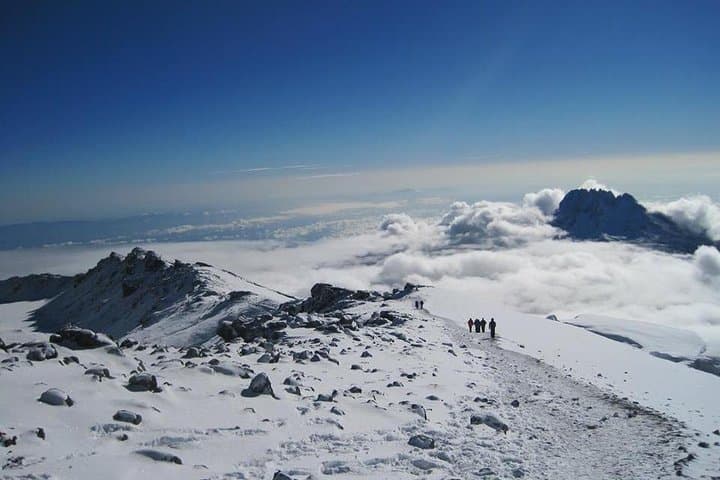
The Machame Route, nicknamed the “Whiskey Route” for its tendency to be more challenging (and more rewarding) than the gentler Marangu approach, is designed around acclimatization: climb high, sleep low. Over seven days you move through five distinct ecological zones—tropical forest, heath, moorland, alpine desert, and the glaciated summit cone. Geologically, Kilimanjaro is a stratovolcano made of three volcanic cones—Kibo, Mawenzi and Shira—whose last major eruptions are ancient, but whose ice fields are modern relics rapidly receding under a warming climate.
Local culture threads through the climb. The Chagga people have farmed the mountain’s lower slopes for centuries; in Moshi, you’ll find small coffee farms and marketplaces that still trade on foot and stories. The climb itself follows in the wake of early explorers—Hans Meyer’s 1889 ascent made the summit globally known—yet today the mountain is governed by Kilimanjaro National Park rules and KPAP porter standards, a reminder that modern climbs require both respect and responsibility.
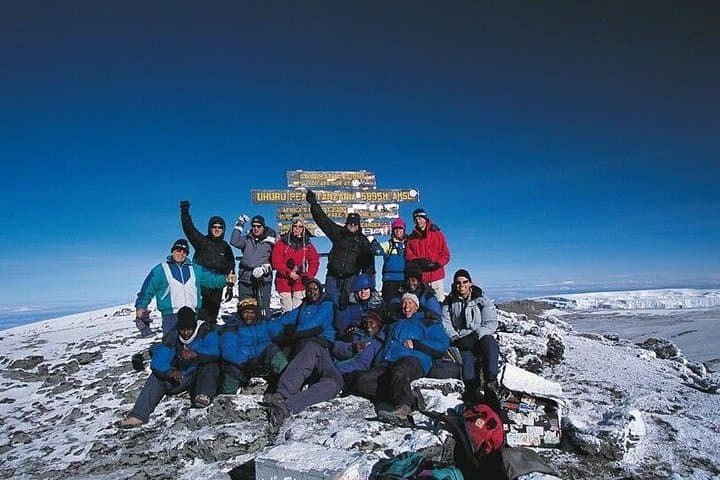
Practical reality sits beside the romance: expect long days of walking (5–8 hours on most days, with the summit push often starting at midnight), significant elevation gain, and abrupt weather changes. Key camps on this itinerary: Machame Camp (3,020 m), Shira Camp (3,845 m), Lava Tower (4,640 m) en route to Barranco Camp, Karanga, Barafu, and the summit at Uhuru Peak (5,895 m), before a descent to Mweka Gate (1,630 m). Acclimatization days and the circuitous routing are the recipe for the Machame Route’s higher summit success rate.
Prepare for cold nights and an exposed summit day: a quality sleeping bag rated to -10°C or lower, insulated layers, and sturdy mountaineering boots are essential. Hydration and a slow pace matter more than speed—the mountain rewards patience. Ask about oxygen and pulse-ox availability (included on this trip) and confirm KPAP-compliant porter wages before you go.
If you want the summit sunrise, plan to be awake at midnight and ready for 6–10 hours of climbing. Beyond logistics, leave no trace, tip fairly, and carry extra layers—the mountain will test gear and resolve in equal measure.
challenging.
7 days.
You should have good cardiovascular fitness and experience with multi-day hikes; training hikes of 4–6 hours with elevation are recommended.
Machame is more strenuous than Marangu because it’s steeper and more varied, but its extra acclimatization and scenery give higher summit success for many teams.
Success depends on fitness, acclimatization and weather; the Machame 7-day itinerary improves odds through gradual gain and an extra acclimatization day, but no guarantee exists.
No ropework or technical climbing skills are required; the route is a high-altitude trek, though crampons may be used on icy summit conditions rarely.
Tipping is not included; guides and porters rely on tips—plan a fair tip and follow KPAP guidance provided by your operator.
Dry seasons (January–March and June–October) offer the most stable weather and clearer summit views.
Acute mountain sickness can affect anyone; the itinerary’s climb-high-sleep-low strategy helps, but monitor symptoms and use pulse-ox and oxygen (provided) if needed.
Kilimanjaro has drawn climbers since Hans Meyer’s 1889 ascent; the mountain sits within Kilimanjaro National Park and is a core part of Chagga cultural territory.
Kilimanjaro’s glaciers are shrinking—practice strict leave-no-trace habits, use certified operators that follow KPAP standards, and minimize single-use plastics.
Nyange Adventures. operates guided outdoor trips and adventures with an emphasis on safety, stewardship, and memorable experiences.
The truck eases to a stop at Machame Gate and the mountain announces itself in layers: rainforest drips, the chatter of colobus monkeys, and the bulk of Kibo rising through cloud. Porters move with choreographed efficiency—canvas, gas, and stacked panniers—while guides sort permits and you tighten the straps on boots that will carry you from 1,790 m to Africa’s roof.
The truck eases to a stop at Machame Gate and the mountain announces itself in layers: rainforest drips, the chatter of colobus monkeys, and the bulk of Kibo rising through cloud. Porters move with choreographed efficiency—canvas, gas, and stacked panniers—while guides sort permits and you tighten the straps on boots that will carry you from 1,790 m to Africa’s roof.
The Machame Route, nicknamed the “Whiskey Route” for its tendency to be more challenging (and more rewarding) than the gentler Marangu approach, is designed around acclimatization: climb high, sleep low. Over seven days you move through five distinct ecological zones—tropical forest, heath, moorland, alpine desert, and the glaciated summit cone. Geologically, Kilimanjaro is a stratovolcano made of three volcanic cones—Kibo, Mawenzi and Shira—whose last major eruptions are ancient, but whose ice fields are modern relics rapidly receding under a warming climate.
Local culture threads through the climb. The Chagga people have farmed the mountain’s lower slopes for centuries; in Moshi, you’ll find small coffee farms and marketplaces that still trade on foot and stories. The climb itself follows in the wake of early explorers—Hans Meyer’s 1889 ascent made the summit globally known—yet today the mountain is governed by Kilimanjaro National Park rules and KPAP porter standards, a reminder that modern climbs require both respect and responsibility.
Practical reality sits beside the romance: expect long days of walking (5–8 hours on most days, with the summit push often starting at midnight), significant elevation gain, and abrupt weather changes. Key camps on this itinerary: Machame Camp (3,020 m), Shira Camp (3,845 m), Lava Tower (4,640 m) en route to Barranco Camp, Karanga, Barafu, and the summit at Uhuru Peak (5,895 m), before a descent to Mweka Gate (1,630 m). Acclimatization days and the circuitous routing are the recipe for the Machame Route’s higher summit success rate.
Prepare for cold nights and an exposed summit day: a quality sleeping bag rated to -10°C or lower, insulated layers, and sturdy mountaineering boots are essential. Hydration and a slow pace matter more than speed—the mountain rewards patience. Ask about oxygen and pulse-ox availability (included on this trip) and confirm KPAP-compliant porter wages before you go.
If you want the summit sunrise, plan to be awake at midnight and ready for 6–10 hours of climbing. Beyond logistics, leave no trace, tip fairly, and carry extra layers—the mountain will test gear and resolve in equal measure.