THE ADVENTURE COLLECTIVE® · Independent discovery and booking for outdoor travel

Seven days on the Machame Route takes you from humid rainforest to Uhuru Peak, moving across volcanic ridges and high moorland. This guide outlines what to expect on each stage, practical preparation tips, and the cultural and geological highlights you’ll pass.
Seven days on the Machame Route takes you from humid rainforest to Uhuru Peak, moving across volcanic ridges and high moorland. This guide outlines what to expect on each stage, practical preparation tips, and the cultural and geological highlights you’ll pass.
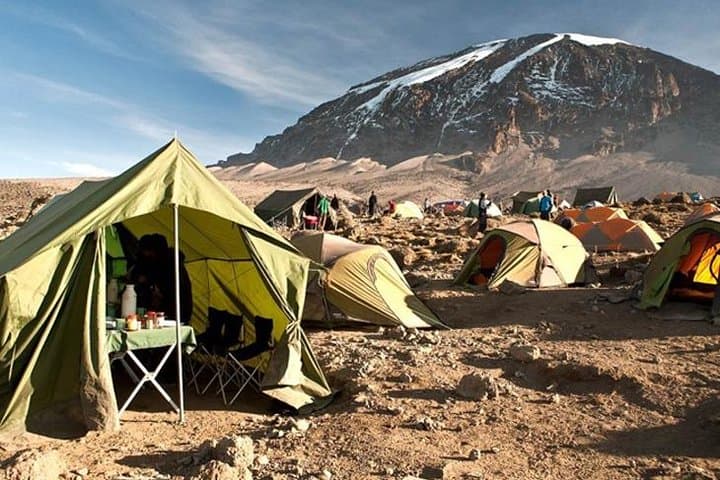
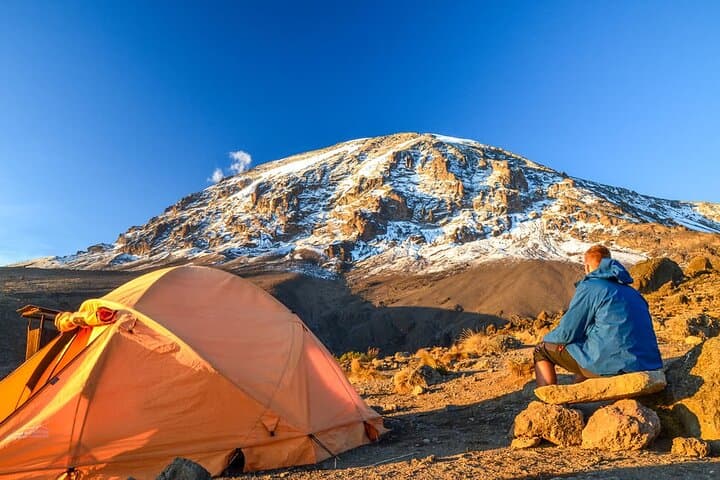
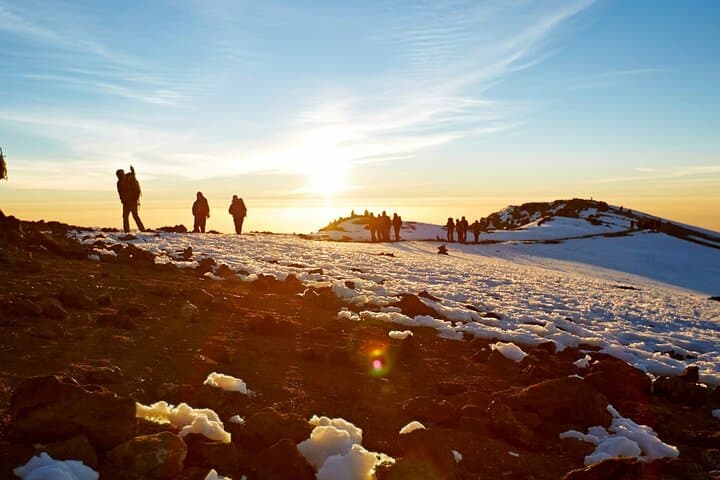
Night on Kilimanjaro has its own gravity: headlamps bob, porters' silhouettes pass like slow ghosts, and the trail narrows into a spine of headlands and cloud. The Machame Route starts in rainforest that smells of wet earth and ends above the ice where the ground is composed of volcanic scree and wind-sculpted rock. Over seven days you move through distinct ecological bands—forest, heath, moorland, alpine desert—each step higher revealing a broader horizon of Mawenzi and Kibo.
Verified experiences and guided adventures in the surrounding area.
Operated by Orkiu_adventure · Moshi, Kilimanjaro Region
Night on Kilimanjaro has its own gravity: headlamps bob, porters' silhouettes pass like slow ghosts, and the trail narrows into a spine of headlands and cloud. The Machame Route starts in rainforest that smells of wet earth and ends above the ice where the ground is composed of volcanic scree and wind-sculpted rock. Over seven days you move through distinct ecological bands—forest, heath, moorland, alpine desert—each step higher revealing a broader horizon of Mawenzi and Kibo.
Geology here is immediate. Kilimanjaro is a dormant stratovolcano capped by a glacier system born of long eruptions and long freezes; lava towers and jagged cliffs mark older flows. Culturally, the slopes belong to Chagga communities around Moshi—terraced farms and coffee plots give way quickly to national parkland protected since 1977.
Expect steady climbs, muddy rainforest sections, steep ridgelines, and a summit push that begins around midnight to beat afternoon winds. Acclimatization is built into the itinerary with nights spent at Lava Tower and Karanga to reduce altitude risk. Pack layered clothing for temperature swings, gaiters for volcanic scree, and poles to save knees on descent.
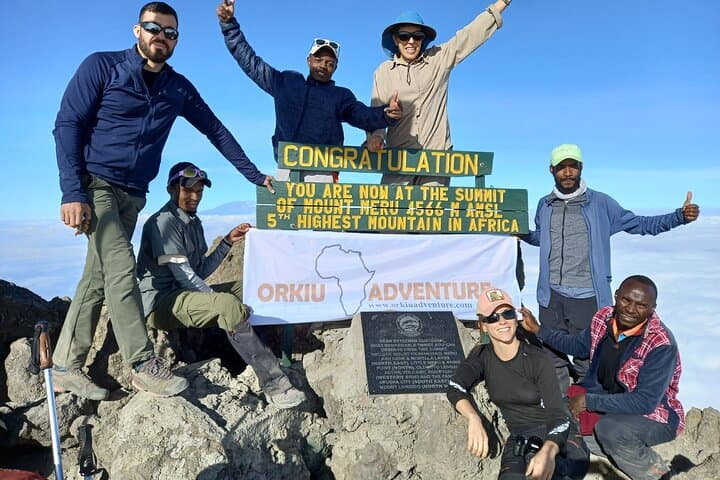
Practical planning points: book permits and a licensed guide through Moshi-based operators, budget time for weather delays, and bring snacks and electrolytes—hydration is non-negotiable. Leave no trace: campsites are fragile and the park enforces strict waste rules. With measured pacing and respect for altitude, the Machame Route delivers one of Africa’s most achievable summit experiences—gritty, wide-angled, and unforgettable.
challenging.
6–7 days.
Require good cardiovascular fitness and the ability to hike 4–8 hours on consecutive days; prior multi-day hiking experience recommended.
The summit day is the longest and most strenuous—expect a 6–12 hour round-trip from Barafu with steep scree and a midnight start; pacing and altitude awareness are essential.
No technical climbing skills are required, but prior multi-day trekking experience and strong fitness improve success and reduce injury risk.
Camps use tent toilets and operators manage waste removal; bring hand sanitizer and biodegradable wipes—water becomes limited at higher camps.
June–October and January–February are the most stable months; avoid long rains (March–May) if you prefer dryer trails.
Kilimanjaro’s peaks were first summited in 1889; the mountain sits on volcanic foundations formed by tectonic uplift and ancient eruptions.
Mount Kilimanjaro National Park manages strict permit and waste rules to protect fragile alpine zones; visitors should stick to established camps and carry out waste where required.
Orkiu_adventure operates guided outdoor trips and adventures with an emphasis on safety, stewardship, and memorable experiences.
Night on Kilimanjaro has its own gravity: headlamps bob, porters' silhouettes pass like slow ghosts, and the trail narrows into a spine of headlands and cloud. The Machame Route starts in rainforest that smells of wet earth and ends above the ice where the ground is composed of volcanic scree and wind-sculpted rock. Over seven days you move through distinct ecological bands—forest, heath, moorland, alpine desert—each step higher revealing a broader horizon of Mawenzi and Kibo.
Night on Kilimanjaro has its own gravity: headlamps bob, porters' silhouettes pass like slow ghosts, and the trail narrows into a spine of headlands and cloud. The Machame Route starts in rainforest that smells of wet earth and ends above the ice where the ground is composed of volcanic scree and wind-sculpted rock. Over seven days you move through distinct ecological bands—forest, heath, moorland, alpine desert—each step higher revealing a broader horizon of Mawenzi and Kibo.
Geology here is immediate. Kilimanjaro is a dormant stratovolcano capped by a glacier system born of long eruptions and long freezes; lava towers and jagged cliffs mark older flows. Culturally, the slopes belong to Chagga communities around Moshi—terraced farms and coffee plots give way quickly to national parkland protected since 1977.
Expect steady climbs, muddy rainforest sections, steep ridgelines, and a summit push that begins around midnight to beat afternoon winds. Acclimatization is built into the itinerary with nights spent at Lava Tower and Karanga to reduce altitude risk. Pack layered clothing for temperature swings, gaiters for volcanic scree, and poles to save knees on descent.
Practical planning points: book permits and a licensed guide through Moshi-based operators, budget time for weather delays, and bring snacks and electrolytes—hydration is non-negotiable. Leave no trace: campsites are fragile and the park enforces strict waste rules. With measured pacing and respect for altitude, the Machame Route delivers one of Africa’s most achievable summit experiences—gritty, wide-angled, and unforgettable.