THE ADVENTURE COLLECTIVE® · Independent discovery and booking for outdoor travel

A seven-day Machame Route climb blends rainforest trails, high-altitude plateaus and a pre-dawn summit push to Uhuru Peak. This guide outlines what to expect on each day, how to prepare physically, and the practical gear and etiquette to travel responsibly on Africa’s highest mountain.
A seven-day Machame Route climb blends rainforest trails, high-altitude plateaus and a pre-dawn summit push to Uhuru Peak. This guide outlines what to expect on each day, how to prepare physically, and the practical gear and etiquette to travel responsibly on Africa’s highest mountain.
Night on the lower slopes smells of damp earth and wood smoke as your team packs up at Machame Camp. The path rises from dense rainforest into heather moor and then onto the broad, wind-scoured Shira Plateau; each day rewrites the landscape until the summit’s volcanic skyline appears like a hard, frozen horizon.
Verified experiences and guided adventures in the surrounding area.
Operated by Gracepatt Safaris · Moshi, Kilimanjaro Region
Night on the lower slopes smells of damp earth and wood smoke as your team packs up at Machame Camp. The path rises from dense rainforest into heather moor and then onto the broad, wind-scoured Shira Plateau; each day rewrites the landscape until the summit’s volcanic skyline appears like a hard, frozen horizon.
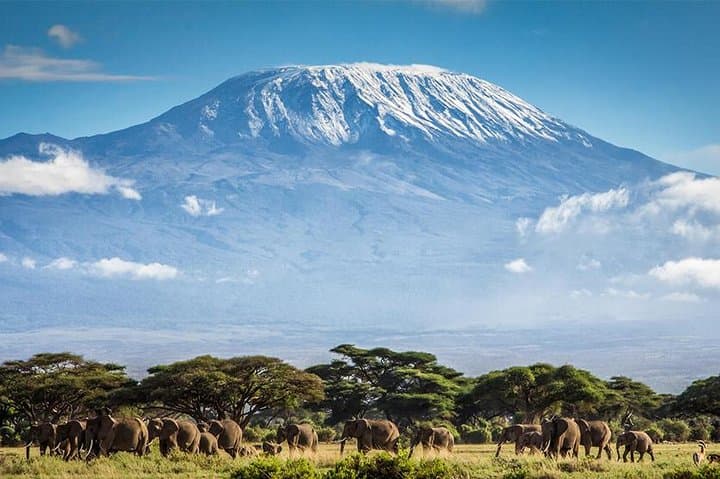
Machame — the "Whiskey Route" — was developed as an alternative to the older Marangu path and is prized for varied terrain and solid acclimatization. Geologically Kilimanjaro is a stratovolcano with three cones: Kibo (the summit cone), Mawenzi and Shira; the route crosses ancient lava flows and skirts glaciers that have receded noticeably since the 20th century. Culturally the mountain sits in Chagga country, and villages on the southern and eastern flanks still farm coffee and bananas where the forest gives way to alpine moor.
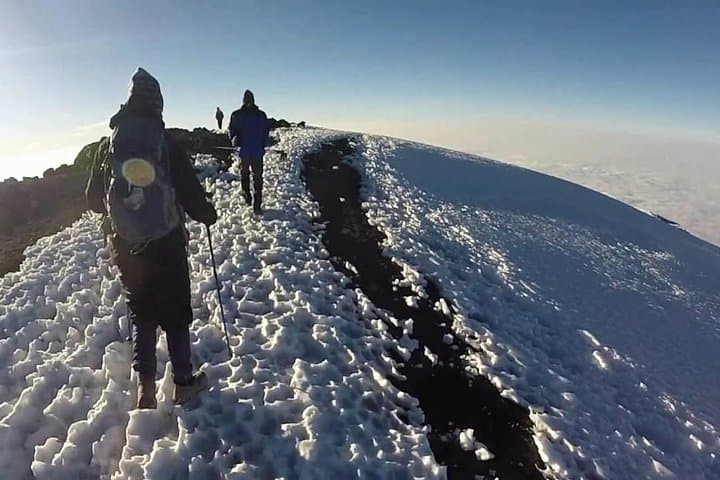
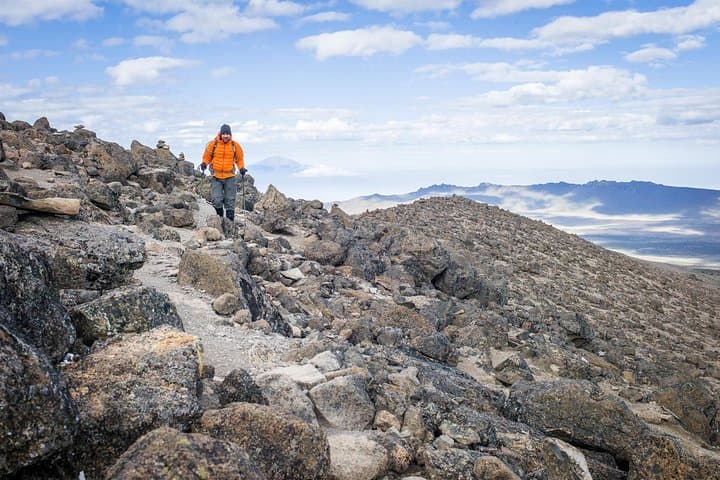
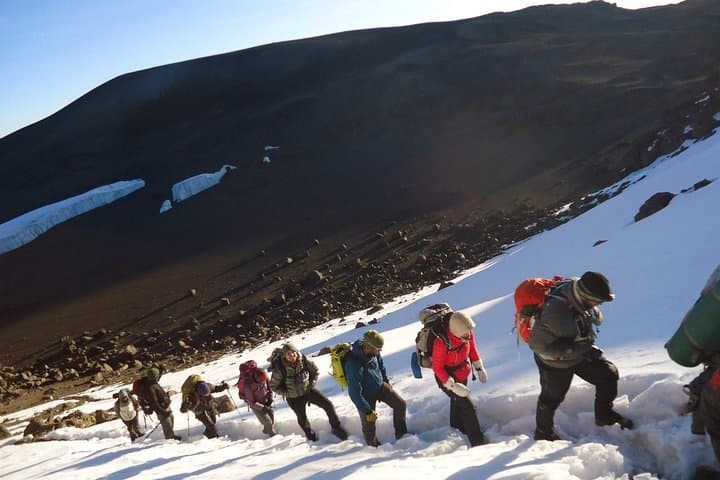
Expect six full days of trekking and one summit push: rainforest trails with mud and roots, rocky plateaus, steep scree approaching Barafu, and a cold, pre-dawn ascent over lunar scree to Uhuru Peak at 5,896 m. Guides, cooks and porters handle camp logistics; you carry a daypack. Acclimatization is the trip’s priority — the Machame itinerary deliberately gains high then drops to sleep lower to help you adapt.
Practical tips: train on sustained uphill hikes, use layered clothing for wide temperature swings, hydrate consistently at altitude, and break in boots well before departure. Summit night begins around midnight — expect 6–8 hours round trip from Barafu. Permit and park regulations protect the trails; book through a licensed operator and plan for unpredictable weather on the high plateau.
difficult.
7 days.
Cardiovascular endurance and strength for consecutive 5–8 hour trekking days at altitude; several months of training recommended
No technical climbing skills are required; the route is non-technical trekking, but fitness and prior multi-day hiking experience are strongly recommended.
Altitude sickness is possible for any climber; prevention focuses on gradual ascent, hydration, rest, and communication with guides — medications like acetazolamide can be used under medical advice.
Camping on the route: tents provided for sleeping, communal mess tents supplied by the cook team; accommodation at start/end is typically a hotel in Moshi.
Dry seasons — late June to October and late December to February — generally offer more stable weather and clearer summit windows, though climbs occur year-round.
Kilimanjaro National Park was established to protect the mountain’s ecosystems; the Machame trail emerged as a popular scenic alternative to older routes.
The glaciers on Kibo have been retreating for decades; responsible trekking includes using licensed guides, minimizing waste, and proper tipping to support porter welfare.
Gracepatt Safaris operates guided outdoor trips and adventures with an emphasis on safety, stewardship, and memorable experiences.
Night on the lower slopes smells of damp earth and wood smoke as your team packs up at Machame Camp. The path rises from dense rainforest into heather moor and then onto the broad, wind-scoured Shira Plateau; each day rewrites the landscape until the summit’s volcanic skyline appears like a hard, frozen horizon.
Night on the lower slopes smells of damp earth and wood smoke as your team packs up at Machame Camp. The path rises from dense rainforest into heather moor and then onto the broad, wind-scoured Shira Plateau; each day rewrites the landscape until the summit’s volcanic skyline appears like a hard, frozen horizon.
Machame — the "Whiskey Route" — was developed as an alternative to the older Marangu path and is prized for varied terrain and solid acclimatization. Geologically Kilimanjaro is a stratovolcano with three cones: Kibo (the summit cone), Mawenzi and Shira; the route crosses ancient lava flows and skirts glaciers that have receded noticeably since the 20th century. Culturally the mountain sits in Chagga country, and villages on the southern and eastern flanks still farm coffee and bananas where the forest gives way to alpine moor.
Expect six full days of trekking and one summit push: rainforest trails with mud and roots, rocky plateaus, steep scree approaching Barafu, and a cold, pre-dawn ascent over lunar scree to Uhuru Peak at 5,896 m. Guides, cooks and porters handle camp logistics; you carry a daypack. Acclimatization is the trip’s priority — the Machame itinerary deliberately gains high then drops to sleep lower to help you adapt.
Practical tips: train on sustained uphill hikes, use layered clothing for wide temperature swings, hydrate consistently at altitude, and break in boots well before departure. Summit night begins around midnight — expect 6–8 hours round trip from Barafu. Permit and park regulations protect the trails; book through a licensed operator and plan for unpredictable weather on the high plateau.