THE ADVENTURE COLLECTIVE® · Independent discovery and booking for outdoor travel

Take the Lemosho Route to summit Kilimanjaro in seven days—forest, moorland and a long summit night that climbs to Uhuru Peak. This guide covers what to expect each day, terrain, and practical gear and acclimatization tips.
Take the Lemosho Route to summit Kilimanjaro in seven days—forest, moorland and a long summit night that climbs to Uhuru Peak. This guide covers what to expect each day, terrain, and practical gear and acclimatization tips.
Dawn light slips through cloud and forest as porters unload packs at Londorossi Gate. The trail begins in rainforest—wet roots, orchids clinging to trunks—then opens onto moorland and the broad Shira Plateau. Each day peels back a new ecological band until the final push crosses loose scree and the Rebmann Glacier toward Stella Point and Uhuru Peak.
Verified experiences and guided adventures in the surrounding area.
Operated by Jaynevy Tours · Moshi, Kilimanjaro Region
Dawn light slips through cloud and forest as porters unload packs at Londorossi Gate. The trail begins in rainforest—wet roots, orchids clinging to trunks—then opens onto moorland and the broad Shira Plateau. Each day peels back a new ecological band until the final push crosses loose scree and the Rebmann Glacier toward Stella Point and Uhuru Peak.
Mount Kilimanjaro is a dormant stratovolcano and Africa’s highest point at 5,895 m (19,341 ft). The Lemosho Route approaches from the west, offering extended acclimatization across forest, giant heather, moorland and alpine desert before joining the southern circuit. The itinerary commonly passes Shira, the Lava Tower (the “Shark’s Tooth”), Barranco Wall and Barafu Camp—features formed by volcanic activity and glacial retreat. The Chagga people and generations of guides have shaped the human story here; porter culture and local campsites are part of that living history.
Practically, this 7-day program ranges from short 3-hour walks (Day 1) to summit-night efforts that begin between midnight and 2 a.m. and can take 7–10 hours round-trip from Barafu to Uhuru Peak and down to Mweka. Expect elevation change from roughly 1,800 m (Londorossi) to 5,895 m at the summit; terrain shifts from muddy, root-strewn forest to loose scree and rock. Hydration, slow pacing, layered clothing, gaiters and trekking poles matter more than speed. Acclimatization days—like the Barranco to Karanga segment—are deliberate buffers against acute mountain sickness. Weather can flip quickly: plan for sun, wind, and biting cold above 4,000 m. When you summit, the sunrise over the crater rim rewards the slow, steady work of ascent.
challenging.
7 days.
Good cardiovascular fitness and experience with multi-day hiking; able to carry a daypack for 6–10 hour days.
Acute mountain sickness is common; proper acclimatization days, slow pacing and hydration reduce risk but symptoms vary—notify guides immediately if you feel unwell.
No technical mountaineering skills are required; this is a non-technical trek but demanding fitness and high-altitude tolerance are necessary.
Daily walking ranges from about 3–7 hours; the route climbs progressively from ~1,800 m to 5,895 m with summit-night long effort and steep gains on the final push.
Commercial climbs require park permits and licensed guides—confirm with the operator which permits and local crew are covered in your booking.
Kilimanjaro’s first recorded summit was in 1889 by Hans Meyer and Ludwig Purtscheller; the mountain has long been central to Chagga culture and farming on its lower slopes.
Glacial retreat is visible year-to-year; stick to established trails, pack out waste, and support local guide and porter welfare to reduce ecological and social impacts.
Jaynevy Tours operates guided outdoor trips and adventures with an emphasis on safety, stewardship, and memorable experiences.
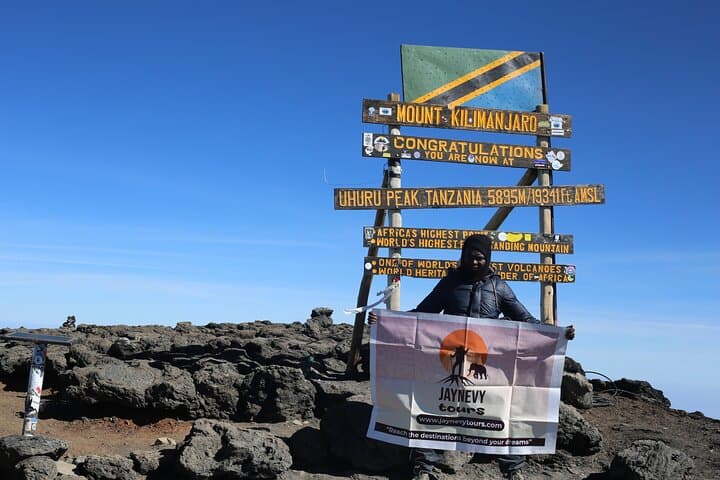
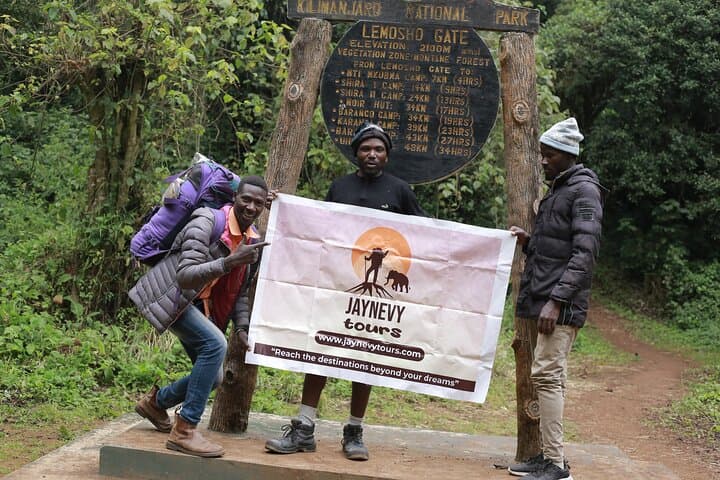
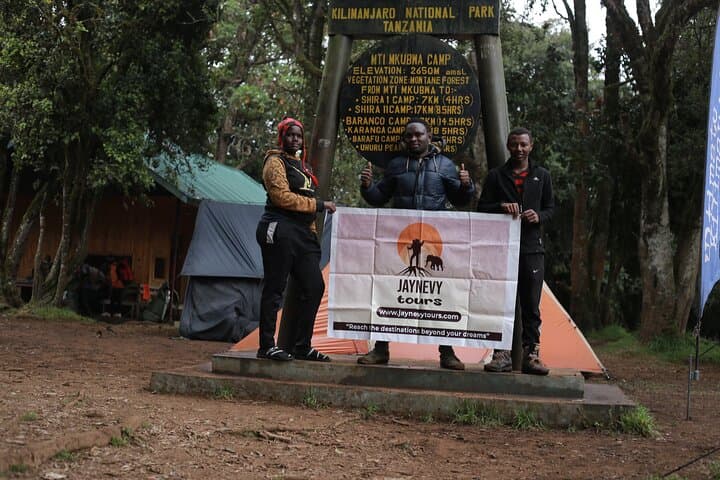
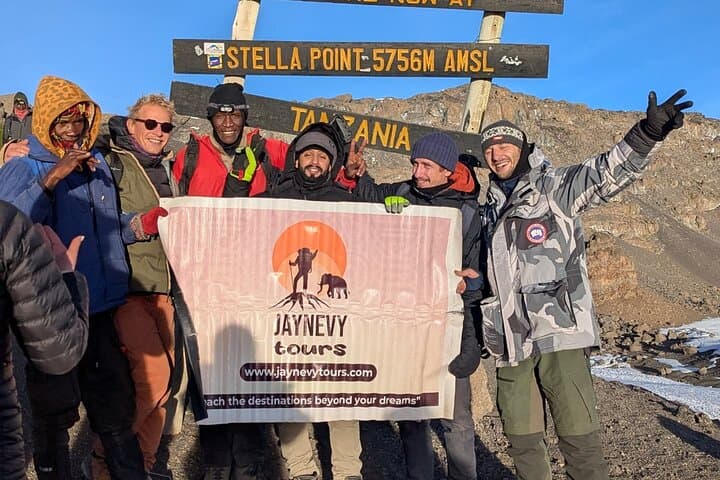
Dawn light slips through cloud and forest as porters unload packs at Londorossi Gate. The trail begins in rainforest—wet roots, orchids clinging to trunks—then opens onto moorland and the broad Shira Plateau. Each day peels back a new ecological band until the final push crosses loose scree and the Rebmann Glacier toward Stella Point and Uhuru Peak.
Dawn light slips through cloud and forest as porters unload packs at Londorossi Gate. The trail begins in rainforest—wet roots, orchids clinging to trunks—then opens onto moorland and the broad Shira Plateau. Each day peels back a new ecological band until the final push crosses loose scree and the Rebmann Glacier toward Stella Point and Uhuru Peak.
Mount Kilimanjaro is a dormant stratovolcano and Africa’s highest point at 5,895 m (19,341 ft). The Lemosho Route approaches from the west, offering extended acclimatization across forest, giant heather, moorland and alpine desert before joining the southern circuit. The itinerary commonly passes Shira, the Lava Tower (the “Shark’s Tooth”), Barranco Wall and Barafu Camp—features formed by volcanic activity and glacial retreat. The Chagga people and generations of guides have shaped the human story here; porter culture and local campsites are part of that living history.
Practically, this 7-day program ranges from short 3-hour walks (Day 1) to summit-night efforts that begin between midnight and 2 a.m. and can take 7–10 hours round-trip from Barafu to Uhuru Peak and down to Mweka. Expect elevation change from roughly 1,800 m (Londorossi) to 5,895 m at the summit; terrain shifts from muddy, root-strewn forest to loose scree and rock. Hydration, slow pacing, layered clothing, gaiters and trekking poles matter more than speed. Acclimatization days—like the Barranco to Karanga segment—are deliberate buffers against acute mountain sickness. Weather can flip quickly: plan for sun, wind, and biting cold above 4,000 m. When you summit, the sunrise over the crater rim rewards the slow, steady work of ascent.