THE ADVENTURE COLLECTIVE® · Independent discovery and booking for outdoor travel

A seven-day Machame ascent on Kilimanjaro that trades technical ice climbing for sustained altitude, careful acclimatization, and serious endurance. Follow a route that moves from rainforest to glacier, culminating in a pre-dawn summit push to Uhuru Peak.
A seven-day Machame ascent on Kilimanjaro that trades technical ice climbing for sustained altitude, careful acclimatization, and serious endurance. Follow a route that moves from rainforest to glacier, culminating in a pre-dawn summit push to Uhuru Peak.
The day begins before dawn in Moshi, with a caffeine-thick air that smells of roasted Tanzanian coffee and diesel. A small convoy bumps out of town toward Machame gate; ahead, Kilimanjaro’s flanks rise like a weather system, forested lower slopes giving way to open moorland and a high, glacial crown. On the first steps through rainforest you can hear the trail — boots on packed soil, the distant chat of porters and the occasional call of a blue colobus — and the mountain already seems to be testing you.
Verified experiences and guided adventures in the surrounding area.
Operated by Serengeti Wildlife Safaris · Moshi, Kilimanjaro Region
The day begins before dawn in Moshi, with a caffeine-thick air that smells of roasted Tanzanian coffee and diesel. A small convoy bumps out of town toward Machame gate; ahead, Kilimanjaro’s flanks rise like a weather system, forested lower slopes giving way to open moorland and a high, glacial crown. On the first steps through rainforest you can hear the trail — boots on packed soil, the distant chat of porters and the occasional call of a blue colobus — and the mountain already seems to be testing you.
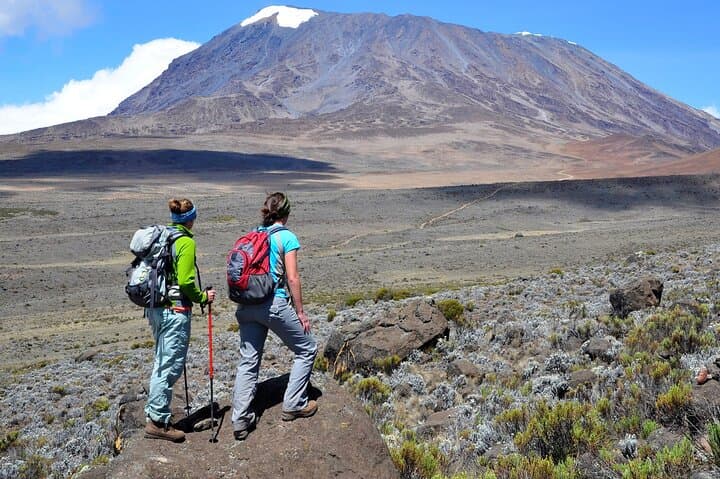
The Machame Route is a study in transitions. Over seven days the habitat shifts from dense rainforest to heather and moorland, then to semi-desert and finally an exposed, alpine landscape where scree and ice rule. The geology is obvious underfoot: ancient lava flows smooth into volcanic tuffs, then the jagged rim of Kibo’s caldera frames a white glacier that is receding every decade.
Cultural context threads through the climb. The Chagga people have lived on Kilimanjaro’s lower slopes for centuries; villages around Moshi and Marangu grow bananas and coffee in the mountain’s rain shadow. Guides and porters — often from nearby communities — bring local knowledge and hard-earned mountain craft; the climb itself is also a social experience, a choreography of teamwork and care.
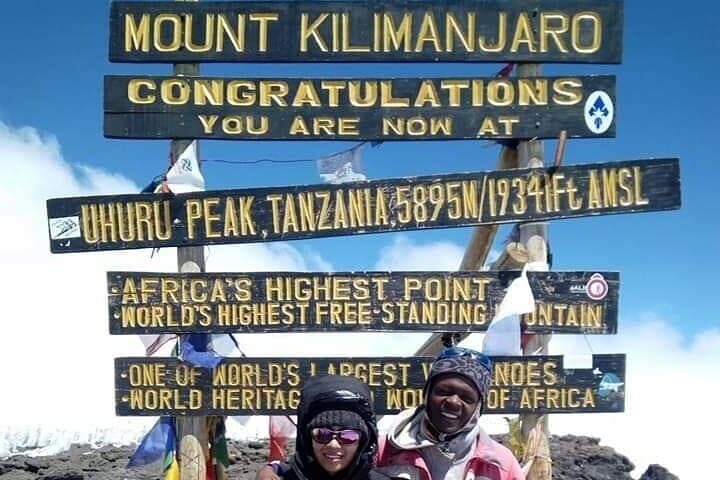
Practically, the Machame seven-day itinerary is designed for acclimatization: longer ascents early on, a route that gains then loses elevation to aid adaptation, and a summit push from Barafu in the small hours to reach Stella Point at sunrise and Uhuru Peak soon after. Expect full days of hiking averaging 4–8 hours, one big night ascent of 6–9 hours, altitude gains topping out at nearly 1,300m on summit day, and camps that alternate between basic tent platforms and high-camp sleeping areas.
If you’re planning this trip, commit to fitness training, focus on slow pacing and hydration on the mountain, and pack layers for abrupt temperature swings — daytime warmth on the moor can flip to -10°C near the crater rim. Respect the team: porters carry gear and cooks prepare meals that matter more than they sound; tipping is customary.
The reward is practical and visceral: an expansive sunrise above the ice, the relief of descent to Mweka, and a return to Moshi with a clearer sense of how climate, geology, and local communities intersect on Africa’s highest freestanding peak. This is a climb that requires grit, but it’s structured so determined hikers with good preparation can stand on the summit and actually take it in.
challenging.
7 days.
Moderately high aerobic fitness and experience with multi-day hiking; train with long hikes and stair sessions.
You should have good cardiovascular fitness and experience with long day hikes; the route is non-technical but demands endurance and acclimatization.
This itinerary lists park fees as included; confirm with the operator that all Kilimanjaro National Park permits are covered.
Dry windows are January–March and June–October; April–May and November are wetter and can make trails muddy and slower.
Acclimatization built into a seven-day Machame schedule reduces risk but doesn’t eliminate it; know symptoms and communicate immediately with guides.
No technical ice equipment is required for the standard Machame route, though good boots and crampons can help if early-season snow is present.
A common guideline is roughly 10–20% of the trip cost split among the team; tips are an important livelihood for porters and guides.
The slopes of Kilimanjaro are historically home to Chagga agricultural communities; trails now mix ancient footpaths with modern conservation efforts.
Kilimanjaro National Park fees fund conservation and community projects; stay on trail, pack out waste, and use local guide services to support sustainable livelihoods.
Serengeti Wildlife Safaris operates guided outdoor trips and adventures with an emphasis on safety, stewardship, and memorable experiences.
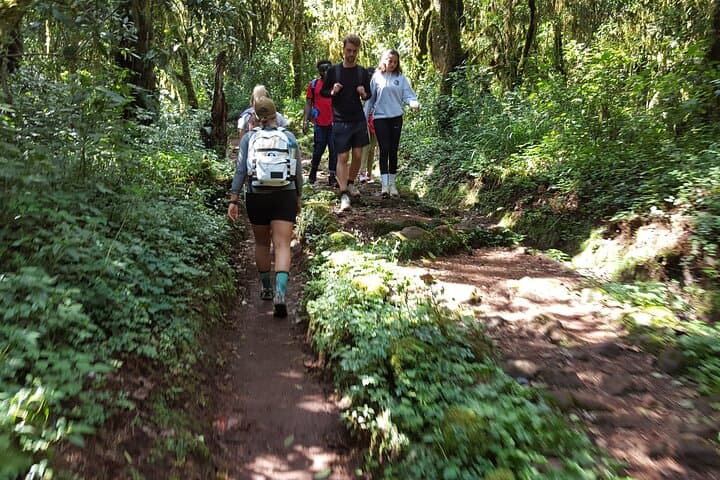
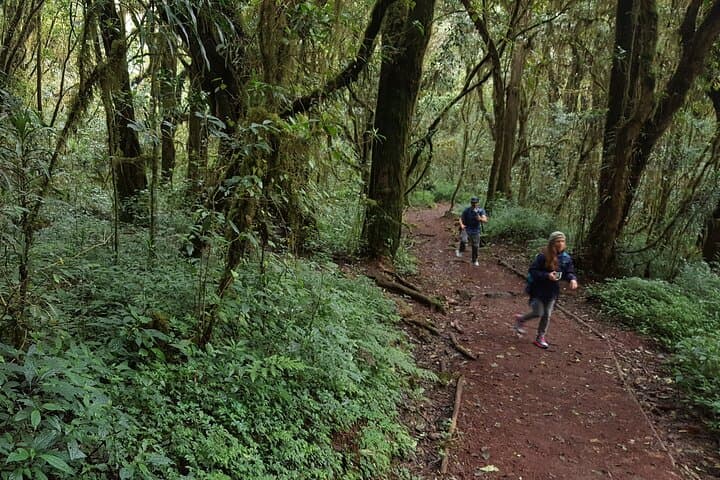
The day begins before dawn in Moshi, with a caffeine-thick air that smells of roasted Tanzanian coffee and diesel. A small convoy bumps out of town toward Machame gate; ahead, Kilimanjaro’s flanks rise like a weather system, forested lower slopes giving way to open moorland and a high, glacial crown. On the first steps through rainforest you can hear the trail — boots on packed soil, the distant chat of porters and the occasional call of a blue colobus — and the mountain already seems to be testing you.
The day begins before dawn in Moshi, with a caffeine-thick air that smells of roasted Tanzanian coffee and diesel. A small convoy bumps out of town toward Machame gate; ahead, Kilimanjaro’s flanks rise like a weather system, forested lower slopes giving way to open moorland and a high, glacial crown. On the first steps through rainforest you can hear the trail — boots on packed soil, the distant chat of porters and the occasional call of a blue colobus — and the mountain already seems to be testing you.
The Machame Route is a study in transitions. Over seven days the habitat shifts from dense rainforest to heather and moorland, then to semi-desert and finally an exposed, alpine landscape where scree and ice rule. The geology is obvious underfoot: ancient lava flows smooth into volcanic tuffs, then the jagged rim of Kibo’s caldera frames a white glacier that is receding every decade.
Cultural context threads through the climb. The Chagga people have lived on Kilimanjaro’s lower slopes for centuries; villages around Moshi and Marangu grow bananas and coffee in the mountain’s rain shadow. Guides and porters — often from nearby communities — bring local knowledge and hard-earned mountain craft; the climb itself is also a social experience, a choreography of teamwork and care.
Practically, the Machame seven-day itinerary is designed for acclimatization: longer ascents early on, a route that gains then loses elevation to aid adaptation, and a summit push from Barafu in the small hours to reach Stella Point at sunrise and Uhuru Peak soon after. Expect full days of hiking averaging 4–8 hours, one big night ascent of 6–9 hours, altitude gains topping out at nearly 1,300m on summit day, and camps that alternate between basic tent platforms and high-camp sleeping areas.
If you’re planning this trip, commit to fitness training, focus on slow pacing and hydration on the mountain, and pack layers for abrupt temperature swings — daytime warmth on the moor can flip to -10°C near the crater rim. Respect the team: porters carry gear and cooks prepare meals that matter more than they sound; tipping is customary.
The reward is practical and visceral: an expansive sunrise above the ice, the relief of descent to Mweka, and a return to Moshi with a clearer sense of how climate, geology, and local communities intersect on Africa’s highest freestanding peak. This is a climb that requires grit, but it’s structured so determined hikers with good preparation can stand on the summit and actually take it in.