THE ADVENTURE COLLECTIVE® · Independent discovery and booking for outdoor travel

Tackle Kilimanjaro’s Machame route on a 7-day guided climb that balances solid acclimatisation with high summit success. Expect thick forest, open moorland, and a stiff final push to Uhuru Peak.
Tackle Kilimanjaro’s Machame route on a 7-day guided climb that balances solid acclimatisation with high summit success. Expect thick forest, open moorland, and a stiff final push to Uhuru Peak.
You step out of the jeep at Machame Gate and the forest swallows sound—birds, the scuff of boots, the soft chatter of porters—while Kilimanjaro's flanks tower above, already losing their green to banded heath and rock.
Verified experiences and guided adventures in the surrounding area.
Operated by Wildtrip Safaris Tanzania · Moshi, Kilimanjaro Region
You step out of the jeep at Machame Gate and the forest swallows sound—birds, the scuff of boots, the soft chatter of porters—while Kilimanjaro's flanks tower above, already losing their green to banded heath and rock.
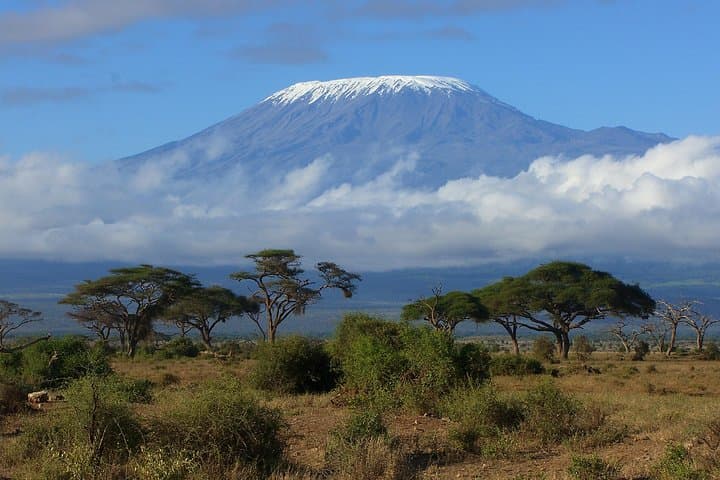
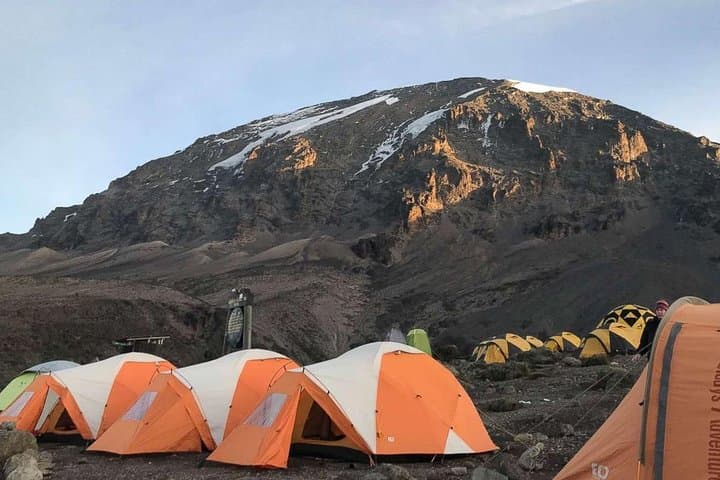
The Machame route is built for gradual gain: dense montane forest gives way to moorland, then the exposed Shira Plateau, a dramatic Barranco Wall, and the final lunar zone before Barafu and the pre-dawn push to Uhuru Peak (5,895 m). The route’s “walk high, sleep low” rhythm is its strength—daily ups and downs that improve acclimatisation and lift summit odds.
Geologically Kilimanjaro is a composite stratovolcano—layers of ash and lava that age and erode into cliffs, ridges, and volcanic scree. Culturally the mountain is central to Chagga communities below; their farms and stories frame the climb and guides often share local names and coffee traditions at lower camps.
Expect 6–8 hours of hiking on several trek days, steep scree on summit night, and thin air above 4,500 m. Wildlife is more likely in the forested sections—colobus monkeys and exotic birds—while higher zones are stark and wind-swept. Guides and porters are mandatory; permits and park fees are required.
Practical notes: hydrate aggressively, use trekking poles, and stick to a conservative pace on summit night. Layer for wide temperature swings—day warmth, summit cold—and plan for mud in the wet season. With steady fitness, careful pacing, and respect for altitude, the Machame 7-day offers one of the most achievable routes to Africa’s rooftop.
challenging.
7 days.
Good aerobic fitness with multi-day trekking experience recommended; able to hike 6–8 hours on some days and manage steep scree at altitude.
Challenging—it's non-technical but sustained; you should be comfortable hiking multiple days with altitude gain to 5,895 m and expect 6–8 hour trek days.
Two main dry seasons—late June to October and January to mid-March—offer more stable weather and clearer summit nights.
Yes; Kilimanjaro National Park requires registered guides, porters are customary, and park permits/fees are mandatory prior to ascent.
Symptoms can appear above 3,000 m; descending is the primary treatment—guides monitor climbers, and companies often carry oxygen and have evacuation plans.
Kilimanjaro has long cultural significance for the Chagga people and was first summited in 1889; its volcanic structure records Pleistocene activity and glacial retreat.
Park authorities manage cables of guides and permits to limit impact; stay on trails, avoid feeding wildlife, and support local porters through fair tipping.
Wildtrip Safaris Tanzania operates guided outdoor trips and adventures with an emphasis on safety, stewardship, and memorable experiences.


You step out of the jeep at Machame Gate and the forest swallows sound—birds, the scuff of boots, the soft chatter of porters—while Kilimanjaro's flanks tower above, already losing their green to banded heath and rock.
You step out of the jeep at Machame Gate and the forest swallows sound—birds, the scuff of boots, the soft chatter of porters—while Kilimanjaro's flanks tower above, already losing their green to banded heath and rock.
The Machame route is built for gradual gain: dense montane forest gives way to moorland, then the exposed Shira Plateau, a dramatic Barranco Wall, and the final lunar zone before Barafu and the pre-dawn push to Uhuru Peak (5,895 m). The route’s “walk high, sleep low” rhythm is its strength—daily ups and downs that improve acclimatisation and lift summit odds.
Geologically Kilimanjaro is a composite stratovolcano—layers of ash and lava that age and erode into cliffs, ridges, and volcanic scree. Culturally the mountain is central to Chagga communities below; their farms and stories frame the climb and guides often share local names and coffee traditions at lower camps.
Expect 6–8 hours of hiking on several trek days, steep scree on summit night, and thin air above 4,500 m. Wildlife is more likely in the forested sections—colobus monkeys and exotic birds—while higher zones are stark and wind-swept. Guides and porters are mandatory; permits and park fees are required.
Practical notes: hydrate aggressively, use trekking poles, and stick to a conservative pace on summit night. Layer for wide temperature swings—day warmth, summit cold—and plan for mud in the wet season. With steady fitness, careful pacing, and respect for altitude, the Machame 7-day offers one of the most achievable routes to Africa’s rooftop.