THE ADVENTURE COLLECTIVE® · Independent discovery and booking for outdoor travel

Travel from Kathmandu’s ancient temples to Pokhara’s lakeshore and Sarangkot’s ridgeline on this seven-day cultural and scenic circuit. Expect temple visits, a lakeside boat trip, and optional paragliding above the Annapurna foothills.
Travel from Kathmandu’s ancient temples to Pokhara’s lakeshore and Sarangkot’s ridgeline on this seven-day cultural and scenic circuit. Expect temple visits, a lakeside boat trip, and optional paragliding above the Annapurna foothills.
The motorcoach winds out of Kathmandu before dawn, the city’s temple spires silhouetted against the first light. Passengers trade the brick-clad bustle for terraced hills and the wide mirror of Phewa Lake; by evening, Sarangkot’s ridge frames a sunset that throws Annapurna’s teeth into relief.
Verified experiences and guided adventures in the surrounding area.
Operated by Himalayan Social Journey · Kathmandu, Bagmati Province
The motorcoach winds out of Kathmandu before dawn, the city’s temple spires silhouetted against the first light. Passengers trade the brick-clad bustle for terraced hills and the wide mirror of Phewa Lake; by evening, Sarangkot’s ridge frames a sunset that throws Annapurna’s teeth into relief.
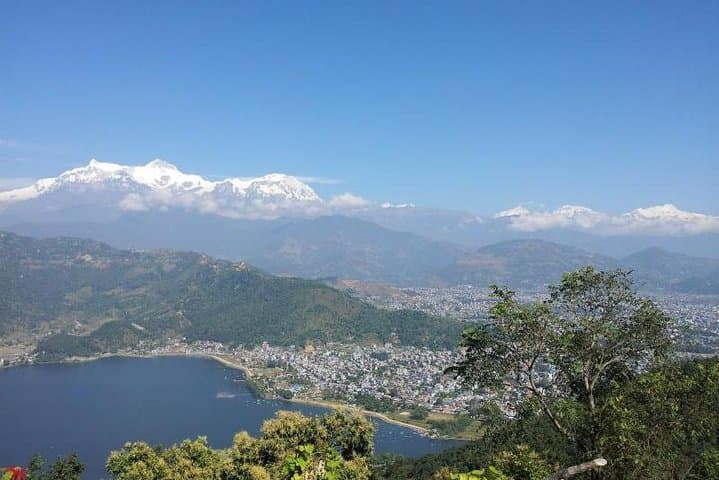
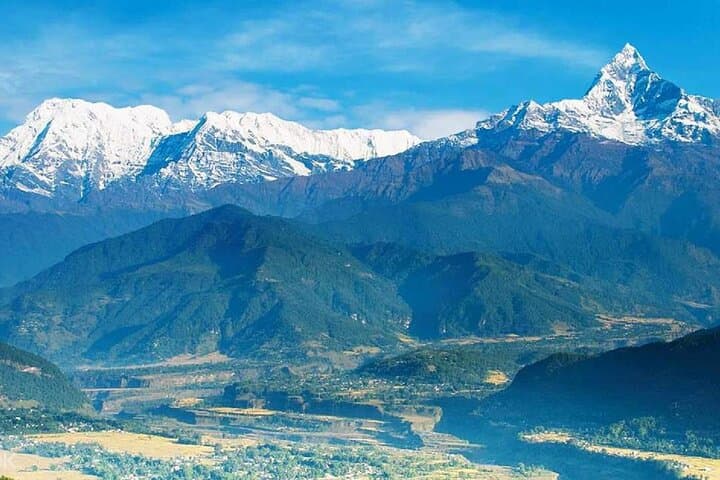
The route crosses the Kathmandu Valley — a cultural and political heartland shaped by Newar artisans over centuries — then drops into the Pokhara basin at roughly 800 m elevation. Geologically, travelers move from the valley’s river-cut alluvium into the foothills of the Himalaya; views of Machhapuchhare (Fishtail) and the Annapurna massif are clearest in fall and winter.
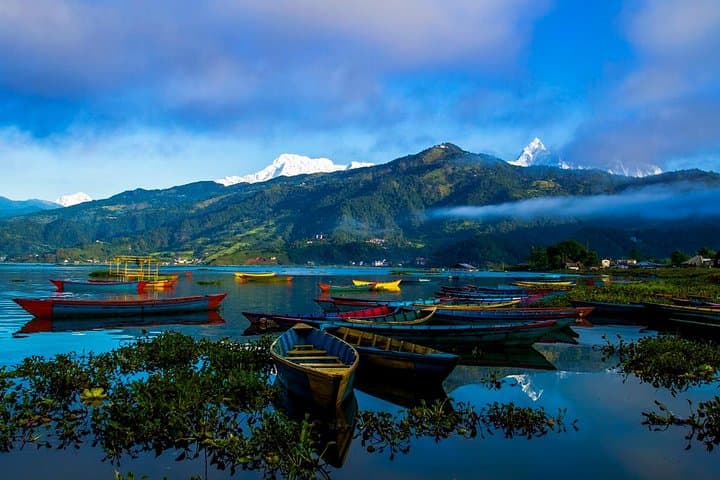
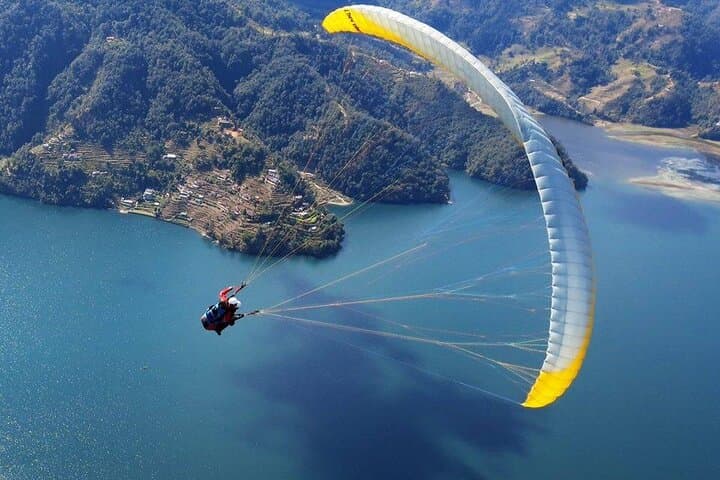
Highlights include Swayambhunath and Pashupatinath’s temple precincts in Kathmandu, the stupa at Boudhanath, lakeside life and Barahi Temple on Phewa Lake, and Sarangkot for sunrise and optional paragliding. Devi’s Falls and Gupteshor Cave reveal the area’s karst action and subterranean water routes.
Practical guidance: accommodations and daily breakfasts are included; expect 6–7 hours of scenic road travel each way (roughly 200 km) unless you opt for the regional flight. Pack light layers — mornings on Sarangkot can be brisk (1,600 m) while Pokhara stays mild. Carry Nepalese rupees for local vendors, modest clothing for temple visits, and a small daypack for short walks and boat rides. Allow extra time for visa processing at Tribhuvan Airport and for traffic delays on the Kathmandu–Pokhara highway.
moderate.
7 days.
Suitable for travelers who can walk short distances (≈1 km) and tolerate several hours on a coach; minimal sustained fitness required.
No—paragliding in Sarangkot is optional and available at additional cost through local operators; bookings are typically made on-site.
The itinerary includes deluxe tourist coach transfers (approx 6–7 hours); passengers may opt to pay for a regional flight instead to save time.
Breakfast is included for all six mornings and a welcome dinner is provided; other meals are at travelers’ expense unless specified otherwise.
Yes—many nationalities can obtain a 15- or 30-day tourist visa at Tribhuvan International Airport; bring cash (about $25–$40 USD) and two passport photos.
Kathmandu Valley contains multiple UNESCO heritage sites and a living urban culture shaped by centuries of Newar craftsmanship and Hindu–Buddhist traditions.
Tourism pressure and solid-waste management are growing concerns in both cities; use refillable water bottles, avoid single-use plastics, and follow local guidance to minimize impact.
Himalayan Social Journey operates guided outdoor trips and adventures with an emphasis on safety, stewardship, and memorable experiences.
The motorcoach winds out of Kathmandu before dawn, the city’s temple spires silhouetted against the first light. Passengers trade the brick-clad bustle for terraced hills and the wide mirror of Phewa Lake; by evening, Sarangkot’s ridge frames a sunset that throws Annapurna’s teeth into relief.
The motorcoach winds out of Kathmandu before dawn, the city’s temple spires silhouetted against the first light. Passengers trade the brick-clad bustle for terraced hills and the wide mirror of Phewa Lake; by evening, Sarangkot’s ridge frames a sunset that throws Annapurna’s teeth into relief.
The route crosses the Kathmandu Valley — a cultural and political heartland shaped by Newar artisans over centuries — then drops into the Pokhara basin at roughly 800 m elevation. Geologically, travelers move from the valley’s river-cut alluvium into the foothills of the Himalaya; views of Machhapuchhare (Fishtail) and the Annapurna massif are clearest in fall and winter.
Highlights include Swayambhunath and Pashupatinath’s temple precincts in Kathmandu, the stupa at Boudhanath, lakeside life and Barahi Temple on Phewa Lake, and Sarangkot for sunrise and optional paragliding. Devi’s Falls and Gupteshor Cave reveal the area’s karst action and subterranean water routes.
Practical guidance: accommodations and daily breakfasts are included; expect 6–7 hours of scenic road travel each way (roughly 200 km) unless you opt for the regional flight. Pack light layers — mornings on Sarangkot can be brisk (1,600 m) while Pokhara stays mild. Carry Nepalese rupees for local vendors, modest clothing for temple visits, and a small daypack for short walks and boat rides. Allow extra time for visa processing at Tribhuvan Airport and for traffic delays on the Kathmandu–Pokhara highway.