THE ADVENTURE COLLECTIVE® · Independent discovery and booking for outdoor travel

A seven-day loop through Karnataka’s most significant heritage sites, this tour connects the rock-cut caves of Badami and temple clusters of Aihole and Pattadakal with the vast, boulder-strewn ruins of Hampi and modern Bangalore. Expect archaeological depth, long drives and active walking over ancient stone.
A seven-day loop through Karnataka’s most significant heritage sites, this tour connects the rock-cut caves of Badami and temple clusters of Aihole and Pattadakal with the vast, boulder-strewn ruins of Hampi and modern Bangalore. Expect archaeological depth, long drives and active walking over ancient stone.
You step out of the air-conditioned car onto red-soil roads and feel the plateau breathe around you — low hills, sculpted boulders and a river that seems to bend the landscape toward history. The cliffs of Badami rise like an open book of stone, their cave temples carved directly into sandstone; farther east the land breaks into the granite boulder fields of Hampi where ruins sit atop rounded rocks as if set there by an earlier, more deliberate hand.
Verified experiences and guided adventures in the surrounding area.
Operated by Agora Voyages Pvt. Ltd. · Badami, Karnataka
You step out of the air-conditioned car onto red-soil roads and feel the plateau breathe around you — low hills, sculpted boulders and a river that seems to bend the landscape toward history. The cliffs of Badami rise like an open book of stone, their cave temples carved directly into sandstone; farther east the land breaks into the granite boulder fields of Hampi where ruins sit atop rounded rocks as if set there by an earlier, more deliberate hand.
This circuit walks through two eras of south Indian empire-building: the early Chalukyas who shaped Aihole and Pattadakal with temple plans that experiment with form, and the Vijayanagara kings whose urban ruins at Hampi offer monumental gateways, royal pavilions and the famous stone chariot. Geologically, you’ll pass sandstone escarpments near Badami and the massive Peninsular gneiss granite that makes Hampi’s landscape both dramatic and fragile.
Expect steady driving between sites (Hubli–Badami ≈110 km, Badami–Hampi ≈140 km, Hampi–Bangalore ≈350 km) with daily walks over uneven stone, short stair climbs and temple courtyards. Heat and sun dominate; mornings and late afternoons are best for photography and walking. Dress modestly for temples, carry at least 2–3 liters of water, wear grippy shoes, and budget time for local guides at major monuments — their context turns carved panels into stories. The route mixes archeology, village life and riverside calm: bring patience for slow-market discoveries and room in your schedule for a sunset on Hemakuta Hill that frames the ruins against the sky.
easy.
7 days.
Light‑to‑moderate: able to walk 1–3 miles per day over uneven surfaces and climb short stairways
The itinerary lists monument entrances and local English-speaking guides on sightseeing days as included; confirm specifics at booking.
Yes — the program is rated physically easy; however expect uneven surfaces and some stair climbs that may be challenging for limited mobility.
October–February (post-monsoon, cooler temperatures) offers the most comfortable conditions; avoid peak summer heat and heavy monsoon rains.
No special permits required beyond ticketed entrances; modest dress (covered shoulders and knees) is expected at many temples.
The Chalukya dynasty (6th–8th centuries) pioneered temple forms at Aihole and Pattadakal; Hampi later flourished as the capital of the Vijayanagara Empire (14th–16th centuries).
Sites are vulnerable to erosion and visitor wear — stick to marked paths, avoid climbing fragile monuments and minimize single-use plastics to reduce impact.
Agora Voyages Pvt. Ltd. operates guided outdoor trips and adventures with an emphasis on safety, stewardship, and memorable experiences.
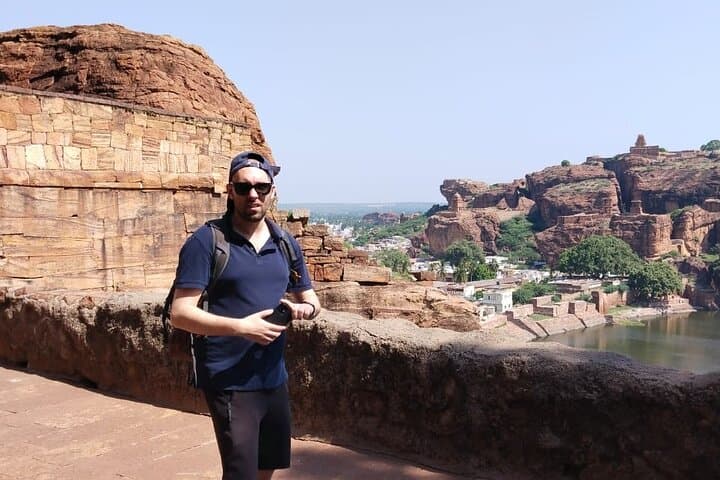
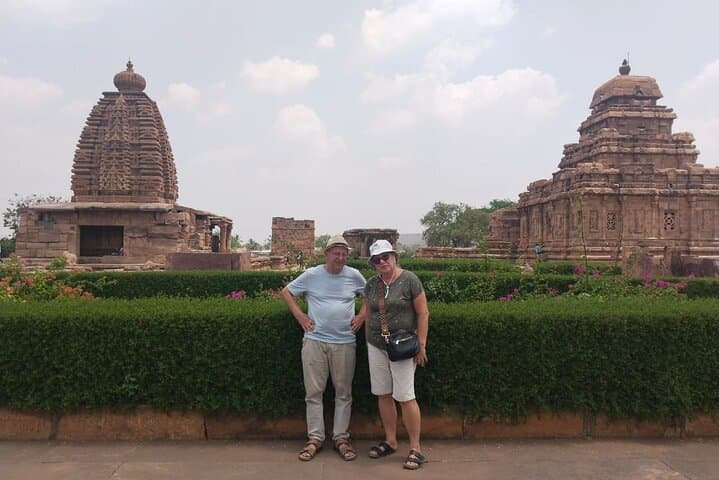
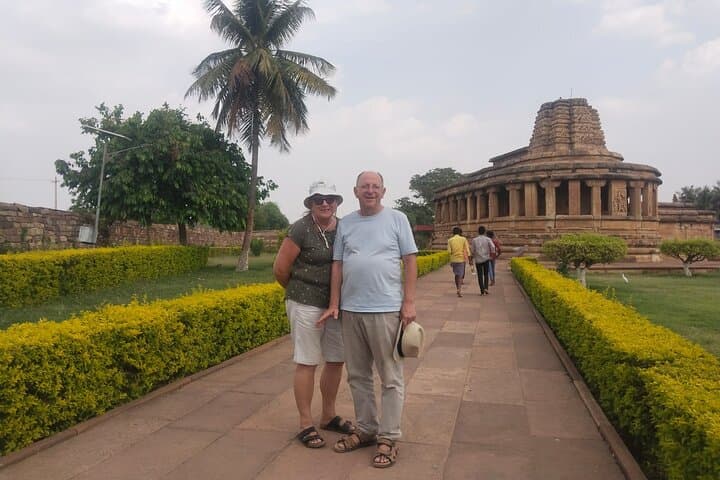
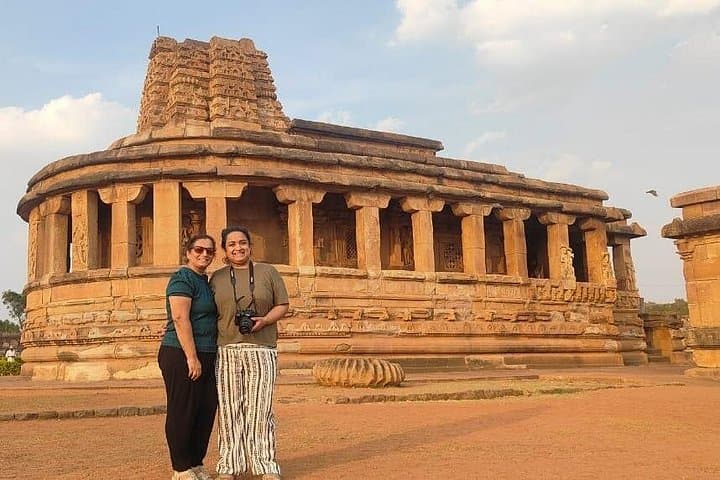
You step out of the air-conditioned car onto red-soil roads and feel the plateau breathe around you — low hills, sculpted boulders and a river that seems to bend the landscape toward history. The cliffs of Badami rise like an open book of stone, their cave temples carved directly into sandstone; farther east the land breaks into the granite boulder fields of Hampi where ruins sit atop rounded rocks as if set there by an earlier, more deliberate hand.
You step out of the air-conditioned car onto red-soil roads and feel the plateau breathe around you — low hills, sculpted boulders and a river that seems to bend the landscape toward history. The cliffs of Badami rise like an open book of stone, their cave temples carved directly into sandstone; farther east the land breaks into the granite boulder fields of Hampi where ruins sit atop rounded rocks as if set there by an earlier, more deliberate hand.
This circuit walks through two eras of south Indian empire-building: the early Chalukyas who shaped Aihole and Pattadakal with temple plans that experiment with form, and the Vijayanagara kings whose urban ruins at Hampi offer monumental gateways, royal pavilions and the famous stone chariot. Geologically, you’ll pass sandstone escarpments near Badami and the massive Peninsular gneiss granite that makes Hampi’s landscape both dramatic and fragile.
Expect steady driving between sites (Hubli–Badami ≈110 km, Badami–Hampi ≈140 km, Hampi–Bangalore ≈350 km) with daily walks over uneven stone, short stair climbs and temple courtyards. Heat and sun dominate; mornings and late afternoons are best for photography and walking. Dress modestly for temples, carry at least 2–3 liters of water, wear grippy shoes, and budget time for local guides at major monuments — their context turns carved panels into stories. The route mixes archeology, village life and riverside calm: bring patience for slow-market discoveries and room in your schedule for a sunset on Hemakuta Hill that frames the ruins against the sky.