THE ADVENTURE COLLECTIVE® · Independent discovery and booking for outdoor travel

A seven-day private circuit from Amman that pairs Jordan’s archaeological and desert highlights—Jerash, Madaba, Dead Sea, Petra, Wadi Rum—with a focused visit to Jerusalem’s Old City. Expect comfortable drives, guided stops, and time to float, walk and photograph.
A seven-day private circuit from Amman that pairs Jordan’s archaeological and desert highlights—Jerash, Madaba, Dead Sea, Petra, Wadi Rum—with a focused visit to Jerusalem’s Old City. Expect comfortable drives, guided stops, and time to float, walk and photograph.
You step out of Queen Alia International Airport into an air that already tastes of spice and sun; a driver holds a sign with your name and a cool bottle of water. In the days that follow that simple welcome you move between eras as if turning pages: Roman colonnades in Jerash, Byzantine mosaics in Madaba, the impossible buoyancy of the Dead Sea, the rose-red throat of Petra, the lithic silence of Wadi Rum, and then the layered sanctity of Jerusalem’s Old City. Each place pulls a different kind of attention — geology and empire, faith and desert light — and the route stitches them together in a week that feels both compact and complete.
Verified experiences and guided adventures in the surrounding area.
Operated by Tour Experts · Amman, Amman Governorate
You step out of Queen Alia International Airport into an air that already tastes of spice and sun; a driver holds a sign with your name and a cool bottle of water. In the days that follow that simple welcome you move between eras as if turning pages: Roman colonnades in Jerash, Byzantine mosaics in Madaba, the impossible buoyancy of the Dead Sea, the rose-red throat of Petra, the lithic silence of Wadi Rum, and then the layered sanctity of Jerusalem’s Old City. Each place pulls a different kind of attention — geology and empire, faith and desert light — and the route stitches them together in a week that feels both compact and complete.
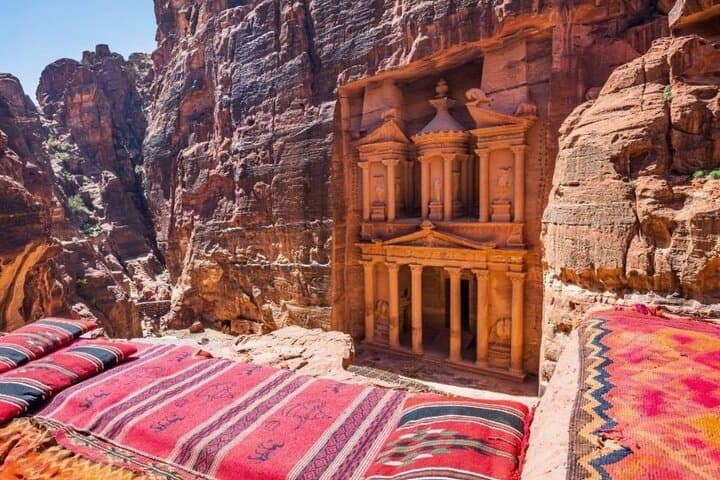
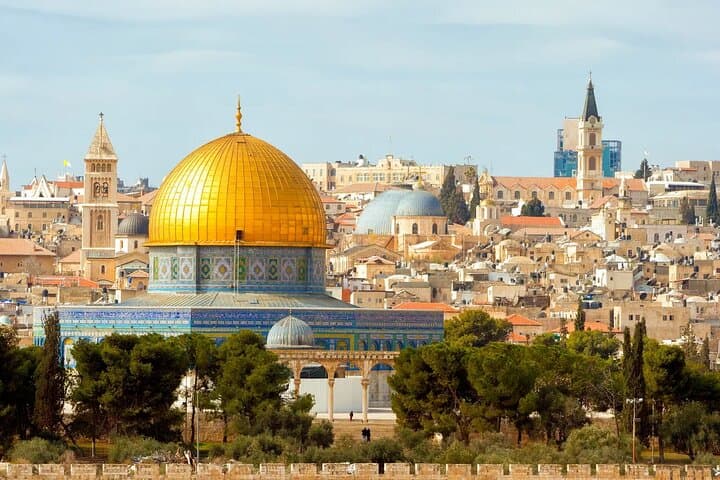
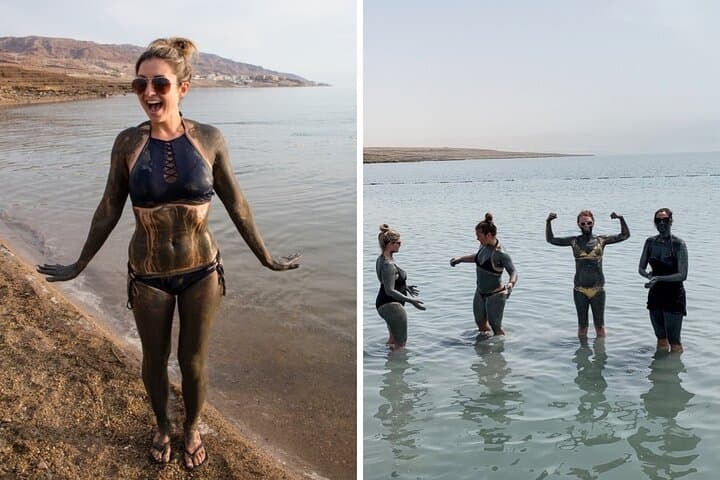
Jordan is a landscape of hard stone and human hand. Petra’s facades are Nabatean carvings in sandstone whose striations catch the sun, while Wadi Rum’s valleys are a playground of granite and sandstone towers polished by millennia of wind. The Dead Sea sits at about 430 meters below sea level, its density daring you to float. Jerash preserves a Greco-Roman grid of streets and arches cut into limestone; Madaba preserves Byzantine mosaics that map an era of pilgrimage. Jerusalem, less than two hours from the Jordanian border, is a city of layered histories—Roman streets under Byzantine churches and medieval walls laid over Ottoman fortifications—where religious rites and tourist footfalls intersect.
There’s practical geography behind the romance. Expect 3–4 hour drives on some stretches (Amman to Petra is roughly 3 to 4 hours; Petra to Wadi Rum about 1.5 hours) and long but comfortable days with an English-speaking driver and private, air-conditioned vehicle. The tour includes breakfast most days and some admissions; the Dead Sea stop gives you hotel time to float and salt-scrub. Border crossings at the King Hussein/Allenby Bridge require passports and patience—carry visas and allow extra time for immigration procedures.
Plan to dress respectfully for Jerusalem’s holy sites (shoulders and knees covered) and in layers for desert mornings that can be cool and afternoons that warm quickly. Bring sturdy shoes for Petra’s uneven steps and Wadi Rum’s sand-graded tracks; sun protection and a refillable water bottle are non-negotiable. If you want photography, aim for Petra at sunrise or Wadi Rum at sunset to catch the rock turning to molten color.
This private itinerary is efficient without being rushed: it gives room for quiet moments—floating at the Dead Sea, watching bedouin tea steam in a Wadi Rum camp, or lingering on the Mount of Olives as the city of Jerusalem stretches below. For travelers who want a concentrated, guided sweep through Jordan’s geology, archaeology, and hospitality, with a historic dip into Jerusalem, this seven-day loop delivers vivid contrasts and practical comforts in equal measure.
moderate.
7 days.
Moderate fitness—able to handle several hours of walking on uneven terrain and multi-hour transfers.
Visa requirements depend on your nationality and the crossing point; the tour crosses via King Hussein/Allenby Bridge—bring your passport and check visa rules with your consulate well before travel.
Some attractions are marked as admission included in the itinerary; confirm your package level and which site fees are covered at booking.
Yes—because of the high salinity you float rather than swim; avoid ingesting water and use caution moving on slippery shores.
Expect a mix: short transfers (30–90 minutes) and longer drives up to 3–4 hours, such as Amman to Petra; comfortable, air-conditioned transport is provided.
The operator lists wheelchair-accessible transport and surfaces in some areas, but ancient sites like Petra and parts of Jerusalem have uneven ground—check specifics if mobility is limited.
In Jordan use Jordanian dinar (JOD); in Jerusalem (Israel/Palestine) Israeli new shekel (ILS) is convenient—carry some local cash for tips, small purchases, and local vendors.
The route crosses millennia—from Nabatean Petra and Greco-Roman Jerash to Byzantine Madaba and the ancient precincts of Jerusalem—each stop layered with archaeological and religious significance.
The Dead Sea is receding and desert ecosystems are fragile; use water sparingly, stick to marked paths in Petra and Wadi Rum, and support licensed local guides and camps.
Tour Experts operates guided outdoor trips and adventures with an emphasis on safety, stewardship, and memorable experiences.

You step out of Queen Alia International Airport into an air that already tastes of spice and sun; a driver holds a sign with your name and a cool bottle of water. In the days that follow that simple welcome you move between eras as if turning pages: Roman colonnades in Jerash, Byzantine mosaics in Madaba, the impossible buoyancy of the Dead Sea, the rose-red throat of Petra, the lithic silence of Wadi Rum, and then the layered sanctity of Jerusalem’s Old City. Each place pulls a different kind of attention — geology and empire, faith and desert light — and the route stitches them together in a week that feels both compact and complete.
You step out of Queen Alia International Airport into an air that already tastes of spice and sun; a driver holds a sign with your name and a cool bottle of water. In the days that follow that simple welcome you move between eras as if turning pages: Roman colonnades in Jerash, Byzantine mosaics in Madaba, the impossible buoyancy of the Dead Sea, the rose-red throat of Petra, the lithic silence of Wadi Rum, and then the layered sanctity of Jerusalem’s Old City. Each place pulls a different kind of attention — geology and empire, faith and desert light — and the route stitches them together in a week that feels both compact and complete.
Jordan is a landscape of hard stone and human hand. Petra’s facades are Nabatean carvings in sandstone whose striations catch the sun, while Wadi Rum’s valleys are a playground of granite and sandstone towers polished by millennia of wind. The Dead Sea sits at about 430 meters below sea level, its density daring you to float. Jerash preserves a Greco-Roman grid of streets and arches cut into limestone; Madaba preserves Byzantine mosaics that map an era of pilgrimage. Jerusalem, less than two hours from the Jordanian border, is a city of layered histories—Roman streets under Byzantine churches and medieval walls laid over Ottoman fortifications—where religious rites and tourist footfalls intersect.
There’s practical geography behind the romance. Expect 3–4 hour drives on some stretches (Amman to Petra is roughly 3 to 4 hours; Petra to Wadi Rum about 1.5 hours) and long but comfortable days with an English-speaking driver and private, air-conditioned vehicle. The tour includes breakfast most days and some admissions; the Dead Sea stop gives you hotel time to float and salt-scrub. Border crossings at the King Hussein/Allenby Bridge require passports and patience—carry visas and allow extra time for immigration procedures.
Plan to dress respectfully for Jerusalem’s holy sites (shoulders and knees covered) and in layers for desert mornings that can be cool and afternoons that warm quickly. Bring sturdy shoes for Petra’s uneven steps and Wadi Rum’s sand-graded tracks; sun protection and a refillable water bottle are non-negotiable. If you want photography, aim for Petra at sunrise or Wadi Rum at sunset to catch the rock turning to molten color.
This private itinerary is efficient without being rushed: it gives room for quiet moments—floating at the Dead Sea, watching bedouin tea steam in a Wadi Rum camp, or lingering on the Mount of Olives as the city of Jerusalem stretches below. For travelers who want a concentrated, guided sweep through Jordan’s geology, archaeology, and hospitality, with a historic dip into Jerusalem, this seven-day loop delivers vivid contrasts and practical comforts in equal measure.