THE ADVENTURE COLLECTIVE® · Independent discovery and booking for outdoor travel

Compress a classic Everest circuit into seven days: Lukla flights, Namche’s cultural pulse, Tengboche’s monastery, a walk to Everest Base Camp, and a helicopter return to Kathmandu. Expect high-altitude terrain, basic teahouse nights, and spectacular glacier views.
Compress a classic Everest circuit into seven days: Lukla flights, Namche’s cultural pulse, Tengboche’s monastery, a walk to Everest Base Camp, and a helicopter return to Kathmandu. Expect high-altitude terrain, basic teahouse nights, and spectacular glacier views.
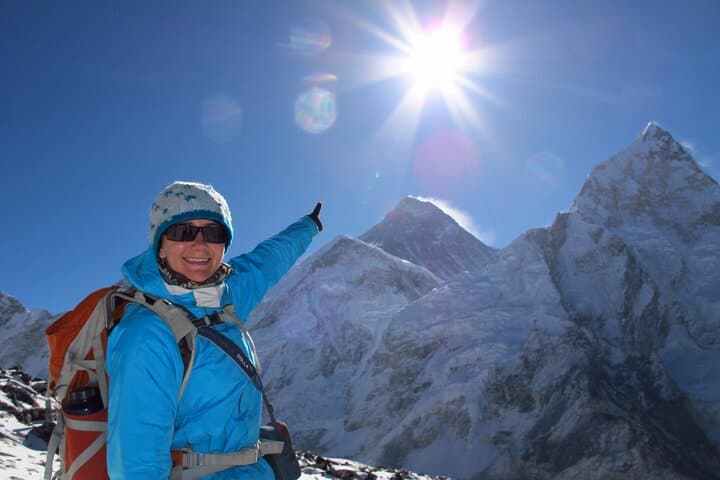
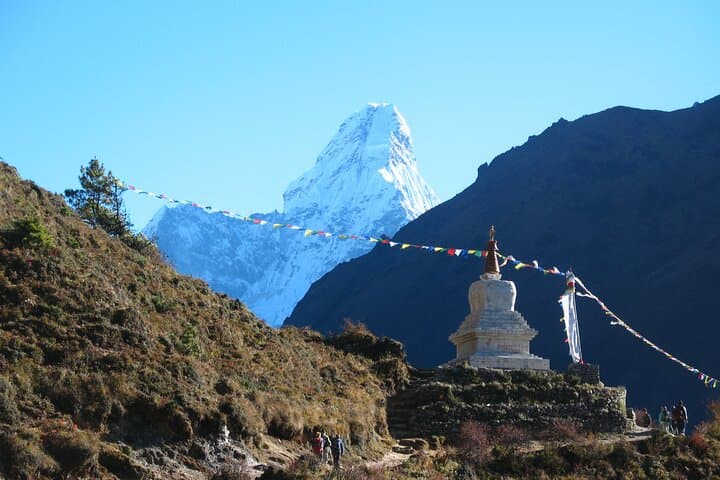
The wind on Kala Patthar cuts with a purpose: thin, cold air that clarifies the world until every serrated ridge reads like a topographic line on paper. You leave Kathmandu at dawn, squeeze into a short mountain flight to Lukla, and step immediately into a landscape that moves from rhododendron groves to prayer-flagged ridgelines and finally to the iron-grey moraine fields below Everest.
Verified experiences and guided adventures in the surrounding area.
Operated by Himalayan Mentor · Gorakshep, Province No. 1
The wind on Kala Patthar cuts with a purpose: thin, cold air that clarifies the world until every serrated ridge reads like a topographic line on paper. You leave Kathmandu at dawn, squeeze into a short mountain flight to Lukla, and step immediately into a landscape that moves from rhododendron groves to prayer-flagged ridgelines and finally to the iron-grey moraine fields below Everest.
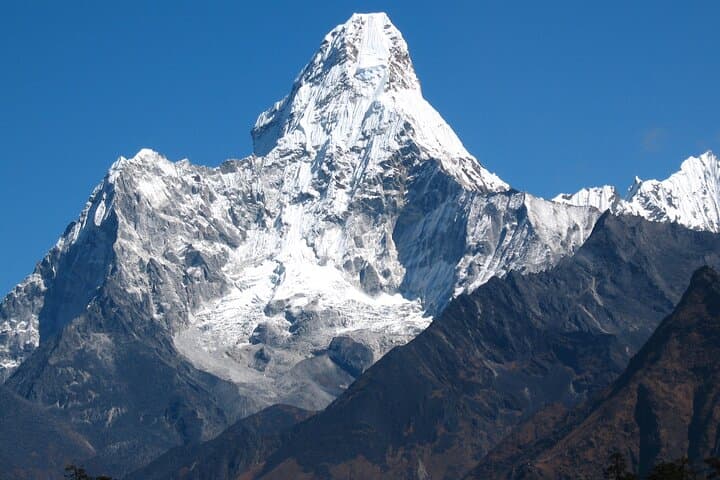
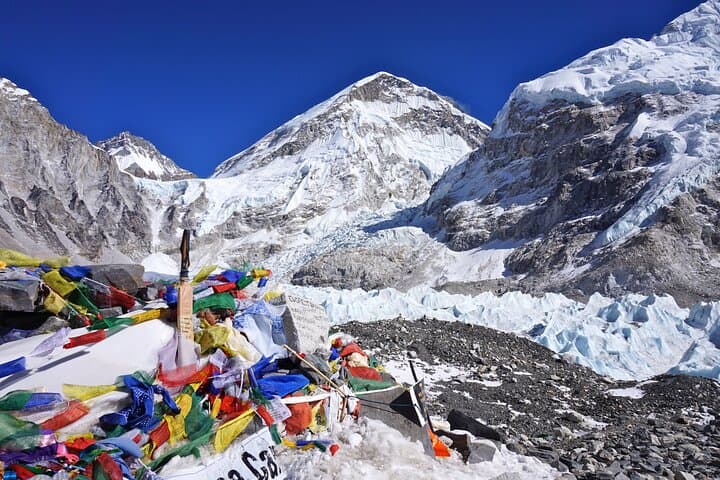
This seven-day itinerary tracks classic Sherpa country and mountaineering history — Namche Bazaar’s trade routes, Tengboche’s monastery perched above the valley, and the glacier-strewn approach to Gorakshep and Everest Base Camp (5,364 m). Geologically you cross young Himalayan uplift: steep valley walls, active glacial moraine, and the Imja Khola gorge that thunders beneath suspension bridges.
Expect daily hiking of 3–6 hours with steady altitude gain: Phakding (~2,600 m) to Namche (3,500 m) to Tengboche (3,870 m) and onward to Lobuche, Gorakshep and Kala Patthar (5,545 m) for sunrise views. Tea houses provide basic lodgings and meals; permits and Sagarmatha National Park fees are required. The heli return from Gorakshep to Kathmandu shortens descent risk but is weather-dependent — visibility and rotor winds dictate flights.
Practical edge: hydrate early, pace for acclimatization on ascents, and carry layered insulation for sub-zero mornings. Sturdy boots and poles make moraine and scree manageable; bring cash for lodge meals and tips. This route compresses classic Everest-country highlights into a week, trading a traditional two-way walk for a helicopter-assisted descent — it’s intense, alpine, and utterly direct.
challenging.
7 days.
Good cardiovascular fitness with prior multi-day trekking experience; able to hike 4–6 hours daily on uneven terrain and tolerate high altitude.
Yes — Sagarmatha National Park entry and TIMS/trekking permits are required for this route; organizers usually handle paperwork before departure.
Lukla flights are short but weather-dependent; mornings are best but cancellations are common during poor visibility or high winds.
Helicopter flights from Gorakshep are subject to weather and operational limits; operators will schedule a shared flight but delays can occur for safety reasons.
Nightly lodgings are tea-house style: basic beds, shared bathrooms, and simple cooked meals; hot showers and charging can cost extra.
The route crosses Sherpa settlements and the approaches used by Himalayan expeditions since the 1950s; Namche developed as the region’s trading and acclimatization hub.
This trek runs through Sagarmatha National Park, which requires permits and emphasizes waste management; choose operators who follow 'pack-in, pack-out' practices and support local lodges.
Himalayan Mentor operates guided outdoor trips and adventures with an emphasis on safety, stewardship, and memorable experiences.
The wind on Kala Patthar cuts with a purpose: thin, cold air that clarifies the world until every serrated ridge reads like a topographic line on paper. You leave Kathmandu at dawn, squeeze into a short mountain flight to Lukla, and step immediately into a landscape that moves from rhododendron groves to prayer-flagged ridgelines and finally to the iron-grey moraine fields below Everest.
The wind on Kala Patthar cuts with a purpose: thin, cold air that clarifies the world until every serrated ridge reads like a topographic line on paper. You leave Kathmandu at dawn, squeeze into a short mountain flight to Lukla, and step immediately into a landscape that moves from rhododendron groves to prayer-flagged ridgelines and finally to the iron-grey moraine fields below Everest.
This seven-day itinerary tracks classic Sherpa country and mountaineering history — Namche Bazaar’s trade routes, Tengboche’s monastery perched above the valley, and the glacier-strewn approach to Gorakshep and Everest Base Camp (5,364 m). Geologically you cross young Himalayan uplift: steep valley walls, active glacial moraine, and the Imja Khola gorge that thunders beneath suspension bridges.
Expect daily hiking of 3–6 hours with steady altitude gain: Phakding (~2,600 m) to Namche (3,500 m) to Tengboche (3,870 m) and onward to Lobuche, Gorakshep and Kala Patthar (5,545 m) for sunrise views. Tea houses provide basic lodgings and meals; permits and Sagarmatha National Park fees are required. The heli return from Gorakshep to Kathmandu shortens descent risk but is weather-dependent — visibility and rotor winds dictate flights.
Practical edge: hydrate early, pace for acclimatization on ascents, and carry layered insulation for sub-zero mornings. Sturdy boots and poles make moraine and scree manageable; bring cash for lodge meals and tips. This route compresses classic Everest-country highlights into a week, trading a traditional two-way walk for a helicopter-assisted descent — it’s intense, alpine, and utterly direct.