THE ADVENTURE COLLECTIVE® · Independent discovery and booking for outdoor travel

Move from Lukla to Everest Base Camp in seven intense days, finishing with a helicopter return to Lukla. This fast-track trek packs classic Khumbu highlights—Namche, Tengboche, glaciers and Kala Patthar—into a high-altitude, acclimatization-sensitive itinerary.
Move from Lukla to Everest Base Camp in seven intense days, finishing with a helicopter return to Lukla. This fast-track trek packs classic Khumbu highlights—Namche, Tengboche, glaciers and Kala Patthar—into a high-altitude, acclimatization-sensitive itinerary.
A raw Himalayan morning swallows the runway at Lukla and the plane climbs into a world of knife-edged ridges and cloud. On this seven-day itinerary you move quickly: Lukla to Namche, up through rhododendron stands, past prayer wheels and mani stones, and across the scoured moraine toward Gorakshep and Everest Base Camp itself. At dawn on Kala Patthar the sun pulls gold across Nuptse and Everest, and the air feels like a thin, honest thing.
Verified experiences and guided adventures in the surrounding area.
Operated by Welcome Nepal Treks P.ltd · Lukla, Province No. 1
A raw Himalayan morning swallows the runway at Lukla and the plane climbs into a world of knife-edged ridges and cloud. On this seven-day itinerary you move quickly: Lukla to Namche, up through rhododendron stands, past prayer wheels and mani stones, and across the scoured moraine toward Gorakshep and Everest Base Camp itself. At dawn on Kala Patthar the sun pulls gold across Nuptse and Everest, and the air feels like a thin, honest thing.
The Khumbu has long been a corridor of Sherpa culture and Tibetan trade; teahouses and mani walls mark centuries of pilgrims and mountaineers. Geologically, the trek travels the young, rising Himalaya — glacial moraines, jumbled seracs and exposed metamorphic rock that record relentless uplift. Local monasteries, from Tengboche to Pangboche, offer cultural context: Buddhist prayer flags and chants are woven into daily life here.
Practical guidance: this itinerary compresses classic acclimatization days and uses a helicopter exit from Gorakshep to Lukla, so you must monitor altitude closely. Expect narrow, rocky trails, altitudes from ~2,800m (Phakding) to ~5,545m (Kala Patthar), daily walking of 4–8 hours, and basic teahouse lodging. Hydrate, eat regularly, and be ready for sudden weather shifts — wind and sun can be severe. Footwear should be broken-in, layered clothing essential, and a good sleeping liner recommended for teahouses. Permits (Sagarmatha National Park) and an experienced, licensed guide are standard. For short-timers who want Everest’s high-country experience without a two-week commitment, this fast-track route delivers dramatic summits and stark glacial terrain — but respect the altitude and your limits.
challenging.
7 days.
Requires very good cardiovascular fitness and prior multi-day trekking experience; ability to walk 4–8 hours on uneven terrain at altitude.
Yes — Sagarmatha National Park permit and TIMS are required; your operator usually arranges these.
You should be in very good aerobic shape, used to multi-day hikes; altitude makes even short distances demanding.
Helicopter flights depend on weather and aircraft availability; operators typically plan backups but expect possible delays.
Teahouse lodges offer basic twin rooms, shared bathrooms at lower altitudes, and slightly simpler facilities above 4,000m.
The Khumbu region was a traditional Sherpa trade route to Tibet; modern trekking grew after the 1953 Everest ascent and development of Lukla airstrip.
Sagarmatha National Park manages permits and waste rules; minimize impact by carrying out non-biodegradable trash and using established teahouses.
Welcome Nepal Treks P.ltd operates guided outdoor trips and adventures with an emphasis on safety, stewardship, and memorable experiences.


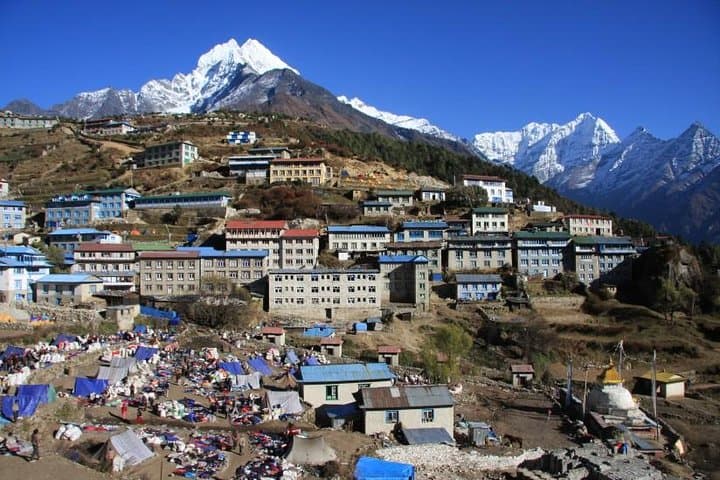

A raw Himalayan morning swallows the runway at Lukla and the plane climbs into a world of knife-edged ridges and cloud. On this seven-day itinerary you move quickly: Lukla to Namche, up through rhododendron stands, past prayer wheels and mani stones, and across the scoured moraine toward Gorakshep and Everest Base Camp itself. At dawn on Kala Patthar the sun pulls gold across Nuptse and Everest, and the air feels like a thin, honest thing.
A raw Himalayan morning swallows the runway at Lukla and the plane climbs into a world of knife-edged ridges and cloud. On this seven-day itinerary you move quickly: Lukla to Namche, up through rhododendron stands, past prayer wheels and mani stones, and across the scoured moraine toward Gorakshep and Everest Base Camp itself. At dawn on Kala Patthar the sun pulls gold across Nuptse and Everest, and the air feels like a thin, honest thing.
The Khumbu has long been a corridor of Sherpa culture and Tibetan trade; teahouses and mani walls mark centuries of pilgrims and mountaineers. Geologically, the trek travels the young, rising Himalaya — glacial moraines, jumbled seracs and exposed metamorphic rock that record relentless uplift. Local monasteries, from Tengboche to Pangboche, offer cultural context: Buddhist prayer flags and chants are woven into daily life here.
Practical guidance: this itinerary compresses classic acclimatization days and uses a helicopter exit from Gorakshep to Lukla, so you must monitor altitude closely. Expect narrow, rocky trails, altitudes from ~2,800m (Phakding) to ~5,545m (Kala Patthar), daily walking of 4–8 hours, and basic teahouse lodging. Hydrate, eat regularly, and be ready for sudden weather shifts — wind and sun can be severe. Footwear should be broken-in, layered clothing essential, and a good sleeping liner recommended for teahouses. Permits (Sagarmatha National Park) and an experienced, licensed guide are standard. For short-timers who want Everest’s high-country experience without a two-week commitment, this fast-track route delivers dramatic summits and stark glacial terrain — but respect the altitude and your limits.