THE ADVENTURE COLLECTIVE® · Independent discovery and booking for outdoor travel

Cross the Danakil Depression to stand at the rim of a molten lava lake, wander Dallol’s acid-colored salt formations, and climb to cliffside Tigray churches on a compact 7-day circuit. This itinerary blends raw geology, desert culture and ancient archaeology with practical overland travel.
Cross the Danakil Depression to stand at the rim of a molten lava lake, wander Dallol’s acid-colored salt formations, and climb to cliffside Tigray churches on a compact 7-day circuit. This itinerary blends raw geology, desert culture and ancient archaeology with practical overland travel.
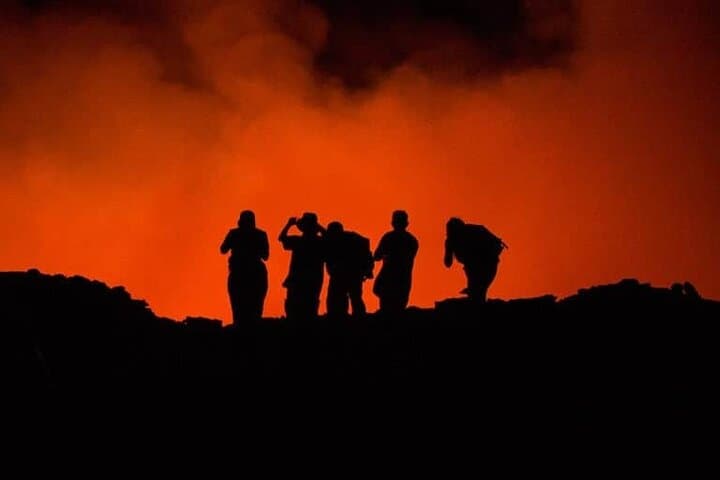
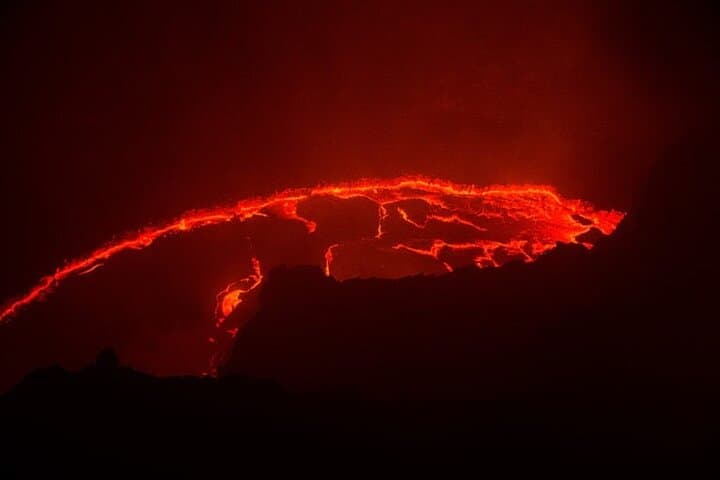
The tour starts before sunrise in Semera and ends under the high, dry sky of Axum—an arc across Ethiopia’s most uncompromising landscapes. You’ll cross salt flats that flare green and yellow, stand on a ridge while a lava lake churns beneath your feet, and rope up to reach cliff-top chapels whose frescoed interiors have survived for centuries.
Verified experiences and guided adventures in the surrounding area.
Operated by Omo Valley Experience Tours · Semera, Afar Region
The tour starts before sunrise in Semera and ends under the high, dry sky of Axum—an arc across Ethiopia’s most uncompromising landscapes. You’ll cross salt flats that flare green and yellow, stand on a ridge while a lava lake churns beneath your feet, and rope up to reach cliff-top chapels whose frescoed interiors have survived for centuries.
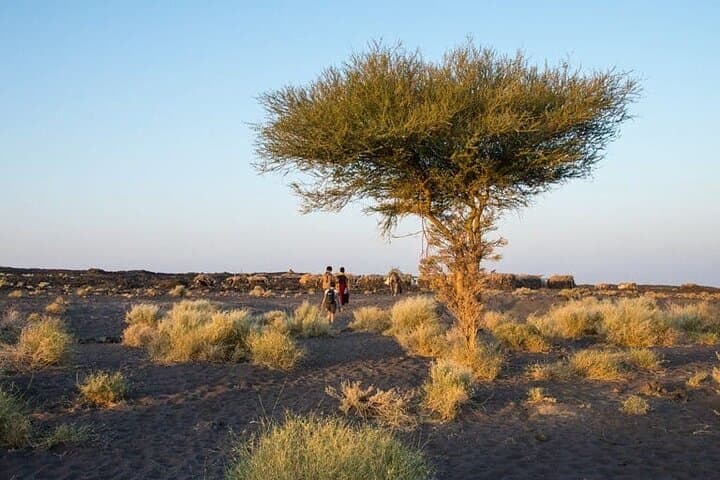
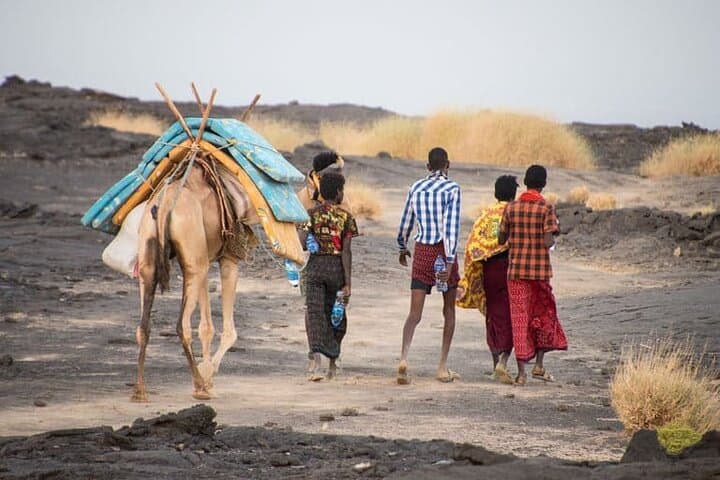
Geology here is theatrical: Erta Ale is an active basaltic shield with a persistent lava lake that glows at night, while nearby Dallol exposes hydrothermal salts and mineral terraces carved by heat and brine. Culturally the route threads Afar salt-worker camps, caravan tracks, and the ancient Aksumite sites—steles, tombs and churches that anchor Ethiopia’s early Christian history.
Expect desert driving—several 3–6 hour transfers over sealed and rough roads—plus short but exposed hikes. The Erta Ale rim hike is typically a 30–60 minute walk (roughly 1–2 km) over loose scoria with ~100–200 m of ascent from the base camp; the Abune Yemata Guh approach requires scrambling and fixed ladder sections, so steady footing and no vertigo help.
Practical guidance: carry 3–4 liters of water per day, sun protection and layered clothing for hot days and surprisingly cold nights, and a reliable headlamp for lava viewing at night. Travel with a local guide, respect Afar communities and fragile salt flats, and plan for variable road conditions and basic accommodation on the route.
challenging.
7 days.
Good aerobic fitness for repeated short hikes, comfort with exposure on steep cliff approaches, and ability to tolerate long vehicle transfers.
The summit approach is short (30–60 minutes) but over loose volcanic scree; expect a steep, unshaded ascent and rocky footing—moderate fitness and sturdy boots are important.
Travel with experienced local guides and drivers; the route is regularly visited by tour groups, but follow local advice, avoid off-road wandering, and carry emergency water.
No special permits beyond standard tourism paperwork are typically required, but check current travel advisories and ensure routine vaccinations are up to date; consult a travel clinic for region-specific recommendations.
Most packages include local guides, ground transport, basic accommodations, some meals and safety equipment for crater approaches—confirm specifics with the operator before booking.
The route ties Afar pastoral culture with Aksumite history—the Aksumites built stelae and Christian centers that made the region a medieval religious hub.
Danakil’s salt flats and hydrothermal areas are fragile; stay on established paths, avoid collecting mineral specimens, and minimize water and waste impact in remote camps.
Omo Valley Experience Tours operates guided outdoor trips and adventures with an emphasis on safety, stewardship, and memorable experiences.
The tour starts before sunrise in Semera and ends under the high, dry sky of Axum—an arc across Ethiopia’s most uncompromising landscapes. You’ll cross salt flats that flare green and yellow, stand on a ridge while a lava lake churns beneath your feet, and rope up to reach cliff-top chapels whose frescoed interiors have survived for centuries.
The tour starts before sunrise in Semera and ends under the high, dry sky of Axum—an arc across Ethiopia’s most uncompromising landscapes. You’ll cross salt flats that flare green and yellow, stand on a ridge while a lava lake churns beneath your feet, and rope up to reach cliff-top chapels whose frescoed interiors have survived for centuries.
Geology here is theatrical: Erta Ale is an active basaltic shield with a persistent lava lake that glows at night, while nearby Dallol exposes hydrothermal salts and mineral terraces carved by heat and brine. Culturally the route threads Afar salt-worker camps, caravan tracks, and the ancient Aksumite sites—steles, tombs and churches that anchor Ethiopia’s early Christian history.
Expect desert driving—several 3–6 hour transfers over sealed and rough roads—plus short but exposed hikes. The Erta Ale rim hike is typically a 30–60 minute walk (roughly 1–2 km) over loose scoria with ~100–200 m of ascent from the base camp; the Abune Yemata Guh approach requires scrambling and fixed ladder sections, so steady footing and no vertigo help.
Practical guidance: carry 3–4 liters of water per day, sun protection and layered clothing for hot days and surprisingly cold nights, and a reliable headlamp for lava viewing at night. Travel with a local guide, respect Afar communities and fragile salt flats, and plan for variable road conditions and basic accommodation on the route.