THE ADVENTURE COLLECTIVE® · Independent discovery and booking for outdoor travel

Traverse the High Atlas into the Drâa valley on this seven-day desert trek from Marrakech. Walk through regs and ergs, camp beneath vast stars, and meet camel herders on routes once used by caravans.
Traverse the High Atlas into the Drâa valley on this seven-day desert trek from Marrakech. Walk through regs and ergs, camp beneath vast stars, and meet camel herders on routes once used by caravans.
The day begins before dawn as a minibus peels away from Marrakech and climbs the Tizi n’Tichka, the High Atlas yawning above you and cold air pushing at the windows.
Verified experiences and guided adventures in the surrounding area.
Operated by Sunny Morocco · Marrakech, Marrakech-Safi
The day begins before dawn as a minibus peels away from Marrakech and climbs the Tizi n’Tichka, the High Atlas yawning above you and cold air pushing at the windows.
By late afternoon you smell tamarisk and riverine dust—the first hints of the Drâa valley—and the landscape loosens into bands of regs and wind-scoured dunes. This seven-day trek moves steadily from mountain passes into the classic Saharan edge, following old caravan tracks to M’Hamid before deeper crossings to Sidi Naji and the great dunes of Erg Zahar.
Historically this route threaded seasonal trade and nomad lives: ksours and mud-brick kasbahs mark the valley where date palms and river channels sustained settlements for centuries. Geologically the trip shifts from folded sandstone and volcanic highs of the Atlas to aeolian fields—ergs of fine sand and regs of compacted gravel—each demanding different footwork.
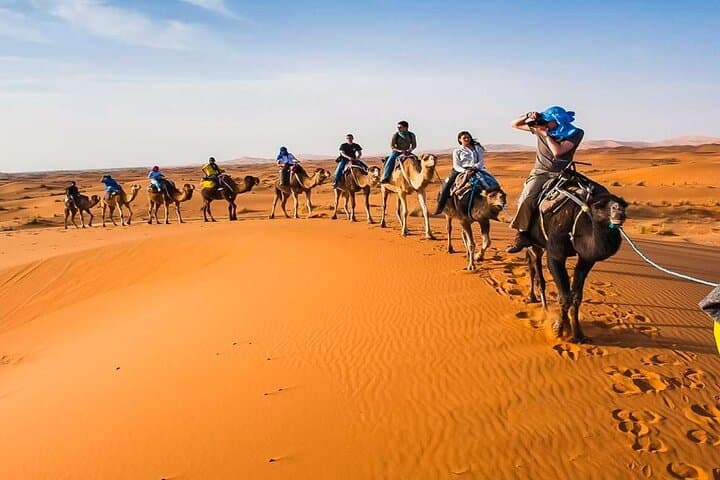
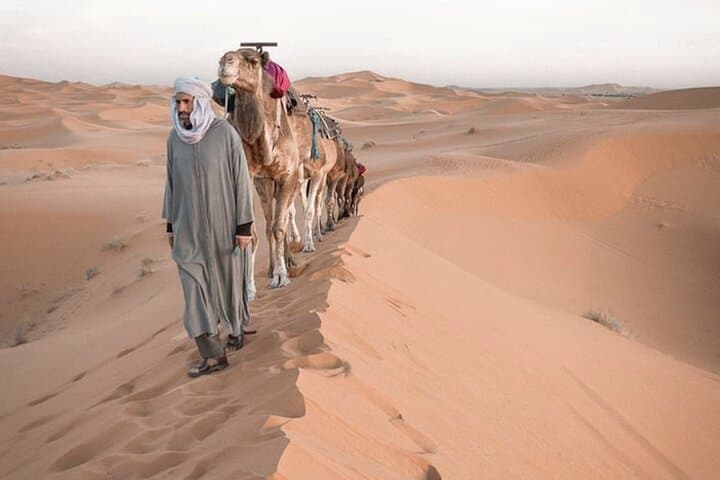
Culturally you’ll meet camel herders and bivouac with guides who read weather and wells by sight and sound. Nights under the desert sky are cold and clear; days can be brutally hot when the sun climbs.
Practical notes: expect 4–7 hours of walking on most days, much of it in soft sand; carry a minimum 3–4 liters of water and use a gaiter to keep sand out of boots. Pack layered clothing for sharp diurnal swings, sun protection, and a headlamp for late-evening camp tasks. Fitness should be steady—this is a moderate trek that rewards preparation and a willingness to walk on shifting ground.
moderate.
7 days (daily 4–7 hours walking).
Suitable for people with good endurance who can hike several hours on uneven or sandy terrain; prior multi-day hiking experience helpful
You should have moderate fitness and be comfortable hiking 4–7 hours a day on soft sand and uneven ground; prior multi-day trekking experience helps.
You’ll sleep in bivouac-style desert camps with shared tents or open-air sleeping depending on the night; meals are typically simple, locally prepared breakfasts, lunches in the field, and hot dinners at camp.
Not recommended for travelers with significant heart, spinal conditions, or pregnancy due to long days, remote terrain, and variable conditions; consult your doctor before booking.
Spring and fall offer the most comfortable daytime temperatures; winter is fine with proper cold-weather gear, while summer can be extremely hot and is more demanding.
This corridor links Marrakech to the old trans-Saharan caravan routes; ksours and mud-brick kasbahs in the Drâa show the valley’s importance as an oasis trade artery.
Travelers are encouraged to minimize campfire impact, pack out waste, and follow guide instructions to protect fragile dune vegetation and scarce desert water sources.
Sunny Morocco operates guided outdoor trips and adventures with an emphasis on safety, stewardship, and memorable experiences.

The day begins before dawn as a minibus peels away from Marrakech and climbs the Tizi n’Tichka, the High Atlas yawning above you and cold air pushing at the windows.
The day begins before dawn as a minibus peels away from Marrakech and climbs the Tizi n’Tichka, the High Atlas yawning above you and cold air pushing at the windows.
By late afternoon you smell tamarisk and riverine dust—the first hints of the Drâa valley—and the landscape loosens into bands of regs and wind-scoured dunes. This seven-day trek moves steadily from mountain passes into the classic Saharan edge, following old caravan tracks to M’Hamid before deeper crossings to Sidi Naji and the great dunes of Erg Zahar.
Historically this route threaded seasonal trade and nomad lives: ksours and mud-brick kasbahs mark the valley where date palms and river channels sustained settlements for centuries. Geologically the trip shifts from folded sandstone and volcanic highs of the Atlas to aeolian fields—ergs of fine sand and regs of compacted gravel—each demanding different footwork.
Culturally you’ll meet camel herders and bivouac with guides who read weather and wells by sight and sound. Nights under the desert sky are cold and clear; days can be brutally hot when the sun climbs.
Practical notes: expect 4–7 hours of walking on most days, much of it in soft sand; carry a minimum 3–4 liters of water and use a gaiter to keep sand out of boots. Pack layered clothing for sharp diurnal swings, sun protection, and a headlamp for late-evening camp tasks. Fitness should be steady—this is a moderate trek that rewards preparation and a willingness to walk on shifting ground.