THE ADVENTURE COLLECTIVE® · Independent discovery and booking for outdoor travel

See Giza’s pyramids, Luxor’s temples, and Cairo’s museums in seven days with 5-star hotels and guided transfers. This compact tour pairs early starts and domestic flights to maximize time at major pharaonic and medieval sites.
See Giza’s pyramids, Luxor’s temples, and Cairo’s museums in seven days with 5-star hotels and guided transfers. This compact tour pairs early starts and domestic flights to maximize time at major pharaonic and medieval sites.
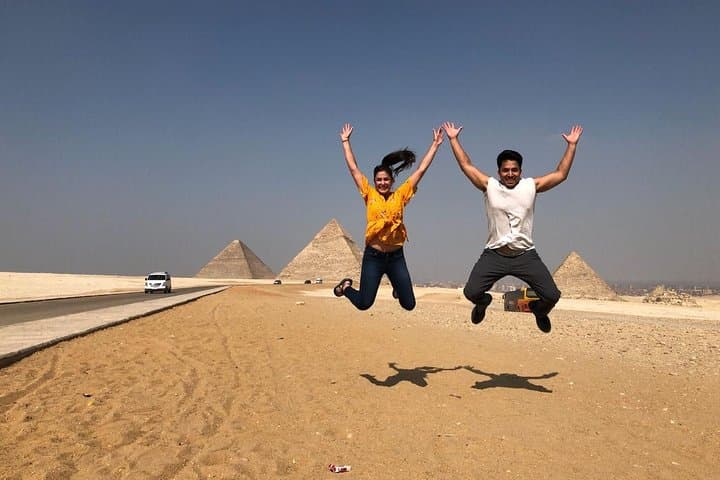
Morning light slices across the Giza plateau; dusted limestone catches the sun as you step from air-conditioned transport into the wind that seems to carry time itself. That first view—Khufu’s massive face, the outline of Sakkara’s stepped stone—sets the rhythm for a week of moving between eras: pharaonic tombs, Greco-Roman artifacts, and the layered streets of medieval Cairo.
Verified experiences and guided adventures in the surrounding area.
Operated by Let`s Explore Egypt · Cairo, Cairo Governorate
Morning light slices across the Giza plateau; dusted limestone catches the sun as you step from air-conditioned transport into the wind that seems to carry time itself. That first view—Khufu’s massive face, the outline of Sakkara’s stepped stone—sets the rhythm for a week of moving between eras: pharaonic tombs, Greco-Roman artifacts, and the layered streets of medieval Cairo.
This itinerary threads two of Egypt’s richest corridors. In Luxor, Karnak’s avenue of sphinxes and the compact, painted chambers of Valley of the Kings chronicle New Kingdom power; on the west bank, Hatshepsut’s terraced temple rises from ochre cliffs. Back in Cairo, the Egyptian Museum houses a dense archive of pharaonic life while the Coptic quarter and Khan el-Khalili reveal later religious and commercial histories.
Geology and human ambition meet here—Nile silt built the valley’s fertility, while the surrounding sandstone and limestone provided the raw material for tombs and temples. Local culture is present in small ways: a vendor’s call, the clink of tea glasses, and midday prayers shaping the city’s cadence.
Practical guidance: expect frequent short walks on uneven stone and city pavements, early starts for flights and site visits, and hot sun—especially June–September. Carry photocopies of travel documents, small bills for tips and entrance upgrades, and a light cover-up for mosque and temple respect. Drink regularly; plan shoes for cobbles and sand; confirm which admissions are included before arrival. With moderate fitness and thoughtful packing, the tour is an efficient way to see Egypt’s headline sites without constant logistics stress.
moderate.
7 days.
Basic to moderate fitness; able to handle repeated short walks, stairs, and up to a few hours on foot each day.
Yes—the itinerary includes a scheduled domestic flight to Luxor and a return to Cairo as part of the multi-day plan; confirm flight times when you receive your final documents.
Some admissions (notably Giza/Sakkara) are listed as included; verify which specific site tickets and optional extras, like tomb entry upgrades, are covered before travel.
Many nationalities require a visa; travelers should check the current e‑Visa or visa-on-arrival rules for Egypt well before departure and carry passport photocopies when touring.
Expect early mornings—flights and site visits can start pre-dawn—and multiple walking sessions of 1–3 hours on uneven stone or pavement each day.
Egypt’s Nile valley supported ancient state formation and monumental pharaonic projects; Cairo later became a medieval Islamic capital layered over Coptic and Roman neighborhoods.
Major sites face wear from visitor traffic, urban pollution, and groundwater; follow path restrictions, avoid touching murals, and use refillable bottles to reduce waste.
Let`s Explore Egypt operates guided outdoor trips and adventures with an emphasis on safety, stewardship, and memorable experiences.
Morning light slices across the Giza plateau; dusted limestone catches the sun as you step from air-conditioned transport into the wind that seems to carry time itself. That first view—Khufu’s massive face, the outline of Sakkara’s stepped stone—sets the rhythm for a week of moving between eras: pharaonic tombs, Greco-Roman artifacts, and the layered streets of medieval Cairo.
Morning light slices across the Giza plateau; dusted limestone catches the sun as you step from air-conditioned transport into the wind that seems to carry time itself. That first view—Khufu’s massive face, the outline of Sakkara’s stepped stone—sets the rhythm for a week of moving between eras: pharaonic tombs, Greco-Roman artifacts, and the layered streets of medieval Cairo.
This itinerary threads two of Egypt’s richest corridors. In Luxor, Karnak’s avenue of sphinxes and the compact, painted chambers of Valley of the Kings chronicle New Kingdom power; on the west bank, Hatshepsut’s terraced temple rises from ochre cliffs. Back in Cairo, the Egyptian Museum houses a dense archive of pharaonic life while the Coptic quarter and Khan el-Khalili reveal later religious and commercial histories.
Geology and human ambition meet here—Nile silt built the valley’s fertility, while the surrounding sandstone and limestone provided the raw material for tombs and temples. Local culture is present in small ways: a vendor’s call, the clink of tea glasses, and midday prayers shaping the city’s cadence.
Practical guidance: expect frequent short walks on uneven stone and city pavements, early starts for flights and site visits, and hot sun—especially June–September. Carry photocopies of travel documents, small bills for tips and entrance upgrades, and a light cover-up for mosque and temple respect. Drink regularly; plan shoes for cobbles and sand; confirm which admissions are included before arrival. With moderate fitness and thoughtful packing, the tour is an efficient way to see Egypt’s headline sites without constant logistics stress.