THE ADVENTURE COLLECTIVE® · Independent discovery and booking for outdoor travel

Spend seven days moving from Cairo’s ancient monuments to Luxor’s royal tombs and the coral gardens of Hurghada. This guided loop blends archaeology, Nile-side cityscapes and a Red Sea snorkeling day with comfortable hotels and domestic flights.
Spend seven days moving from Cairo’s ancient monuments to Luxor’s royal tombs and the coral gardens of Hurghada. This guided loop blends archaeology, Nile-side cityscapes and a Red Sea snorkeling day with comfortable hotels and domestic flights.
You arrive on the Giza Plateau at dawn: the air is still cool and the Pyramid of Khufu throws a long, exact shadow across sand that has borne human hands for millennia. Later the Nile dares you to slow down as feluccas ply gold reflections between the temples of Luxor; by midweek the Red Sea opens like a brilliant, breathing aquarium around Hurghada.
Verified experiences and guided adventures in the surrounding area.
Operated by Luxor Private Day Tours · Cairo, Cairo Governorate
You arrive on the Giza Plateau at dawn: the air is still cool and the Pyramid of Khufu throws a long, exact shadow across sand that has borne human hands for millennia. Later the Nile dares you to slow down as feluccas ply gold reflections between the temples of Luxor; by midweek the Red Sea opens like a brilliant, breathing aquarium around Hurghada.
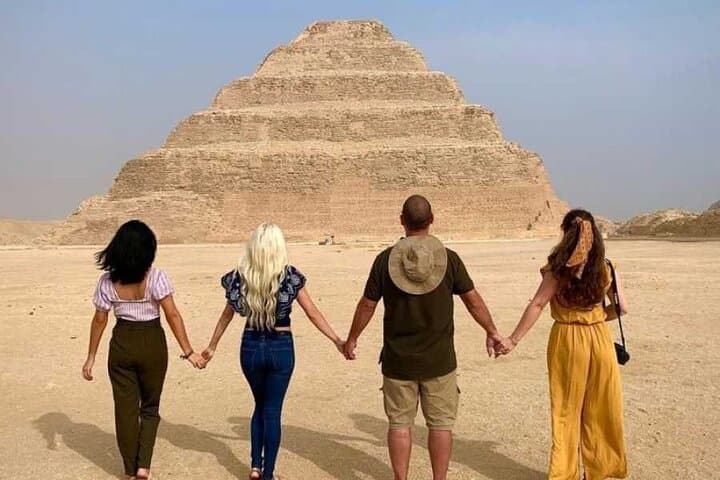
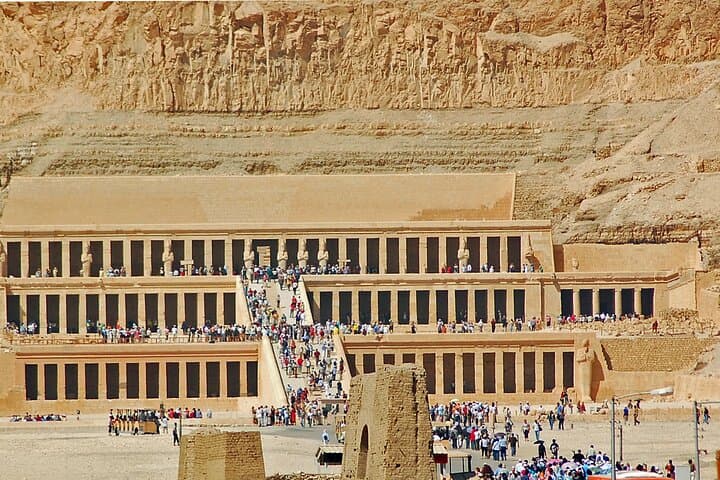
This seven-day loop stitches together three different geographies and histories. Cairo’s urban sprawl grew from the pharaonic limestone ridges and later medieval streets; the Giza Pyramids and Saqqara step pyramid date to the 3rd and 4th dynasties and rest on Eocene limestone. Luxor sits in the Nile’s fertile valley, where pharaonic mortuary complexes—Valley of the Kings, Karnak, Hatshepsut—mark millennia of ritual landscape. On the Red Sea coast, coral reefs formed on a young, tectonically active margin and sustain an astonishing biodiversity.
Expect paced days of walking—1–3 km across sites with stone steps and uneven surfaces—short domestic flights (≈1 hour) and a longer road transfer to Hurghada (about 4–5 hours by car). Cultural notes: dress modestly in urban and religious sites, practice bargaining in Khan El-Khalili, and respect local customs. For the water day, reef-safe sunscreen and basic snorkeling competence make the experience richer.
Practical edge: start early to avoid heat and crowds, carry a reusable water bottle and a compact sunshade, and allow downtime in Hurghada to let your legs recover. This itinerary mixes active exploration with comfortable hotels and guided context—ideal for travelers who want history, landscape and a guarantee of clear, warm water to close the week.
moderate.
7 days.
Basic walking endurance — able to walk several hours over uneven ground and climb temple stairs; comfortable with travel days and short flights.
Most nationalities require a visa for Egypt—check your government’s travel site. Many travelers can obtain a single-entry tourist e-visa online before arrival.
Sites involve walking on uneven stone, steps and low-light tomb interiors; most sections are short walks but require stable footing and basic mobility.
Standard group snorkeling excursions often provide masks, fins and life vests; bringing your own mask ensures better fit and comfort.
Egyptian pounds (EGP) are used for daily purchases; tipping (baksheesh) is customary for guides, drivers and porters—carry small notes for tips.
The itinerary links Old Kingdom engineering at Giza, Theban New Kingdom mortuary complexes in Luxor, and centuries of Red Sea trade that connected Egypt to Arabia and Africa.
Coral reefs in the Red Sea are sensitive—use reef-safe sunscreen, avoid touching coral, and follow local guides to minimize boat and anchor impact.
Luxor Private Day Tours operates guided outdoor trips and adventures with an emphasis on safety, stewardship, and memorable experiences.
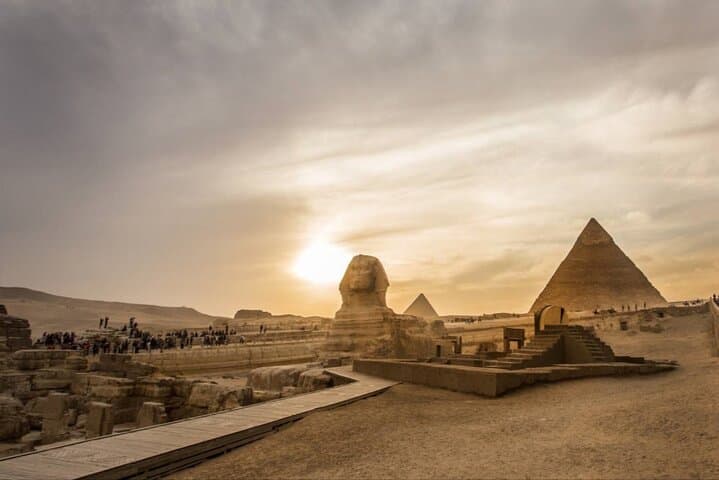
You arrive on the Giza Plateau at dawn: the air is still cool and the Pyramid of Khufu throws a long, exact shadow across sand that has borne human hands for millennia. Later the Nile dares you to slow down as feluccas ply gold reflections between the temples of Luxor; by midweek the Red Sea opens like a brilliant, breathing aquarium around Hurghada.
You arrive on the Giza Plateau at dawn: the air is still cool and the Pyramid of Khufu throws a long, exact shadow across sand that has borne human hands for millennia. Later the Nile dares you to slow down as feluccas ply gold reflections between the temples of Luxor; by midweek the Red Sea opens like a brilliant, breathing aquarium around Hurghada.
This seven-day loop stitches together three different geographies and histories. Cairo’s urban sprawl grew from the pharaonic limestone ridges and later medieval streets; the Giza Pyramids and Saqqara step pyramid date to the 3rd and 4th dynasties and rest on Eocene limestone. Luxor sits in the Nile’s fertile valley, where pharaonic mortuary complexes—Valley of the Kings, Karnak, Hatshepsut—mark millennia of ritual landscape. On the Red Sea coast, coral reefs formed on a young, tectonically active margin and sustain an astonishing biodiversity.
Expect paced days of walking—1–3 km across sites with stone steps and uneven surfaces—short domestic flights (≈1 hour) and a longer road transfer to Hurghada (about 4–5 hours by car). Cultural notes: dress modestly in urban and religious sites, practice bargaining in Khan El-Khalili, and respect local customs. For the water day, reef-safe sunscreen and basic snorkeling competence make the experience richer.
Practical edge: start early to avoid heat and crowds, carry a reusable water bottle and a compact sunshade, and allow downtime in Hurghada to let your legs recover. This itinerary mixes active exploration with comfortable hotels and guided context—ideal for travelers who want history, landscape and a guarantee of clear, warm water to close the week.