THE ADVENTURE COLLECTIVE® · Independent discovery and booking for outdoor travel

Seven days tracing the real and imagined paths of Vlad the Impaler across Transylvania: castles, salt mines and a theatrical Ritual in Turda. Expect long drives, medieval staircases and immersive cultural evenings.
Seven days tracing the real and imagined paths of Vlad the Impaler across Transylvania: castles, salt mines and a theatrical Ritual in Turda. Expect long drives, medieval staircases and immersive cultural evenings.
You arrive in Bucharest as dusk softens the city’s edges and a coach eases north into the Carpathian foothills—fog curls over roadside farms and the road bends toward ruined fortresses.
Verified experiences and guided adventures in the surrounding area.
Operated by Transylvania Live Expert in Transylvania · Bucharest, Bucharest
You arrive in Bucharest as dusk softens the city’s edges and a coach eases north into the Carpathian foothills—fog curls over roadside farms and the road bends toward ruined fortresses.
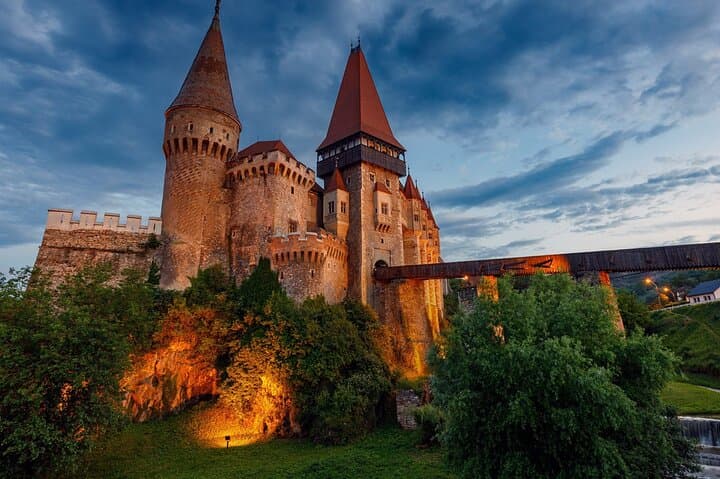
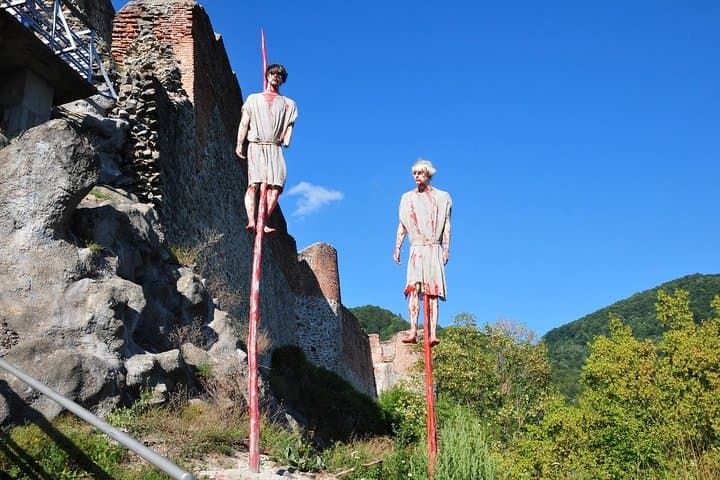
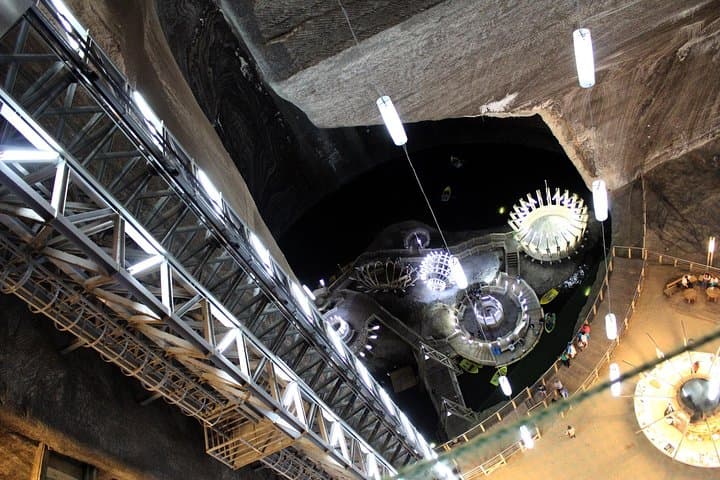
Over seven days the tour threads together concrete history and gothic legend: Snagov Monastery’s small island claim to Vlad the Impaler, the steep stone approach to Poienari Citadel, the soaring Gothic sweep of Corvin Castle and the narrow, colorful lanes of Sighisoara’s citadel. Geology matters here—limestone ridges and salt-rich seams carved millennia of mines like Turda, where ancient galleries open into an otherworldly subterranean amphitheater.
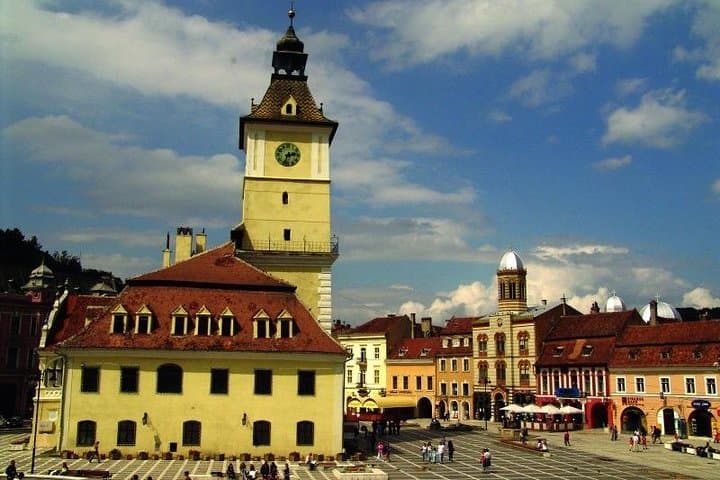
Culturally the program balances medieval strongholds and living Romanian traditions: folk songs, a “vampire” dinner in Turda and theatrical pageantry staged at Bran and in Brasov. The Ritual of Killing of the Living Dead is a staged, communal performance in Turda for small groups and is part folkloric reenactment, part immersive theater.
Practically, expect long coach transfers (several 3–5 hour drives), easy walking through uneven castle courtyards and stairways, and centrally located 3–4* hotels each night. Carry water, a compact rain shell and shoes with good grip for stone steps. Bring local currency for small purchases and allow extra time in July for masquerade events. The itinerary is suitable for travelers comfortable with modest daily walking and hours on the road—rewarded by layered landscapes, vaulted halls, and a cast of characters from history and legend.
easy.
7 days.
Suitable for travelers in basic fitness—some walking on uneven surfaces and daily transfers, not strenuous but requires mobility for stairs.
It is an organized, theatrical performance rooted in local folklore staged for tour groups in Turda; it is not an actual ritual.
The itinerary lists many admissions (Snagov, Bran, Peles, Turda Salt Mine) and includes 6 breakfasts and 2 dinners; check the booking page for exact inclusions.
Vegetarian options are available—notify the operator at booking to accommodate allergies or other dietary requirements.
The tour is rated easy but requires walking on uneven ground, stair climbs in castles and mobility for multiple transfers; not suitable for travelers unable to navigate stairs.
Sites tie to 15th-century Wallachian and Transylvanian history, including Vlad III (Vlad the Impaler) and medieval Saxon towns that shaped regional trade and defense.
Many castles and salt mine sites are managed as heritage attractions—follow signage, avoid touching fragile frescoes and stick to marked paths to reduce wear.
Transylvania Live Expert in Transylvania operates guided outdoor trips and adventures with an emphasis on safety, stewardship, and memorable experiences.
You arrive in Bucharest as dusk softens the city’s edges and a coach eases north into the Carpathian foothills—fog curls over roadside farms and the road bends toward ruined fortresses.
You arrive in Bucharest as dusk softens the city’s edges and a coach eases north into the Carpathian foothills—fog curls over roadside farms and the road bends toward ruined fortresses.
Over seven days the tour threads together concrete history and gothic legend: Snagov Monastery’s small island claim to Vlad the Impaler, the steep stone approach to Poienari Citadel, the soaring Gothic sweep of Corvin Castle and the narrow, colorful lanes of Sighisoara’s citadel. Geology matters here—limestone ridges and salt-rich seams carved millennia of mines like Turda, where ancient galleries open into an otherworldly subterranean amphitheater.
Culturally the program balances medieval strongholds and living Romanian traditions: folk songs, a “vampire” dinner in Turda and theatrical pageantry staged at Bran and in Brasov. The Ritual of Killing of the Living Dead is a staged, communal performance in Turda for small groups and is part folkloric reenactment, part immersive theater.
Practically, expect long coach transfers (several 3–5 hour drives), easy walking through uneven castle courtyards and stairways, and centrally located 3–4* hotels each night. Carry water, a compact rain shell and shoes with good grip for stone steps. Bring local currency for small purchases and allow extra time in July for masquerade events. The itinerary is suitable for travelers comfortable with modest daily walking and hours on the road—rewarded by layered landscapes, vaulted halls, and a cast of characters from history and legend.