THE ADVENTURE COLLECTIVE® · Independent discovery and booking for outdoor travel

From the rock fortress of Sigiriya to the misty tea slopes of Nuwara Eliya and a dawn safari in Yala, this 7-day classical tour condenses Sri Lanka’s cultural and natural highlights into one practical, story-driven journey.
From the rock fortress of Sigiriya to the misty tea slopes of Nuwara Eliya and a dawn safari in Yala, this 7-day classical tour condenses Sri Lanka’s cultural and natural highlights into one practical, story-driven journey.
You step off the plane into heat that smells of cardamom and diesel, and the driver waits with a sign bearing your name. The road out of Bandaranaike sweeps through palm-fringed suburbs and, within an hour, the city gives way to paddy fields that fold like green water toward the central highlands. This is the pattern of a week on Sri Lanka’s classical circuit: sharp shifts in altitude, sudden vistas, and cultural sites that pull history into the present.
Verified experiences and guided adventures in the surrounding area.
Operated by Detroves Travels (PVT) Ltd · Colombo, Western Province
You step off the plane into heat that smells of cardamom and diesel, and the driver waits with a sign bearing your name. The road out of Bandaranaike sweeps through palm-fringed suburbs and, within an hour, the city gives way to paddy fields that fold like green water toward the central highlands. This is the pattern of a week on Sri Lanka’s classical circuit: sharp shifts in altitude, sudden vistas, and cultural sites that pull history into the present.
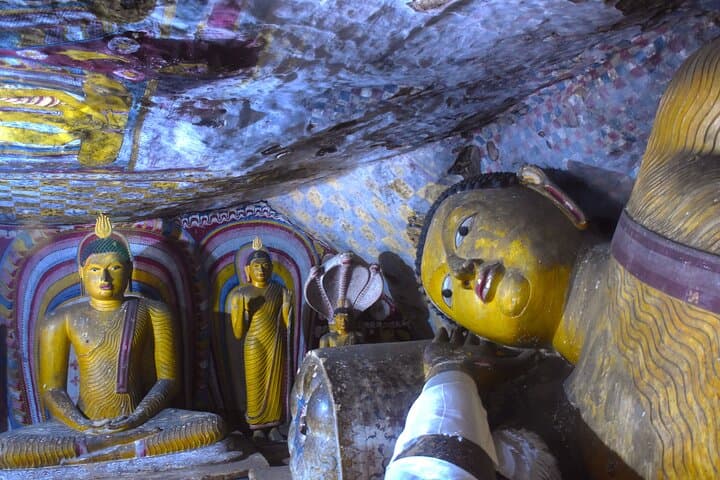
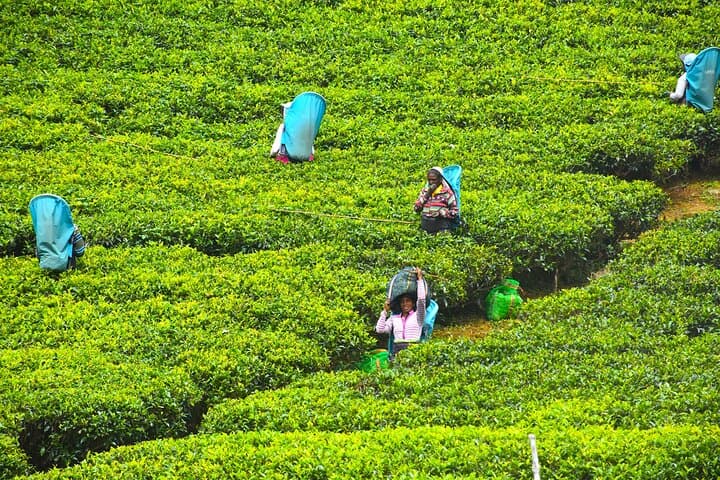
By day two you’re staring up at Sigiriya—a slab of granite rising roughly 200 meters above the plain—its sheer face scarred with the faded frescoes and the chiseled paws that once framed a king’s citadel. Nearby, Dambulla’s cave temples hold ceilings painted in ochre and gold where centuries of devotion have left coins and incense stains. Move inland and the island’s colonial geology becomes obvious: steeply terraced tea estates carved into volcanic soils that the British reworked into cricket pitches, bungalows and export routes. In Kandy, the Temple of the Tooth pulses with ritual; in Nuwara Eliya the air is cool enough to make you reach for a jacket—the town sits around 1,900 meters above sea level.
The itinerary weaves culture and wildlife with practical ease: an early-morning climb at Sigiriya, a slow train ride from Nanu Oya to Ella through some of the world’s most photographed railway scenery, and a safari in Yala where the scrub and lagoons shelter elephants and leopards. The train’s windows frame tea terraces that look like stitched green cloth, and the safari tracks cut through a landscape that seems to dare predators and prey to meet.
A few practical notes: rise for sunrise casts at Sigiriya—the light reveals the rock’s contours and clears the heat for the climb. The Nanu Oya–Ella rail segment is around 25 km and can be crowded; reserve a window seat or a forward-facing compartment where possible. Yala safaris work best at dawn and dusk; the park’s highest leopard density rewards patient, quiet observation. Carry local currency—small notes for tips and temple donations—and bring a photocopy of your passport for checkpoints.
Health and comfort matter: insect repellent, a light rain shell and sturdy shoes will handle sudden showers and uneven steps. The route is family-friendly but expect early starts and several transfers; travel insurance is wise. Above all, keep your schedule flexible—Sri Lanka’s charm often appears in the unscheduled moments: a roadside sambal, a tea plucker pausing to smile, a stretch of sky that turns every hill a different color.
moderate.
7 days.
Suitable for travelers with average fitness; expect short steep climbs (Sigiriya) and multi-hour drives; comfortable mobility is recommended.
Most nationalities require an Electronic Travel Authorization (ETA) obtained online before arrival—apply at Sri Lanka’s official immigration site.
Yes; the tour is labeled easy on physical demands, but expect early mornings, climbs like Sigiriya’s 200-meter ascent and long drives—assess mobility accordingly.
Some heritage site admissions are included per itinerary notes (e.g., Sigiriya and Dambulla), but double-check the booking details and budget for any optional extras.
The scenic rail segment covers roughly 25 km and can take about 2–3 hours depending on stops; travel time varies with service and season.
Yala is known for elephants, leopards, crocodiles and a wide variety of birds; sightings aren’t guaranteed but dawn/dusk drives increase your chances.
Sri Lankan rupees are used; carry small notes for tips at temples, guides and drivers—5–10% for good service is common.
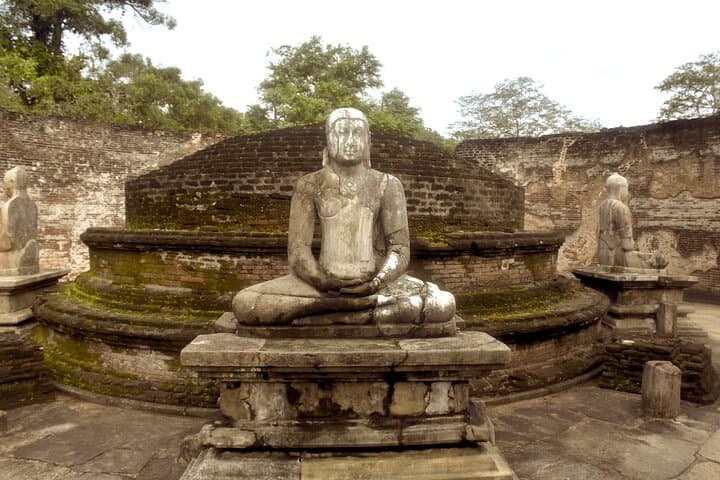
This route threads ancient polities and colonial economies—Sigiriya and Polonnaruwa recall early kingdoms, while the hill country was transformed by British-era tea plantations.
Tourism impacts fragile habitats; stick to marked trails, avoid feeding wildlife, and support local guides who practice responsible safari etiquette.
Detroves Travels (PVT) Ltd operates guided outdoor trips and adventures with an emphasis on safety, stewardship, and memorable experiences.
You step off the plane into heat that smells of cardamom and diesel, and the driver waits with a sign bearing your name. The road out of Bandaranaike sweeps through palm-fringed suburbs and, within an hour, the city gives way to paddy fields that fold like green water toward the central highlands. This is the pattern of a week on Sri Lanka’s classical circuit: sharp shifts in altitude, sudden vistas, and cultural sites that pull history into the present.
You step off the plane into heat that smells of cardamom and diesel, and the driver waits with a sign bearing your name. The road out of Bandaranaike sweeps through palm-fringed suburbs and, within an hour, the city gives way to paddy fields that fold like green water toward the central highlands. This is the pattern of a week on Sri Lanka’s classical circuit: sharp shifts in altitude, sudden vistas, and cultural sites that pull history into the present.
By day two you’re staring up at Sigiriya—a slab of granite rising roughly 200 meters above the plain—its sheer face scarred with the faded frescoes and the chiseled paws that once framed a king’s citadel. Nearby, Dambulla’s cave temples hold ceilings painted in ochre and gold where centuries of devotion have left coins and incense stains. Move inland and the island’s colonial geology becomes obvious: steeply terraced tea estates carved into volcanic soils that the British reworked into cricket pitches, bungalows and export routes. In Kandy, the Temple of the Tooth pulses with ritual; in Nuwara Eliya the air is cool enough to make you reach for a jacket—the town sits around 1,900 meters above sea level.
The itinerary weaves culture and wildlife with practical ease: an early-morning climb at Sigiriya, a slow train ride from Nanu Oya to Ella through some of the world’s most photographed railway scenery, and a safari in Yala where the scrub and lagoons shelter elephants and leopards. The train’s windows frame tea terraces that look like stitched green cloth, and the safari tracks cut through a landscape that seems to dare predators and prey to meet.
A few practical notes: rise for sunrise casts at Sigiriya—the light reveals the rock’s contours and clears the heat for the climb. The Nanu Oya–Ella rail segment is around 25 km and can be crowded; reserve a window seat or a forward-facing compartment where possible. Yala safaris work best at dawn and dusk; the park’s highest leopard density rewards patient, quiet observation. Carry local currency—small notes for tips and temple donations—and bring a photocopy of your passport for checkpoints.
Health and comfort matter: insect repellent, a light rain shell and sturdy shoes will handle sudden showers and uneven steps. The route is family-friendly but expect early starts and several transfers; travel insurance is wise. Above all, keep your schedule flexible—Sri Lanka’s charm often appears in the unscheduled moments: a roadside sambal, a tea plucker pausing to smile, a stretch of sky that turns every hill a different color.