THE ADVENTURE COLLECTIVE® · Independent discovery and booking for outdoor travel

Walk the last 110 km of the Camino Francés from Sarria to Santiago de Compostela over seven days. Expect forested tracks, medieval monuments, luggage transfer between stages and daily distances from 19–29 km.
Walk the last 110 km of the Camino Francés from Sarria to Santiago de Compostela over seven days. Expect forested tracks, medieval monuments, luggage transfer between stages and daily distances from 19–29 km.
You set out from Sarria at dawn, the town's cobbled streets still cool beneath your boots and the first scallop shells clinking on backpacks like a distant chorus. The path opens into chestnut and oak groves; streams dare you to pause, and the land pushes you forward with gentle slopes that reveal villages, stone crosses and granaries framed by green fields.
Verified experiences and guided adventures in the surrounding area.
Operated by Viajes Camino De Santiago · Sarria, Lugo
You set out from Sarria at dawn, the town's cobbled streets still cool beneath your boots and the first scallop shells clinking on backpacks like a distant chorus. The path opens into chestnut and oak groves; streams dare you to pause, and the land pushes you forward with gentle slopes that reveal villages, stone crosses and granaries framed by green fields.
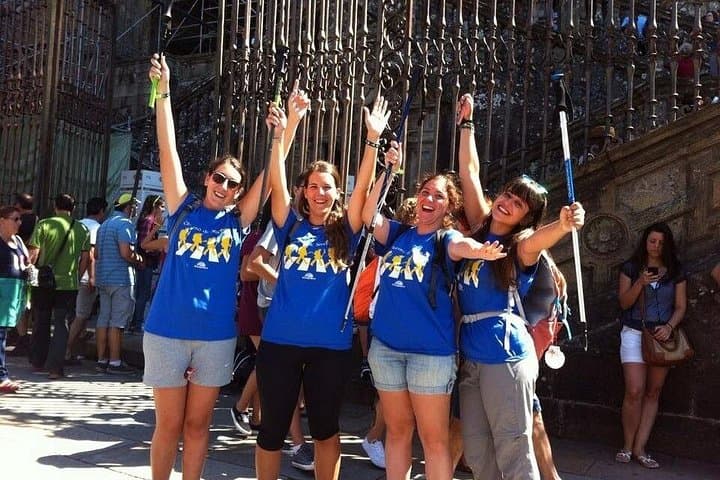
This seven-day itinerary covers the canonical last 110 km of the Camino Francés, a route layered with Romanesque churches, medieval bridges and castro ruins that recall Galicia’s Celtic past. Geologically the terrain is ancient—granite outcrops, river valleys and rolling pasturelands shaped by millennia of rain and human cultivation. Culturally the Camino remains a living ritual: pilgrims stamp credentials at albergues and churches, share simple meals of pulpo and local cheese, and gather in plazas beneath cathedral towers.
Practicalities are straightforward. Expect daily stages of roughly 19–29 km on mixed surfaces—paved lanes, country roads and compact dirt tracks—with short but sometimes persistent climbs; cumulative ascent is in the low thousands of meters over the week. Luggage transfer between accommodations lightens each day to let you walk unburdened. Plan mornings and late afternoons for walking to avoid midday rain or sun, carry a basic first-aid kit for blisters, and book hotels in advance during peak season.
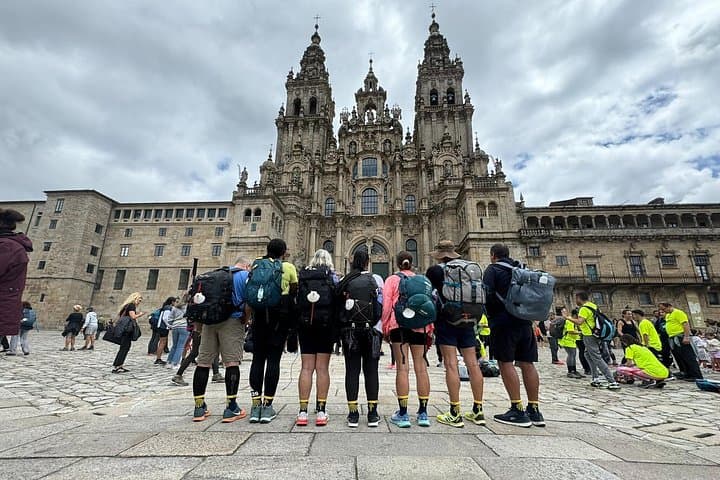
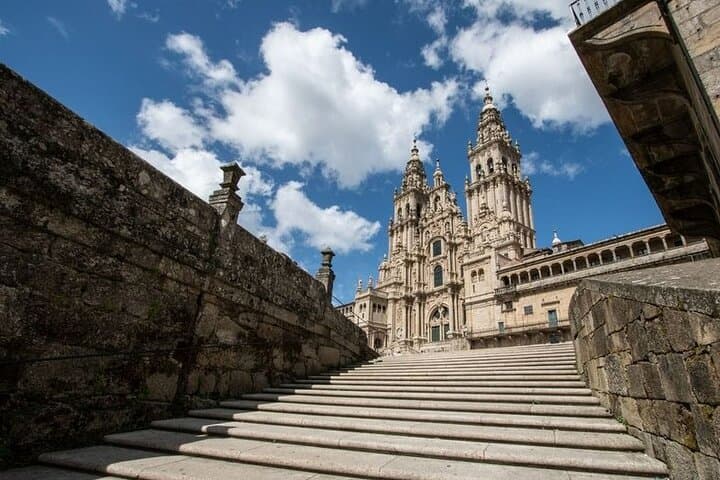
This trip is equal parts moving landscape and measured logistics: a chance to walk, reflect, meet others, and arrive in Compostela with the iconic Obradoiro square as your final, earned view.
moderate.
7 days (approx. 110 km total).
Suitable for walkers who regularly do day hikes of 15–25 km; you should have endurance for consecutive daily distances.
Yes — this tour includes luggage transportation between stages so you walk without load; you only carry a daypack each day.
No technical experience is required, but you should be comfortable walking 19–29 km in a day for consecutive days and able to manage basic self-care for blisters and fatigue.
A Pilgrim's Credential is provided to stamp on route; to receive the Compostela at Santiago you must meet the pilgrimage office’s criteria, typically at least 100 km walked to Santiago.
Late spring and early fall balance mild temperatures and lower crowds; summer is busy and wetter periods are more common in winter.
The Camino Francés has been a pilgrimage route since medieval times; the last 110 km from Sarria became a standard starting point because it meets the 100 km minimum to earn a Compostela.
Stick to marked trails and use established accommodations to limit erosion and pressure on small villages; pack out waste and favor refillable water bottles.
Viajes Camino De Santiago operates guided outdoor trips and adventures with an emphasis on safety, stewardship, and memorable experiences.
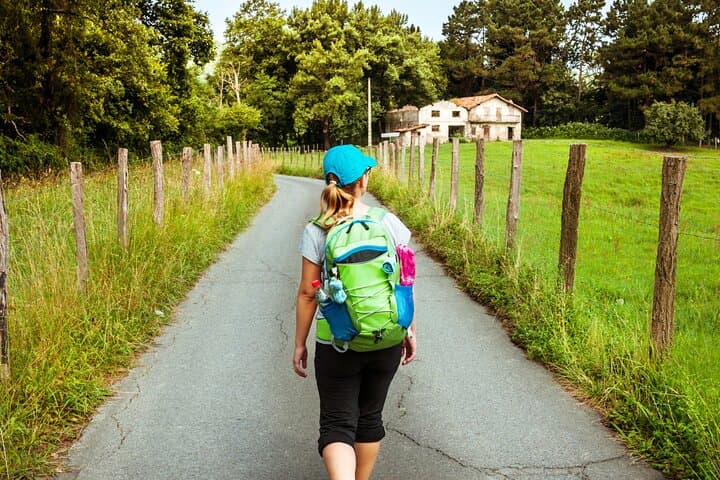
You set out from Sarria at dawn, the town's cobbled streets still cool beneath your boots and the first scallop shells clinking on backpacks like a distant chorus. The path opens into chestnut and oak groves; streams dare you to pause, and the land pushes you forward with gentle slopes that reveal villages, stone crosses and granaries framed by green fields.
You set out from Sarria at dawn, the town's cobbled streets still cool beneath your boots and the first scallop shells clinking on backpacks like a distant chorus. The path opens into chestnut and oak groves; streams dare you to pause, and the land pushes you forward with gentle slopes that reveal villages, stone crosses and granaries framed by green fields.
This seven-day itinerary covers the canonical last 110 km of the Camino Francés, a route layered with Romanesque churches, medieval bridges and castro ruins that recall Galicia’s Celtic past. Geologically the terrain is ancient—granite outcrops, river valleys and rolling pasturelands shaped by millennia of rain and human cultivation. Culturally the Camino remains a living ritual: pilgrims stamp credentials at albergues and churches, share simple meals of pulpo and local cheese, and gather in plazas beneath cathedral towers.
Practicalities are straightforward. Expect daily stages of roughly 19–29 km on mixed surfaces—paved lanes, country roads and compact dirt tracks—with short but sometimes persistent climbs; cumulative ascent is in the low thousands of meters over the week. Luggage transfer between accommodations lightens each day to let you walk unburdened. Plan mornings and late afternoons for walking to avoid midday rain or sun, carry a basic first-aid kit for blisters, and book hotels in advance during peak season.
This trip is equal parts moving landscape and measured logistics: a chance to walk, reflect, meet others, and arrive in Compostela with the iconic Obradoiro square as your final, earned view.