THE ADVENTURE COLLECTIVE® · Independent discovery and booking for outdoor travel

Walk with dromedaries across the red sand of Tunisia’s Grand Erg Oriental to reach Lake Houidat. This seven-day private caravan combines guided camel travel, bivouac nights, and cultural visits to Berber granaries.
Walk with dromedaries across the red sand of Tunisia’s Grand Erg Oriental to reach Lake Houidat. This seven-day private caravan combines guided camel travel, bivouac nights, and cultural visits to Berber granaries.
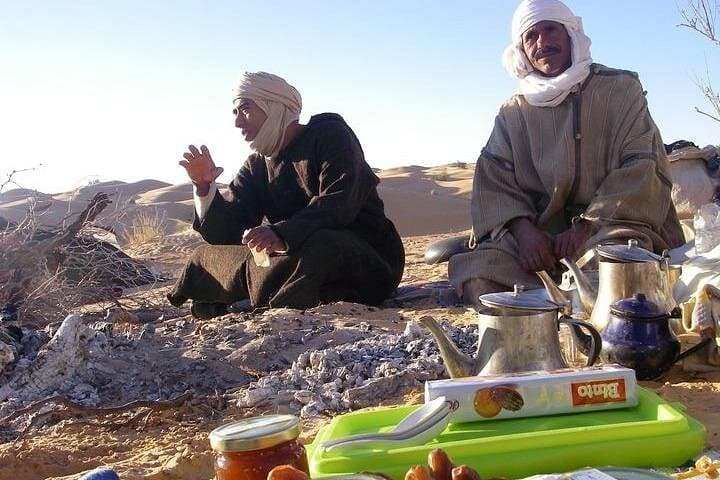
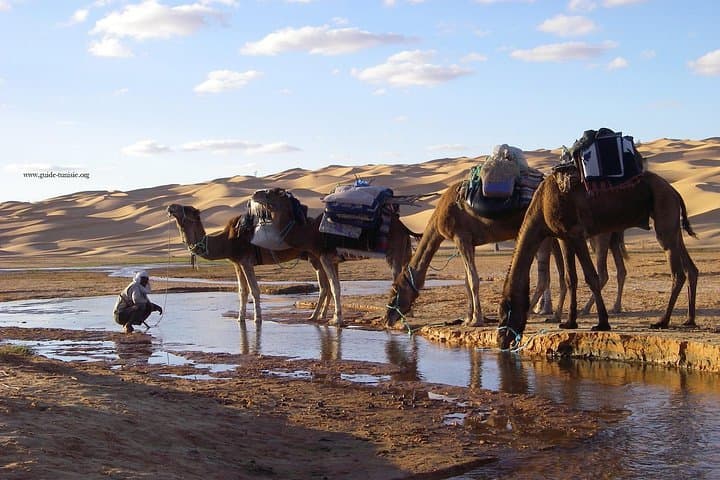
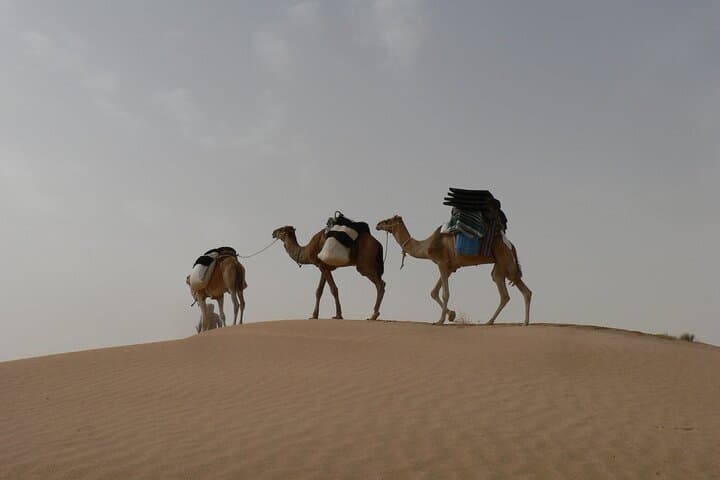
Morning light pulls across red dunes and the caravan begins to move: a line of dromedaries ambling across wind-carved ridges toward a distant green dot — Lac Houidat. Over seven days travelers trade paved roads for dune crests, ember-baked pancakes, and nights under a wide, cool sky. The rhythm here is measured by the camel’s stride, the guide’s slow calls, and the changing color of sand.
Verified experiences and guided adventures in the surrounding area.
Operated by Djerba Randonnées · Douz, Medenine Governorate
Morning light pulls across red dunes and the caravan begins to move: a line of dromedaries ambling across wind-carved ridges toward a distant green dot — Lac Houidat. Over seven days travelers trade paved roads for dune crests, ember-baked pancakes, and nights under a wide, cool sky. The rhythm here is measured by the camel’s stride, the guide’s slow calls, and the changing color of sand.
This route threads eastern Tunisia’s Grand Erg Oriental, skirting the Djebil National Park fence and passing small rocky massifs like Tenesouan. The region holds long Berber histories — ksour (granary towns) and ghorfas speak to centuries of oasis agriculture and caravan trade that linked inland settlements to coastal ports. Geologically, the landscape is aeolian: dunes driven and sculpted by Saharan winds, with pocket wetlands such as Lake Houidat forming seasonal green rests in the ochre sea.
Expect days of 12–15 km of travel paced by camel, midday stops for shade and tea, and simple bivouac tents with mattresses and sleeping bags provided. Meals are communal and often locally styled; vegetarian options are available. Wildlife is skittish but present — you may catch tracks of gazelles or glimpses of fennec fox at dawn.
Practical tips: bring high-SPF sun protection, a brimmed hat, sturdy walking shoes for dune slopes, and a 2–3L hydration system. Nights can be cold; layer wool and a warm hat. If you have back or spinal issues, this trip is not recommended. Plan arrival in Douz to join the transfer, and allow a day afterward for travel connections or a hotel night in Houmt Souk.
moderate.
7 days.
Suitable for travelers with moderate fitness who can handle daily motion on camelback and short walks in sand
Expect to cover roughly 12–15 km per day, paced by the camel; actual distance varies with route and weather.
Yes — mattresses, sleeping bags, blankets, and tents are provided as part of the trip package.
Children may join but infants must sit on an adult’s lap; not recommended for travelers with spinal injuries due to camel movement.
Three meals per day are provided with vegetarian options available; mineral water is supplied for the seven days.
The route follows traditional caravan passages and touches ksour and ghorfas — vernacular Berber architecture used historically for grain storage and trade hubs.
Dune ecosystems are fragile; avoid walking on vegetated interdune areas, pack out waste, and follow guide instructions to minimize erosion and disturbance.
Djerba Randonnées operates guided outdoor trips and adventures with an emphasis on safety, stewardship, and memorable experiences.
Morning light pulls across red dunes and the caravan begins to move: a line of dromedaries ambling across wind-carved ridges toward a distant green dot — Lac Houidat. Over seven days travelers trade paved roads for dune crests, ember-baked pancakes, and nights under a wide, cool sky. The rhythm here is measured by the camel’s stride, the guide’s slow calls, and the changing color of sand.
Morning light pulls across red dunes and the caravan begins to move: a line of dromedaries ambling across wind-carved ridges toward a distant green dot — Lac Houidat. Over seven days travelers trade paved roads for dune crests, ember-baked pancakes, and nights under a wide, cool sky. The rhythm here is measured by the camel’s stride, the guide’s slow calls, and the changing color of sand.
This route threads eastern Tunisia’s Grand Erg Oriental, skirting the Djebil National Park fence and passing small rocky massifs like Tenesouan. The region holds long Berber histories — ksour (granary towns) and ghorfas speak to centuries of oasis agriculture and caravan trade that linked inland settlements to coastal ports. Geologically, the landscape is aeolian: dunes driven and sculpted by Saharan winds, with pocket wetlands such as Lake Houidat forming seasonal green rests in the ochre sea.
Expect days of 12–15 km of travel paced by camel, midday stops for shade and tea, and simple bivouac tents with mattresses and sleeping bags provided. Meals are communal and often locally styled; vegetarian options are available. Wildlife is skittish but present — you may catch tracks of gazelles or glimpses of fennec fox at dawn.
Practical tips: bring high-SPF sun protection, a brimmed hat, sturdy walking shoes for dune slopes, and a 2–3L hydration system. Nights can be cold; layer wool and a warm hat. If you have back or spinal issues, this trip is not recommended. Plan arrival in Douz to join the transfer, and allow a day afterward for travel connections or a hotel night in Houmt Souk.