THE ADVENTURE COLLECTIVE® · Independent discovery and booking for outdoor travel

Spend a week moving from temple shadows to ocean light: three days exploring Angkor’s monumental ruins, a Tonle Sap village and boat trip, then a beachside wind-down on Koh Rong. Practical tips on timing, dress, and what to pack make this an accessible blend of culture and coastal relaxation.
Spend a week moving from temple shadows to ocean light: three days exploring Angkor’s monumental ruins, a Tonle Sap village and boat trip, then a beachside wind-down on Koh Rong. Practical tips on timing, dress, and what to pack make this an accessible blend of culture and coastal relaxation.
You step out before dawn into Siem Reap’s cool, lamp-lit streets and the horizon over Angkor starts as a slow, golden hush. At Angkor Wat the carved stone seems to inhale sunlight, the faces of Bayon watch traffic of travelers and the jungle roots at Ta Prohm tug at ancient walls as if trying to reclaim them.
Verified experiences and guided adventures in the surrounding area.
Operated by Indochina Tour · Siem Reap, Siem Reap Province
You step out before dawn into Siem Reap’s cool, lamp-lit streets and the horizon over Angkor starts as a slow, golden hush. At Angkor Wat the carved stone seems to inhale sunlight, the faces of Bayon watch traffic of travelers and the jungle roots at Ta Prohm tug at ancient walls as if trying to reclaim them.
This seven-day route threads history and shoreline: three days among the Khmer Empire’s finest — Angkor Wat, Angkor Thom, Ta Prohm — then a lake boat to Tonle Sap’s stilt villages before a domestic flight and a one-hour boat ride to Koh Rong’s white sand and clear water. Geologically the region is flat alluvium carved by the Mekong system; Tonle Sap’s seasonal pulse can double the lake’s size between dry and wet seasons. Culturally, expect strong Buddhist influences, Apsara dance performances, and rural communities whose livelihoods depend on fishing and tourism.
Practical guidance: schedule temple visits for sunrise or late afternoon to avoid mid-day heat; Angkor Archaeological Park covers hundreds of square kilometers, so prioritize a few key sites per day. Carry cash for small vendors and temple donations—cards are limited outside Siem Reap. On Koh Rong, tides and currents matter for boat schedules; confirm return times with your host. Bring reef-safe sunscreen, insect repellent, breathable layers, and a comfortable pair of walking shoes with good grip for uneven sandstone steps.
Respect local dress codes at temples (shoulders and knees covered), stay hydrated in tropical heat, and consider supporting community-run tours around Tonle Sap to help preserve the lake’s fragile ecosystem.
moderate.
7 days.
Light to moderate fitness; expect several hours of walking on uneven stone and sandy beaches with occasional boat transfers.
Yes — the itinerary notes stroller access and easy physical requirements, but expect some long days and boat transfers; check accommodations’ family policies.
Angkor temple admissions are commonly included on day 2 per the itinerary; confirm at booking for the specific package you purchase.
Boat transfer from Sihanoukville to Koh Rong typically takes about 45–75 minutes depending on the vessel and sea conditions; confirm pickup times in advance.
The cool dry season (November–February) offers lower humidity and clearer skies for temples and beaches, while the wet season brings fewer crowds and dramatic green landscapes.
Angkor was the heart of the Khmer Empire between the 9th and 15th centuries; its stone monuments reflect early Khmer cosmology and Buddhist influences layered over centuries.
Mass tourism pressures Angkor and Tonle Sap’s fisheries; favor community enterprises, limit single-use plastics, and use reef-safe products to reduce local impact.
Indochina Tour operates guided outdoor trips and adventures with an emphasis on safety, stewardship, and memorable experiences.


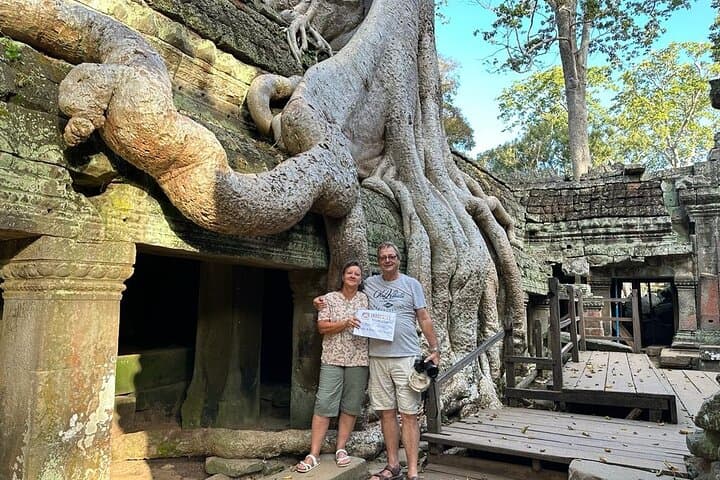
You step out before dawn into Siem Reap’s cool, lamp-lit streets and the horizon over Angkor starts as a slow, golden hush. At Angkor Wat the carved stone seems to inhale sunlight, the faces of Bayon watch traffic of travelers and the jungle roots at Ta Prohm tug at ancient walls as if trying to reclaim them.
You step out before dawn into Siem Reap’s cool, lamp-lit streets and the horizon over Angkor starts as a slow, golden hush. At Angkor Wat the carved stone seems to inhale sunlight, the faces of Bayon watch traffic of travelers and the jungle roots at Ta Prohm tug at ancient walls as if trying to reclaim them.
This seven-day route threads history and shoreline: three days among the Khmer Empire’s finest — Angkor Wat, Angkor Thom, Ta Prohm — then a lake boat to Tonle Sap’s stilt villages before a domestic flight and a one-hour boat ride to Koh Rong’s white sand and clear water. Geologically the region is flat alluvium carved by the Mekong system; Tonle Sap’s seasonal pulse can double the lake’s size between dry and wet seasons. Culturally, expect strong Buddhist influences, Apsara dance performances, and rural communities whose livelihoods depend on fishing and tourism.
Practical guidance: schedule temple visits for sunrise or late afternoon to avoid mid-day heat; Angkor Archaeological Park covers hundreds of square kilometers, so prioritize a few key sites per day. Carry cash for small vendors and temple donations—cards are limited outside Siem Reap. On Koh Rong, tides and currents matter for boat schedules; confirm return times with your host. Bring reef-safe sunscreen, insect repellent, breathable layers, and a comfortable pair of walking shoes with good grip for uneven sandstone steps.
Respect local dress codes at temples (shoulders and knees covered), stay hydrated in tropical heat, and consider supporting community-run tours around Tonle Sap to help preserve the lake’s fragile ecosystem.