THE ADVENTURE COLLECTIVE® · Independent discovery and booking for outdoor travel

A compact, seven-day trek from Pokhara that climbs through Gurung villages, bamboo forests and glacial terrain to Machhapuchhre Base Camp and Annapurna Base Camp (4,130 m). Expect long walking days, teahouse stays, and dramatic high-mountain views.
A compact, seven-day trek from Pokhara that climbs through Gurung villages, bamboo forests and glacial terrain to Machhapuchhre Base Camp and Annapurna Base Camp (4,130 m). Expect long walking days, teahouse stays, and dramatic high-mountain views.
You step out of the jeep at Kimche and the trail immediately tightens into rhododendron and bamboo—each step lifting you higher toward a bowl of snow under the high peaks. Morning light slices the Annapurna massif; the path alternates between stone staircases, earthen switchbacks and short descents into glacial streams that seem to dare you forward.
Verified experiences and guided adventures in the surrounding area.
Operated by Osho world Adventure · Pokhara, Gandaki Province
You step out of the jeep at Kimche and the trail immediately tightens into rhododendron and bamboo—each step lifting you higher toward a bowl of snow under the high peaks. Morning light slices the Annapurna massif; the path alternates between stone staircases, earthen switchbacks and short descents into glacial streams that seem to dare you forward.
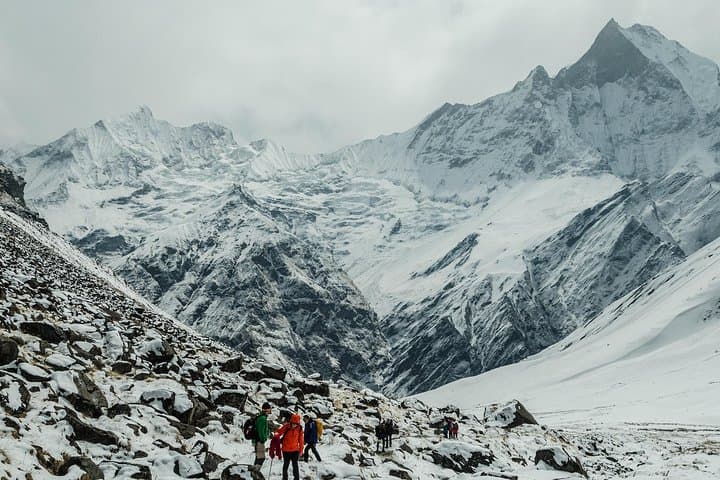
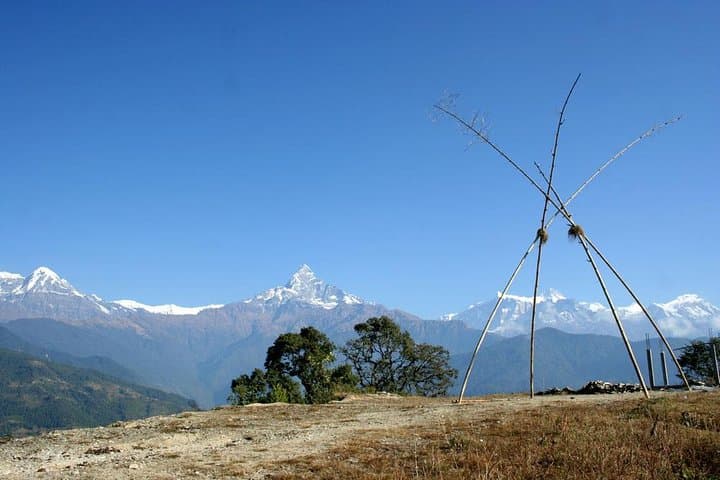
This seven-day route threads local villages—Ghandruk and Chhomrong—where Gurung culture and stone-built teahouses shape the rhythm of the trail. Geologically, you walk the southern flanks of the Annapurna massif where uplifted metamorphic rock meets recent glacial moraine; glaciers and snowfields sculpt the skyline above Machhapuchhre (Fishtail) and Annapurna I. The area has long been a seasonal corridor for shepherds and traders and today balances trekking infrastructure with village life.
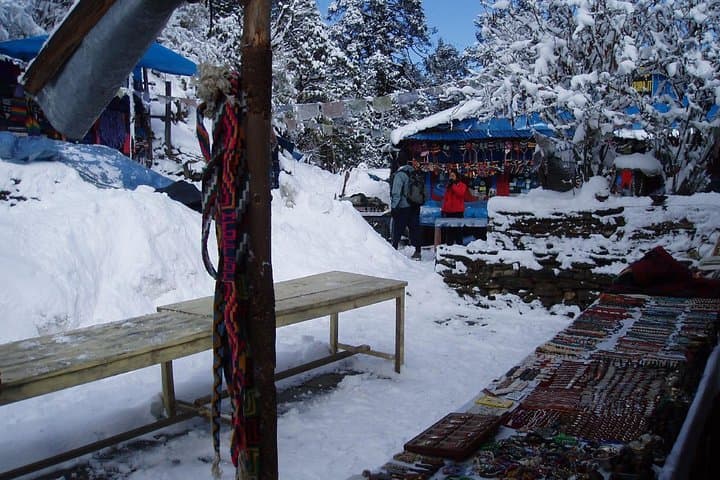
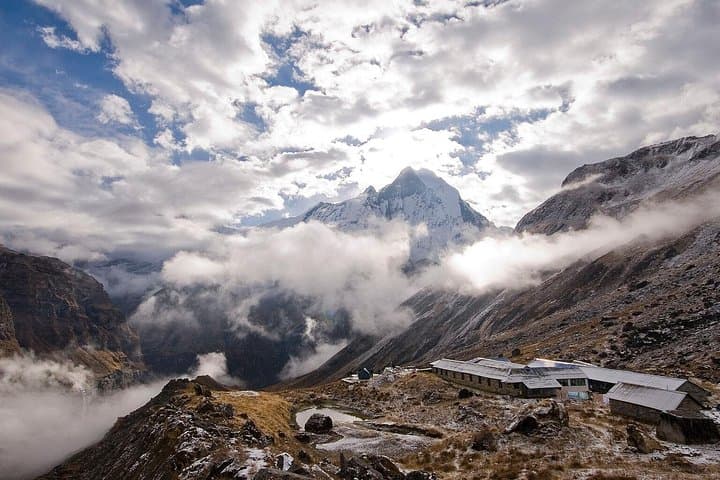
Expect 5–7 hour walking days, forested climbs through bamboo and rhododendron, exposed high-altitude saddles, and a final reach to Annapurna Base Camp at roughly 4,130 m. Weather can change fast: clear dawns give dramatic sunrise on the Annapurnas; afternoons bring cloud build-up and wind. Teahouses provide twin rooms, hot meals, and local hospitality, but services thin above Deurali so carry basics.
Practical tips: pace yourself uphill to manage altitude, drink frequently, and layer for wide temperature swings. Good trekking boots, a warm sleeping bag (rated for near-freezing), trekking poles, and a lightweight daypack will make the days easier. Allow time to move deliberately—the mountains reward patience more than speed.
challenging.
7 days.
Suitable for fit hikers used to full-day walking; good cardiovascular fitness and prior multi-day hiking experience recommended.
You need an Annapurna Conservation Area Permit (ACAP) and a TIMS card; these are typically arranged before or at Pokhara.
No technical experience is needed, but previous multi-day hiking and good fitness are recommended due to sustained elevation and long days.
Accommodation is teahouse-style: twin rooms, basic bedding, and shared bathrooms; facilities become simpler above Deurali.
Spring (March–May) and autumn (Sept–Nov) offer the most stable weather and clear mountain views, while monsoon brings heavy rain and winter brings cold and snow at high camps.
The Annapurna region has long been home to Gurung and Magar communities and became one of Nepal’s first protected trekking zones with established teahouse routes since the 1970s.
The Annapurna Conservation Area manages permits and promotes sustainable tourism; stick to trails, avoid single-use plastics, and respect village waste practices.
Osho world Adventure operates guided outdoor trips and adventures with an emphasis on safety, stewardship, and memorable experiences.
You step out of the jeep at Kimche and the trail immediately tightens into rhododendron and bamboo—each step lifting you higher toward a bowl of snow under the high peaks. Morning light slices the Annapurna massif; the path alternates between stone staircases, earthen switchbacks and short descents into glacial streams that seem to dare you forward.
You step out of the jeep at Kimche and the trail immediately tightens into rhododendron and bamboo—each step lifting you higher toward a bowl of snow under the high peaks. Morning light slices the Annapurna massif; the path alternates between stone staircases, earthen switchbacks and short descents into glacial streams that seem to dare you forward.
This seven-day route threads local villages—Ghandruk and Chhomrong—where Gurung culture and stone-built teahouses shape the rhythm of the trail. Geologically, you walk the southern flanks of the Annapurna massif where uplifted metamorphic rock meets recent glacial moraine; glaciers and snowfields sculpt the skyline above Machhapuchhre (Fishtail) and Annapurna I. The area has long been a seasonal corridor for shepherds and traders and today balances trekking infrastructure with village life.
Expect 5–7 hour walking days, forested climbs through bamboo and rhododendron, exposed high-altitude saddles, and a final reach to Annapurna Base Camp at roughly 4,130 m. Weather can change fast: clear dawns give dramatic sunrise on the Annapurnas; afternoons bring cloud build-up and wind. Teahouses provide twin rooms, hot meals, and local hospitality, but services thin above Deurali so carry basics.
Practical tips: pace yourself uphill to manage altitude, drink frequently, and layer for wide temperature swings. Good trekking boots, a warm sleeping bag (rated for near-freezing), trekking poles, and a lightweight daypack will make the days easier. Allow time to move deliberately—the mountains reward patience more than speed.