THE ADVENTURE COLLECTIVE® · Independent discovery and booking for outdoor travel

A seven-day 4x4 campervan loop from Keflavík through Snæfellsnes and the Westfjords, this itinerary pairs dramatic coastlines, lava-tube spelunking and geothermal soaking with off-grid camping. Expect mixed gravel roads, long views and a portable basecamp that brings remote Iceland within reach.
A seven-day 4x4 campervan loop from Keflavík through Snæfellsnes and the Westfjords, this itinerary pairs dramatic coastlines, lava-tube spelunking and geothermal soaking with off-grid camping. Expect mixed gravel roads, long views and a portable basecamp that brings remote Iceland within reach.
You ease out of Keflavík before dawn, the campervan's diesel thrumming like a patient engine of possibility. The road peels away from the airport and, within an hour, lava fields and sculpted coastlines begin to push Reykjavik out of view. Over seven days the landscape does more than change — it rearranges priorities: sea cliffs that dare the Atlantic, black-pebble beaches that absorb light, and secret geothermal pools that breathe steam into an already elemental sky.
Verified experiences and guided adventures in the surrounding area.
Operated by CampEasy ehf. · Reykjavík, Capital Region
You ease out of Keflavík before dawn, the campervan's diesel thrumming like a patient engine of possibility. The road peels away from the airport and, within an hour, lava fields and sculpted coastlines begin to push Reykjavik out of view. Over seven days the landscape does more than change — it rearranges priorities: sea cliffs that dare the Atlantic, black-pebble beaches that absorb light, and secret geothermal pools that breathe steam into an already elemental sky.
The route is a compact education in western Iceland. Start with a stiff morning hike to Glymur waterfall (round-trip ~3.5 hours) for views that reward the climb, then drive the Snæfellsnes Peninsula where Kirkjufell rises in layered stone and Djúpalónssandur shows the scar of old shipwrecks and sailors' lifting-stone rituals. Under the peninsula you descend into an 8,000-year-old lava tube — a 32-meter deep, spiral-staired chamber carved by ancient flows — a reminder that Iceland's drama is both surface and subterranean.
Cross into the Westfjords and the terrain becomes more intimate and remote: Rauðisandur's rust-colored sands, Látrabjarg's bird cliffs where puffins wheel and guillemots cling to eroded faces, and Dynjandi, a 100-meter stair of falling water that announces itself long before you reach the viewpoint.
Culture here is coastal and tactile. Fishing communities along the route still read the weather like scripture; turf farmsteads such as Litlibær preserve a quieter history. Geology is immediate — continental rifts at Þingvellir, volcanic craters like Kerið, and boiling pools like Deildartunguhver that demonstrate heat almost within arm's reach.
Practical edge: this is a driving holiday that doubles as a mobile basecamp. Daily drives range from 100–300 km on mixed sealed and gravel roads; some stretches require 4x4 confidence and slow, deliberate handling. Campsite fees and selected activities are included, and the Easy Guide tablet supplied with the van maps routes and meeting points — use it, and keep paper copies of reservations.
Timing matters: pack layers, respect rapidly changing weather, and plan fuel stops — stations are sparse in the Westfjords. For on-water moments, calm-water kayaking in Ísafjörður Bay is surprisingly accessible for beginners; helmets and headlamps are provided for the lava tube tour. Leave fragile moss and geothermal features untouched: boots have done more harm here than visitors imagine.
By the final day you arrive back near the Golden Circle — Strokkur's punctual geyser, Gullfoss's thunder, and the Secret Lagoon — and the trip folds into travel lore: a week of concentrated Iceland where the wild still has room to surprise and the road invites you to slow down and look closely.
moderate.
7 days.
Basic hiking fitness for short hikes (Glymur ~3.5 hrs); stamina for daily driving and hauling camping gear.
Not strictly, but you should be comfortable driving on graded gravel and narrow single-lane bridges; the van requires cautious handling on corrugated surfaces.
The package includes a quality campervan; check your booking for bedding and kitchen kit details — extras like sleeping bags may be optional or rentable.
Some remote W estfjords stretches need sturdy 4x4s; confirm with the supplier which F-roads are permitted for your specific camper model.
Refuel every 200–300 km where possible; in the Westfjords wait until towns like Ísafjörður or Patreksfjörður rather than relying on roadside pumps.
Yes — infant seats are available, but drivers must meet the minimum age (20) and some activities have age limits (kayaking minimum 12 on select tours).
The itinerary runs in most conditions; however, extreme winds can delay activities — maintain flexible plans and heed local warnings.
The west coast's fishing communities evolved from medieval Norse settlement; turf houses and coastal museums preserve the region's maritime culture.
Follow marked trails and avoid walking on moss — Icelandic moss can take decades to recover. Use designated parking and paid campsites to support local infrastructure.
CampEasy ehf. operates guided outdoor trips and adventures with an emphasis on safety, stewardship, and memorable experiences.
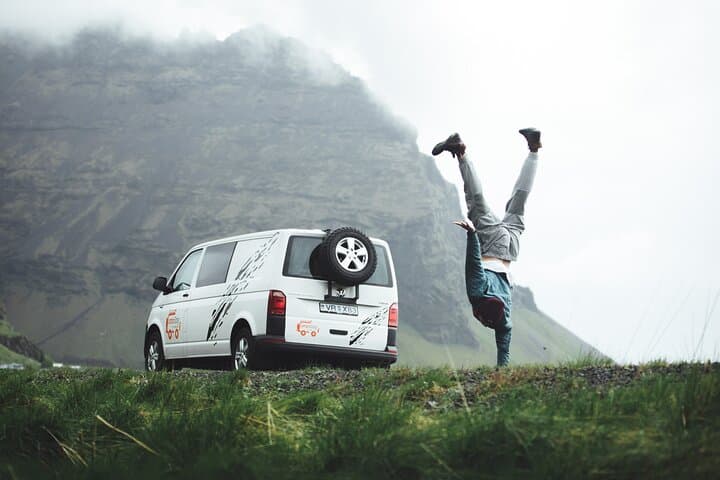
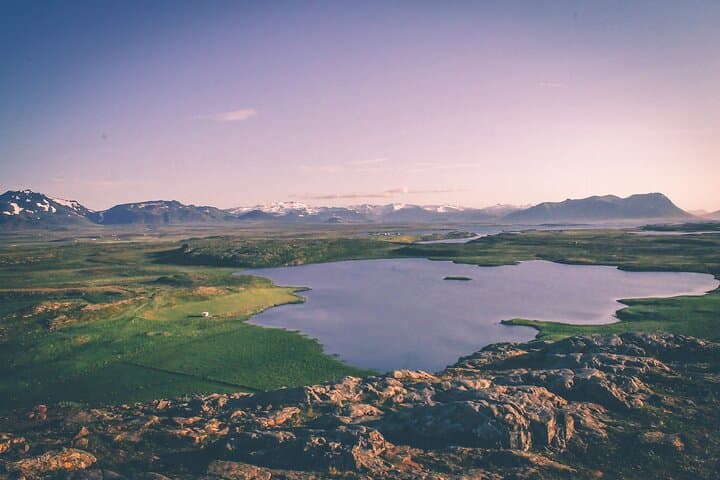
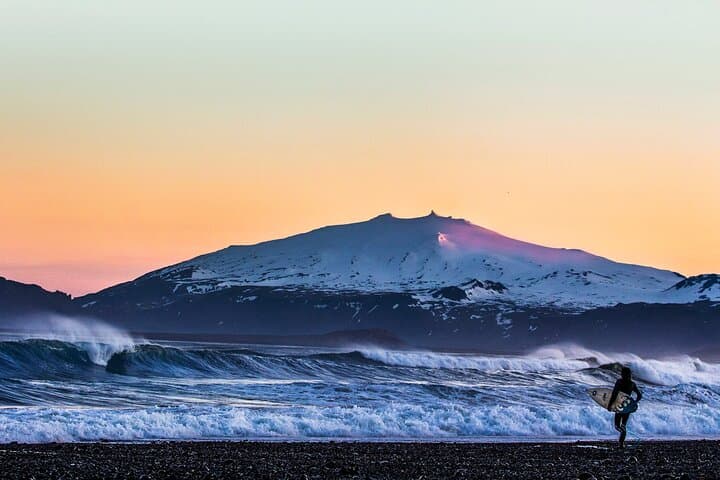
You ease out of Keflavík before dawn, the campervan's diesel thrumming like a patient engine of possibility. The road peels away from the airport and, within an hour, lava fields and sculpted coastlines begin to push Reykjavik out of view. Over seven days the landscape does more than change — it rearranges priorities: sea cliffs that dare the Atlantic, black-pebble beaches that absorb light, and secret geothermal pools that breathe steam into an already elemental sky.
You ease out of Keflavík before dawn, the campervan's diesel thrumming like a patient engine of possibility. The road peels away from the airport and, within an hour, lava fields and sculpted coastlines begin to push Reykjavik out of view. Over seven days the landscape does more than change — it rearranges priorities: sea cliffs that dare the Atlantic, black-pebble beaches that absorb light, and secret geothermal pools that breathe steam into an already elemental sky.
The route is a compact education in western Iceland. Start with a stiff morning hike to Glymur waterfall (round-trip ~3.5 hours) for views that reward the climb, then drive the Snæfellsnes Peninsula where Kirkjufell rises in layered stone and Djúpalónssandur shows the scar of old shipwrecks and sailors' lifting-stone rituals. Under the peninsula you descend into an 8,000-year-old lava tube — a 32-meter deep, spiral-staired chamber carved by ancient flows — a reminder that Iceland's drama is both surface and subterranean.
Cross into the Westfjords and the terrain becomes more intimate and remote: Rauðisandur's rust-colored sands, Látrabjarg's bird cliffs where puffins wheel and guillemots cling to eroded faces, and Dynjandi, a 100-meter stair of falling water that announces itself long before you reach the viewpoint.
Culture here is coastal and tactile. Fishing communities along the route still read the weather like scripture; turf farmsteads such as Litlibær preserve a quieter history. Geology is immediate — continental rifts at Þingvellir, volcanic craters like Kerið, and boiling pools like Deildartunguhver that demonstrate heat almost within arm's reach.
Practical edge: this is a driving holiday that doubles as a mobile basecamp. Daily drives range from 100–300 km on mixed sealed and gravel roads; some stretches require 4x4 confidence and slow, deliberate handling. Campsite fees and selected activities are included, and the Easy Guide tablet supplied with the van maps routes and meeting points — use it, and keep paper copies of reservations.
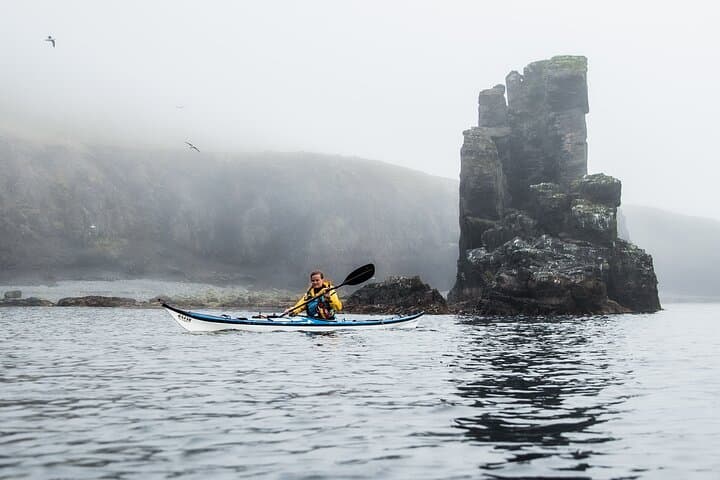
Timing matters: pack layers, respect rapidly changing weather, and plan fuel stops — stations are sparse in the Westfjords. For on-water moments, calm-water kayaking in Ísafjörður Bay is surprisingly accessible for beginners; helmets and headlamps are provided for the lava tube tour. Leave fragile moss and geothermal features untouched: boots have done more harm here than visitors imagine.
By the final day you arrive back near the Golden Circle — Strokkur's punctual geyser, Gullfoss's thunder, and the Secret Lagoon — and the trip folds into travel lore: a week of concentrated Iceland where the wild still has room to surprise and the road invites you to slow down and look closely.