THE ADVENTURE COLLECTIVE® · Independent discovery and booking for outdoor travel

Walk from terraced fields to high plateaus on a private 6-hour hike through the Ourika Valley. Meet Berber villagers, taste home-cooked tagine, and take panoramic Atlas views on a moderate, family-friendly route.
Walk from terraced fields to high plateaus on a private 6-hour hike through the Ourika Valley. Meet Berber villagers, taste home-cooked tagine, and take panoramic Atlas views on a moderate, family-friendly route.
A cool mountain wind meets your face as the minibus drops you at the trailhead and the Ourika River begins to murmur behind a stand of olive trees. The path climbs through irrigated terraces and chestnut groves; Berber houses peer over stone walls, and children wave from shaded courtyards. This is a day in the High Atlas where the landscape pushes you forward and the villages open like chapters.
Verified experiences and guided adventures in the surrounding area.
Operated by Ourika tours · Ourika, Marrakech-Safi
A cool mountain wind meets your face as the minibus drops you at the trailhead and the Ourika River begins to murmur behind a stand of olive trees. The path climbs through irrigated terraces and chestnut groves; Berber houses peer over stone walls, and children wave from shaded courtyards. This is a day in the High Atlas where the landscape pushes you forward and the villages open like chapters.
Geology here is honest: layered schist and granite hewn by glacial and fluvial action, forming stepped plateaus and narrow ravines. Historically the valley has been a transit corridor between Marrakech and the high pastures; Amazigh (Berber) communities kept terraced agriculture and cooperative weaving alive. Expect to pass water gardens fed by mountain springs, meet cooperatives selling argan and woven goods, and learn about seasonal grazing and irrigation practices.
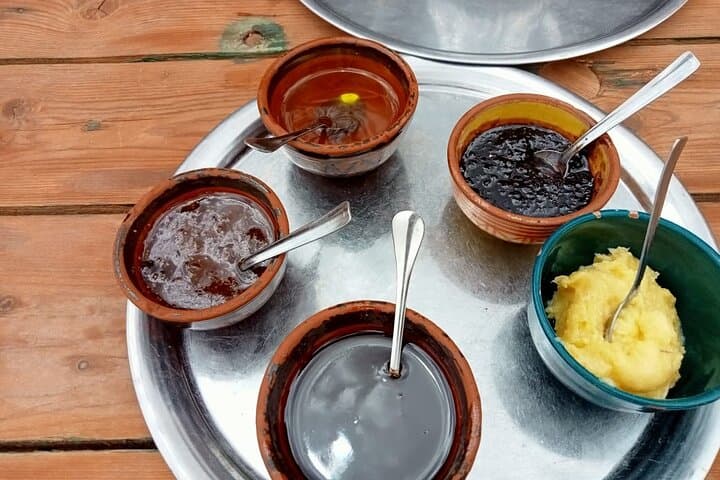
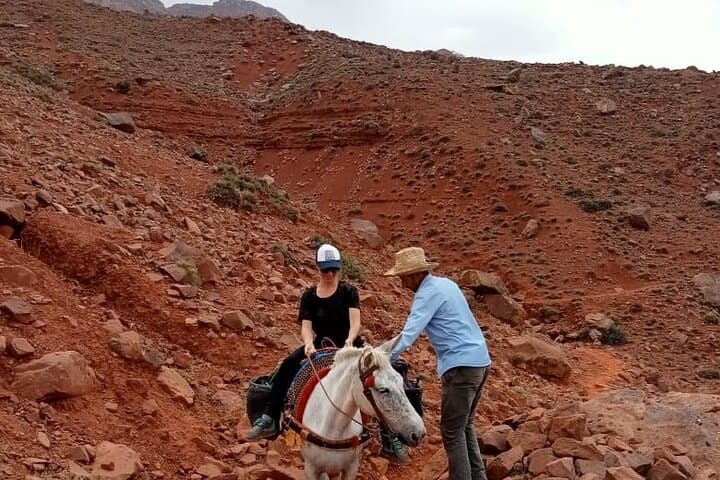
The hike itself is a steady, family-friendly mountain walk: conventional village paths, sun-dappled mule tracks and occasional stone stairways. Views toward Marrakech and the higher Atlas open on ridgelines; depending on route, the group may climb to a Tizi (saddle) for broad panoramas. Guides arrange a local mountain lunch in a family house—tagine, salads and mint tea feel like a welcome reward.
Practical guidance: allow 6 hours for the round-trip pace described, expect uneven stone terrain and short steep sections, and bring sturdy shoes, sun protection and 1.5–2 liters of water. Start early to avoid midday heat, carry small bills for purchases and tips, and be prepared to slow your pace when meetings with livestock or locals require it. This is cultural hiking—observe local customs, ask before photographing people, and leave no trace.
moderate.
6 hours.
Moderate fitness—comfortable walking for several hours with intermittent steep sections; some previous hiking experience helpful
Yes—families are common on this private hike, but children should be comfortable walking several hours and able to handle short steep segments.
Most departures include private transport from Marrakech; pickup and drop-off details are confirmed at booking and vary by meeting point.
Yes—lunch is typically a home-cooked Berber meal served in a mountain house and included in the booking price.
No special permits are required for day hikes in the Ourika Valley; carry ID and any personal medications, and check booking questions for passport info if requested.
The Ourika Valley has long been an Amazigh agricultural zone linking Marrakech with Atlas pastures; terracing and water channels reflect centuries of communal land management.
Tourism supports local cooperatives but can strain water and waste systems—stick to marked trails, avoid single-use plastics, and buy locally made goods to ensure economic benefit.
Ourika tours operates guided outdoor trips and adventures with an emphasis on safety, stewardship, and memorable experiences.
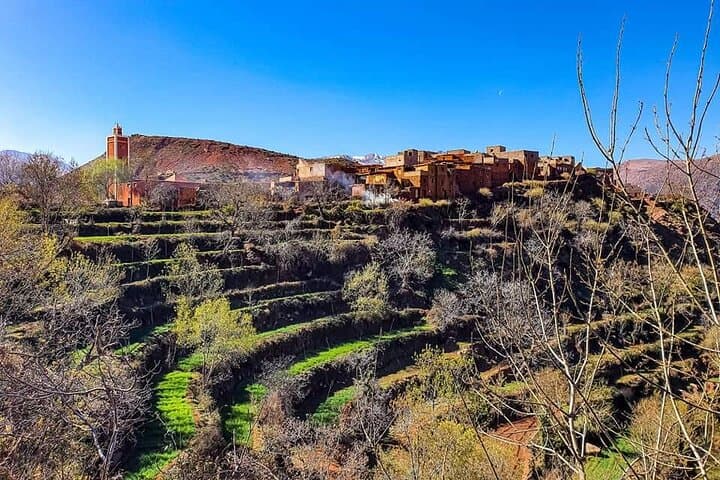
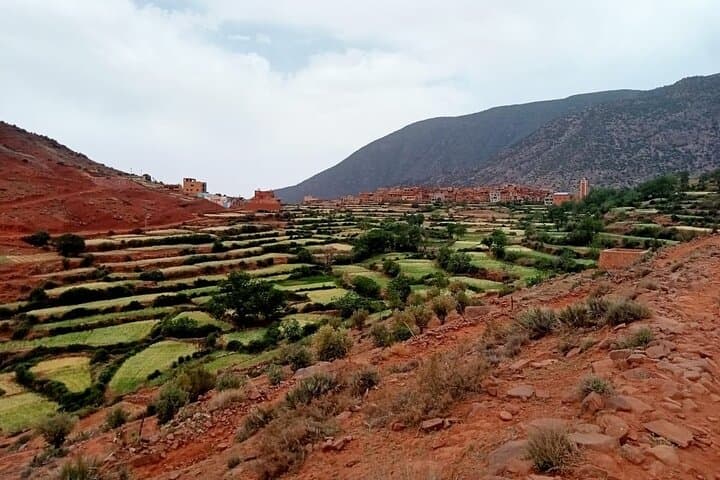
A cool mountain wind meets your face as the minibus drops you at the trailhead and the Ourika River begins to murmur behind a stand of olive trees. The path climbs through irrigated terraces and chestnut groves; Berber houses peer over stone walls, and children wave from shaded courtyards. This is a day in the High Atlas where the landscape pushes you forward and the villages open like chapters.
A cool mountain wind meets your face as the minibus drops you at the trailhead and the Ourika River begins to murmur behind a stand of olive trees. The path climbs through irrigated terraces and chestnut groves; Berber houses peer over stone walls, and children wave from shaded courtyards. This is a day in the High Atlas where the landscape pushes you forward and the villages open like chapters.
Geology here is honest: layered schist and granite hewn by glacial and fluvial action, forming stepped plateaus and narrow ravines. Historically the valley has been a transit corridor between Marrakech and the high pastures; Amazigh (Berber) communities kept terraced agriculture and cooperative weaving alive. Expect to pass water gardens fed by mountain springs, meet cooperatives selling argan and woven goods, and learn about seasonal grazing and irrigation practices.
The hike itself is a steady, family-friendly mountain walk: conventional village paths, sun-dappled mule tracks and occasional stone stairways. Views toward Marrakech and the higher Atlas open on ridgelines; depending on route, the group may climb to a Tizi (saddle) for broad panoramas. Guides arrange a local mountain lunch in a family house—tagine, salads and mint tea feel like a welcome reward.
Practical guidance: allow 6 hours for the round-trip pace described, expect uneven stone terrain and short steep sections, and bring sturdy shoes, sun protection and 1.5–2 liters of water. Start early to avoid midday heat, carry small bills for purchases and tips, and be prepared to slow your pace when meetings with livestock or locals require it. This is cultural hiking—observe local customs, ask before photographing people, and leave no trace.