THE ADVENTURE COLLECTIVE® · Independent discovery and booking for outdoor travel

Traverse the scented Rose Valley, Dades Gorge and M'Goun highlands on a six-day guided trek from Marrakech. Expect 10–18 km walking days, two nights camping, and immersive stays in Berber guesthouses.
Traverse the scented Rose Valley, Dades Gorge and M'Goun highlands on a six-day guided trek from Marrakech. Expect 10–18 km walking days, two nights camping, and immersive stays in Berber guesthouses.
Morning light strips the high ridges of the High Atlas as your minivan eases over the Tizi n'Tichka pass and the valley below comes into focus: terraced fields, mud-brick kasbahs and a river threading pink rose gardens. On this 6-day route you trade city bustle for trail rhythms—daily walks of 10–18 km across river terraces, juniper-studded slopes and scarred plateaus that open to the M'Goun massif.
Verified experiences and guided adventures in the surrounding area.
Operated by Morocco Exposure · Kelâat M'Gouna, Drâa-Tafilalet
Morning light strips the high ridges of the High Atlas as your minivan eases over the Tizi n'Tichka pass and the valley below comes into focus: terraced fields, mud-brick kasbahs and a river threading pink rose gardens. On this 6-day route you trade city bustle for trail rhythms—daily walks of 10–18 km across river terraces, juniper-studded slopes and scarred plateaus that open to the M'Goun massif.
Geology here is rugged and recent in geological terms: the High Atlas rose as Africa collided with Eurasia, leaving folded limestone flanks and steep gorges carved by seasonal torrents. Culture is equally visible—Amazigh (Berber) villages, handcrafted kasbahs and the scented markets of Kelâat M'Gouna, where Damask roses are still harvested by hand. The itinerary threads classic highlights: Dades Gorge, Oleander Valley stream crossings, and a visit to the UNESCO ksar of Aït Benhaddou on the return drive.
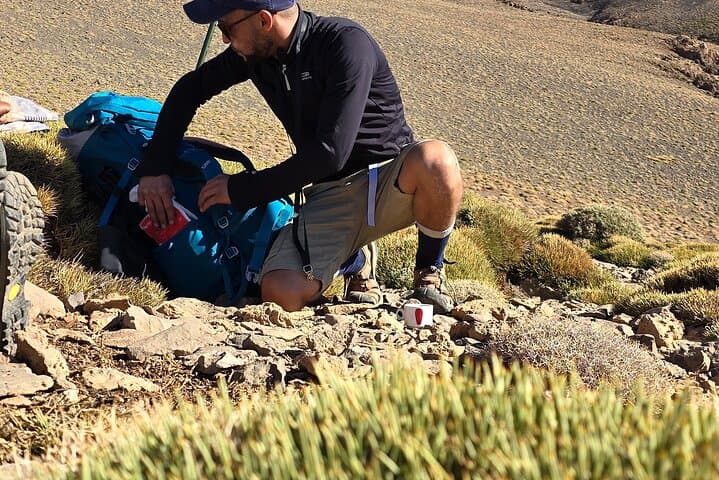
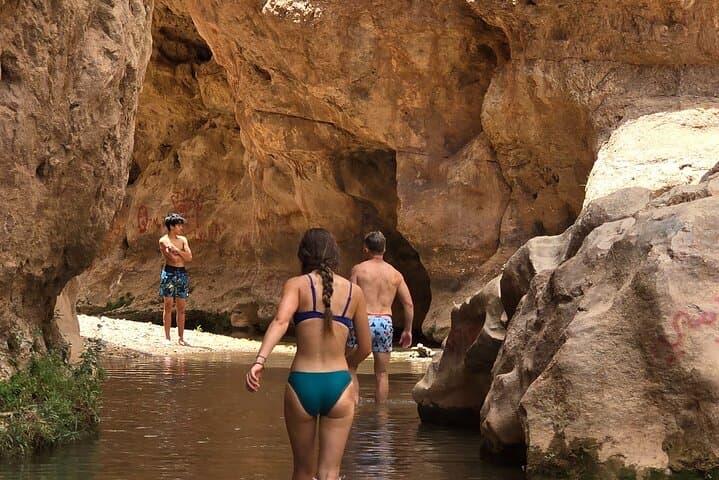
Practically, expect 5–6 hours of walking on most days, single 300 m ascents, and mixed terrain from rocky switchbacks to soft valley tracks. Mules carry camping gear; you sleep two nights under canvas and three nights in simple guesthouses. Start early to avoid midday heat, carry 2–3 L of water, and pack layers—temperatures swing from warm valley afternoons to cool mountain nights. Bring sturdy boots and hiking sandals for stream crossings, and leave time on the final day for a restorative hammam in Kelâat M'Gouna before the drive back to Marrakech.
moderate.
6 days.
Regular walking fitness; able to complete sustained 5–6 hour days with 300 m ascents and uneven terrain.
Most days cover 10–18 km with 4–6 hours of walking; one day includes about a 300 m ascent to a scenic pass.
Yes, muleteers transport main luggage and camping gear; bring a small daypack for daily essentials.
Accommodation alternates between local guesthouses/riads and two nights camping in tents; guesthouses are simple but comfortable.
Altitudes reach around 1,800 m—this is not high-altitude mountaineering, but the itinerary is not recommended for those with serious cardiovascular issues.
The Valleys are home to Amazigh (Berber) communities and traditional kasbah architecture; Aït Benhaddou nearby is a UNESCO-listed ksar used as a filming location.
Water is a scarce resource—use refillable bottles and support local guesthouses that follow low-impact practices; stick to established trails to protect fragile soils.
Morocco Exposure operates guided outdoor trips and adventures with an emphasis on safety, stewardship, and memorable experiences.
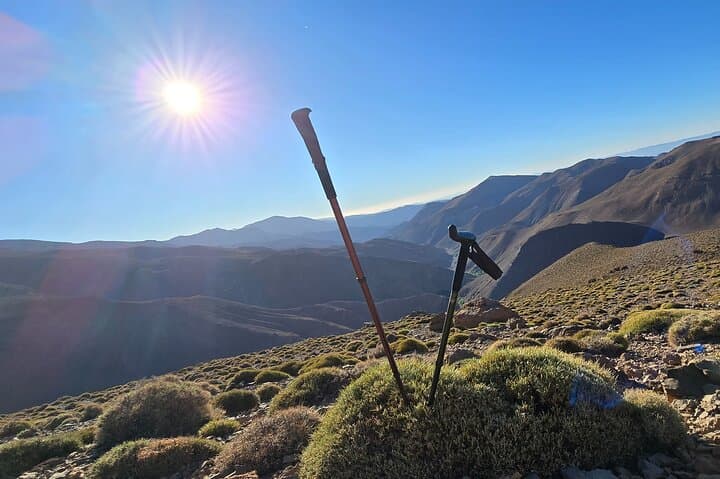
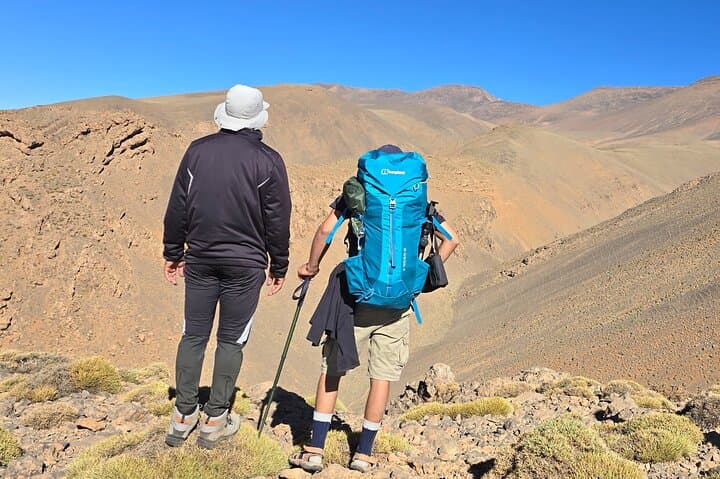
Morning light strips the high ridges of the High Atlas as your minivan eases over the Tizi n'Tichka pass and the valley below comes into focus: terraced fields, mud-brick kasbahs and a river threading pink rose gardens. On this 6-day route you trade city bustle for trail rhythms—daily walks of 10–18 km across river terraces, juniper-studded slopes and scarred plateaus that open to the M'Goun massif.
Morning light strips the high ridges of the High Atlas as your minivan eases over the Tizi n'Tichka pass and the valley below comes into focus: terraced fields, mud-brick kasbahs and a river threading pink rose gardens. On this 6-day route you trade city bustle for trail rhythms—daily walks of 10–18 km across river terraces, juniper-studded slopes and scarred plateaus that open to the M'Goun massif.
Geology here is rugged and recent in geological terms: the High Atlas rose as Africa collided with Eurasia, leaving folded limestone flanks and steep gorges carved by seasonal torrents. Culture is equally visible—Amazigh (Berber) villages, handcrafted kasbahs and the scented markets of Kelâat M'Gouna, where Damask roses are still harvested by hand. The itinerary threads classic highlights: Dades Gorge, Oleander Valley stream crossings, and a visit to the UNESCO ksar of Aït Benhaddou on the return drive.
Practically, expect 5–6 hours of walking on most days, single 300 m ascents, and mixed terrain from rocky switchbacks to soft valley tracks. Mules carry camping gear; you sleep two nights under canvas and three nights in simple guesthouses. Start early to avoid midday heat, carry 2–3 L of water, and pack layers—temperatures swing from warm valley afternoons to cool mountain nights. Bring sturdy boots and hiking sandals for stream crossings, and leave time on the final day for a restorative hammam in Kelâat M'Gouna before the drive back to Marrakech.