THE ADVENTURE COLLECTIVE® · Independent discovery and booking for outdoor travel

Six days across Sri Lanka’s Cultural Triangle—Sigiriya, Polonnaruwa, Dambulla, Kandy and the tea country—packs history, geology and everyday life into one compact route. This private tour pairs English-speaking chauffeur-guides and 3-star B&B stays with visits to UNESCO sites and hill-country tea estates.
Six days across Sri Lanka’s Cultural Triangle—Sigiriya, Polonnaruwa, Dambulla, Kandy and the tea country—packs history, geology and everyday life into one compact route. This private tour pairs English-speaking chauffeur-guides and 3-star B&B stays with visits to UNESCO sites and hill-country tea estates.
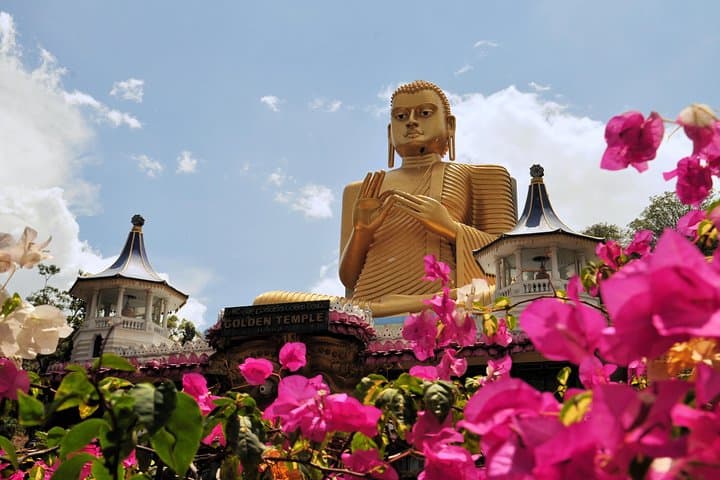
You step off the humid tarmac at Bandaranaike International and the air already smells of cinnamon and diesel—a sign the island will move fast and slow all at once. A driver in a clean, air-conditioned van meets you with a name card and a roadmap that reads like a condensed history: Sigiriya’s sky-scraping rock, the carved caverns of Dambulla, the misted terraces of Nuwara Eliya. Over six days the tour stitches those places into a single, readable narrative of Sri Lanka’s cultural heart.
Verified experiences and guided adventures in the surrounding area.
Operated by Beyond Escapes · Sigiriya, Central Province
You step off the humid tarmac at Bandaranaike International and the air already smells of cinnamon and diesel—a sign the island will move fast and slow all at once. A driver in a clean, air-conditioned van meets you with a name card and a roadmap that reads like a condensed history: Sigiriya’s sky-scraping rock, the carved caverns of Dambulla, the misted terraces of Nuwara Eliya. Over six days the tour stitches those places into a single, readable narrative of Sri Lanka’s cultural heart.
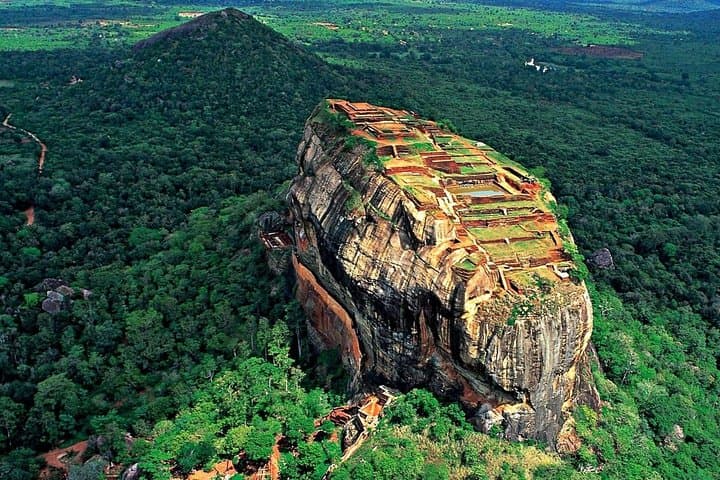
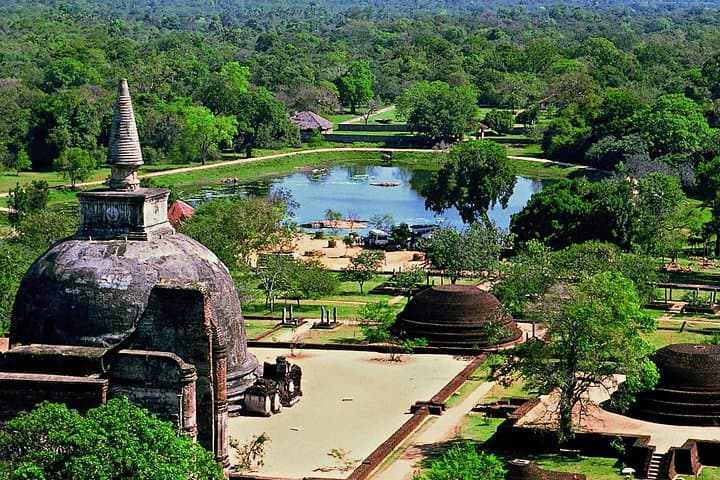
By noon on day two you’ll be at the base of Sigiriya—an almost-vertical granite monolith rising about 200 meters above the plains. The climb threads iron stairways, mirrored platforms and battered frescoes; visitors count roughly a thousand steps and a few breathless stops to take in water gardens below. A few hours away, Polonnaruwa lays out a different order: broad stone platforms, moon-faced Buddhas and irrigation tanks from the 11th–13th centuries when Sri Lanka’s medieval kingdom engineered its own agricultural revolution.
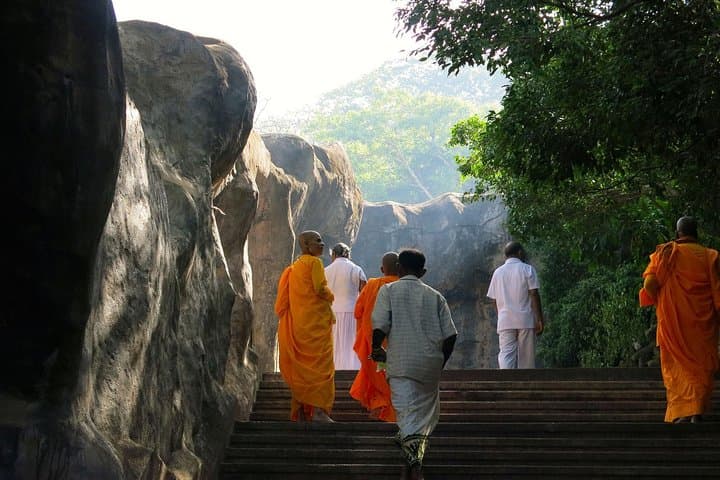
The itinerary moves inland into the Central Highlands—Kandy’s busy streets and the Temple of the Tooth, where pilgrims and monks gather around an object that has shaped political legitimacy for centuries. Peradeniya Botanical Garden, near Kandy, shows off species brought to the island through colonial trade; further uphill, Nuwara Eliya sits at nearly 1,900 meters with tea estates that hum like industry and memory. Ramboda, St. Clair and Devon waterfalls punctuate the drives, dramatic reminders that water carved these valleys long before roads did.
Culturally this route is an accelerating study in contrast: ancient kings and hydraulic engineers, colonial planters, and modern vendors selling fresh coconut and spicy lamprais. Guides on this private tour are English-speaking chauffeur-guides whose knowledge strings the sites into context—who built what, when, and why.
Practical edge: weekends and public holidays can swell visitor numbers at Sigiriya and Dambulla; early starts beat the heat and the buses. Expect a mix of walking surfaces—paved temple courtyards, packed dirt around tea plantations, and hundreds of stairs at Sigiriya—so solid footwear and a steady pace matter. There’s minimal technical difficulty, but the highest altitude days (Nuwara Eliya) can feel cool and breezy compared with the plains.
Useful logistics: the tour includes B&B accommodation at three-star hotels, transport by air-conditioned vehicle, bottled water during excursions, and pickup from Colombo airport or local hotels. Bring a passport, arrange visas in advance, carry local currency (LKR) for tips and small purchases, and keep sunscreen and insect repellent to hand. If you want clearer photos, aim for sunrise at Pidurangala facing Sigiriya or golden-hour light over tea terraces. Follow site rules, respect temple dress codes, and you’ll come away with a compact, practical survey of Sri Lanka’s layered heritage—sweeping, audible and quietly weathered by time.
moderate.
6 days.
Moderate fitness; comfortable walking, stair climbs (approx. 1,000–1,200 steps at Sigiriya) and short hikes expected
This is a private tour with an English-speaking chauffeur-guide and private vehicle for your group.
Expect a moderate climb of roughly 1,000–1,200 steps with a 200m ascent; there are platforms and viewpoints to rest along the way.
Admission to some UNESCO sites is included per the itinerary; confirm specifics at booking for any optional extra activities.
Five nights are in three-star bed-and-breakfast hotels; upgrades may be available on request.
A current passport is required and travelers must obtain any necessary visas before arrival—the traveler is responsible for visa arrangements.
Children can join but must be accompanied by an adult; child rates apply only when sharing with two paying adults.
Sigiriya and Polonnaruwa are UNESCO-listed sites reflecting Sri Lanka’s ancient hydraulic engineering and the 5th–13th century kingdoms that shaped island politics and art.
Visitor pressure at UNESCO sites and in hill-country tea estates is managed by controlled paths and entry limits; bring refillable bottles and stick to marked trails to reduce local impact.
Beyond Escapes operates guided outdoor trips and adventures with an emphasis on safety, stewardship, and memorable experiences.
You step off the humid tarmac at Bandaranaike International and the air already smells of cinnamon and diesel—a sign the island will move fast and slow all at once. A driver in a clean, air-conditioned van meets you with a name card and a roadmap that reads like a condensed history: Sigiriya’s sky-scraping rock, the carved caverns of Dambulla, the misted terraces of Nuwara Eliya. Over six days the tour stitches those places into a single, readable narrative of Sri Lanka’s cultural heart.
You step off the humid tarmac at Bandaranaike International and the air already smells of cinnamon and diesel—a sign the island will move fast and slow all at once. A driver in a clean, air-conditioned van meets you with a name card and a roadmap that reads like a condensed history: Sigiriya’s sky-scraping rock, the carved caverns of Dambulla, the misted terraces of Nuwara Eliya. Over six days the tour stitches those places into a single, readable narrative of Sri Lanka’s cultural heart.
By noon on day two you’ll be at the base of Sigiriya—an almost-vertical granite monolith rising about 200 meters above the plains. The climb threads iron stairways, mirrored platforms and battered frescoes; visitors count roughly a thousand steps and a few breathless stops to take in water gardens below. A few hours away, Polonnaruwa lays out a different order: broad stone platforms, moon-faced Buddhas and irrigation tanks from the 11th–13th centuries when Sri Lanka’s medieval kingdom engineered its own agricultural revolution.
The itinerary moves inland into the Central Highlands—Kandy’s busy streets and the Temple of the Tooth, where pilgrims and monks gather around an object that has shaped political legitimacy for centuries. Peradeniya Botanical Garden, near Kandy, shows off species brought to the island through colonial trade; further uphill, Nuwara Eliya sits at nearly 1,900 meters with tea estates that hum like industry and memory. Ramboda, St. Clair and Devon waterfalls punctuate the drives, dramatic reminders that water carved these valleys long before roads did.
Culturally this route is an accelerating study in contrast: ancient kings and hydraulic engineers, colonial planters, and modern vendors selling fresh coconut and spicy lamprais. Guides on this private tour are English-speaking chauffeur-guides whose knowledge strings the sites into context—who built what, when, and why.
Practical edge: weekends and public holidays can swell visitor numbers at Sigiriya and Dambulla; early starts beat the heat and the buses. Expect a mix of walking surfaces—paved temple courtyards, packed dirt around tea plantations, and hundreds of stairs at Sigiriya—so solid footwear and a steady pace matter. There’s minimal technical difficulty, but the highest altitude days (Nuwara Eliya) can feel cool and breezy compared with the plains.
Useful logistics: the tour includes B&B accommodation at three-star hotels, transport by air-conditioned vehicle, bottled water during excursions, and pickup from Colombo airport or local hotels. Bring a passport, arrange visas in advance, carry local currency (LKR) for tips and small purchases, and keep sunscreen and insect repellent to hand. If you want clearer photos, aim for sunrise at Pidurangala facing Sigiriya or golden-hour light over tea terraces. Follow site rules, respect temple dress codes, and you’ll come away with a compact, practical survey of Sri Lanka’s layered heritage—sweeping, audible and quietly weathered by time.