THE ADVENTURE COLLECTIVE® · Independent discovery and booking for outdoor travel

A six-day loop from Arusha flies you into Serengeti game country for dawn drives and tented nights, then deposits you on Zanzibar’s palm-fringed coast. Expect close wildlife encounters, a hint of Swahili history in Stone Town, and clear planning needs like light luggage and early starts.
A six-day loop from Arusha flies you into Serengeti game country for dawn drives and tented nights, then deposits you on Zanzibar’s palm-fringed coast. Expect close wildlife encounters, a hint of Swahili history in Stone Town, and clear planning needs like light luggage and early starts.
You step off a small prop plane and the Serengeti throws itself wide: endless grass, a distant line of acacia, and the urgent, low conversations of hooves on hard earth.
Verified experiences and guided adventures in the surrounding area.
Operated by ALMASI AFRICA · Arusha, Arusha Region
You step off a small prop plane and the Serengeti throws itself wide: endless grass, a distant line of acacia, and the urgent, low conversations of hooves on hard earth.
This six-day loop pairs the raw, open heart of northern Tanzania with the calm of Zanzibar’s Indian Ocean shores. Historically, the Serengeti’s plains—carved by ancient rivers and shifting tectonics—have supported the Great Migration for millennia; Stone Town on Zanzibar reflects centuries of Swahili trade, Omani influence, and spice commerce. Geology in the Serengeti is straightforward: flat to gently rolling plains at roughly 1,100–1,800 m elevation, punctuated by kopjes—weathered granite outcrops that offer lookout points for predators and guests alike.
Culture here is live: Maasai herders keep watch on the margin of parks while Stone Town’s alleys pulse with vendors, carved doors, and clove-scented stalls. Conservation has shaped daily practice—park fees and guided drives fund anti-poaching and community projects.
Practically, expect early-morning and full-day game drives from an open-top vehicle, short charter flights (about 1–1.5 hours) between Arusha, Serengeti airstrips, and Zanzibar, and two nights in tented camp followed by beachfront resort time. Terrain is low-technical but dusty; bring sun protection, layered mornings, and a camera with a telephoto lens. Flights limit luggage—soft bags work best.
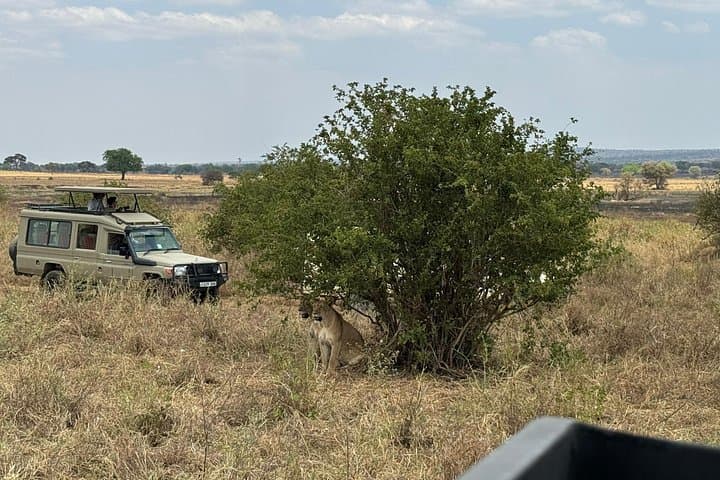
This itinerary balances active wildlife tracking with downtime by the sea: rise with lions on the plains, then trade the roar for waves and spice tours—two distinct Tanzanias in one trip.
moderate.
6 days.
Suitable for travelers in general good health; activities are low-impact but require long vehicle drives and early starts.
Charter flights typically take about 1 to 1.5 hours depending on the airstrip and routing; flight times vary with weather.
Vaccination requirements change—check official health guidance; malaria prophylaxis is commonly recommended for Serengeti and Zanzibar—consult your doctor.
Most operators can handle dietary restrictions if notified in advance—use booking questions to list allergies and preferences.
The itinerary is rated easy for mobility but involves long drives and early starts; it isn’t recommended for travelers with serious cardiovascular or spinal conditions and may be modified for young children.
Stone Town’s narrow streets reflect centuries of Swahili trade and Omani influence; the Serengeti’s name comes from a Maasai word for 'endless plains.'
Park fees and guided drives fund anti-poaching and community programs; visitors should follow guide instructions to minimize disturbance to wildlife.
ALMASI AFRICA operates guided outdoor trips and adventures with an emphasis on safety, stewardship, and memorable experiences.
You step off a small prop plane and the Serengeti throws itself wide: endless grass, a distant line of acacia, and the urgent, low conversations of hooves on hard earth.
You step off a small prop plane and the Serengeti throws itself wide: endless grass, a distant line of acacia, and the urgent, low conversations of hooves on hard earth.
This six-day loop pairs the raw, open heart of northern Tanzania with the calm of Zanzibar’s Indian Ocean shores. Historically, the Serengeti’s plains—carved by ancient rivers and shifting tectonics—have supported the Great Migration for millennia; Stone Town on Zanzibar reflects centuries of Swahili trade, Omani influence, and spice commerce. Geology in the Serengeti is straightforward: flat to gently rolling plains at roughly 1,100–1,800 m elevation, punctuated by kopjes—weathered granite outcrops that offer lookout points for predators and guests alike.
Culture here is live: Maasai herders keep watch on the margin of parks while Stone Town’s alleys pulse with vendors, carved doors, and clove-scented stalls. Conservation has shaped daily practice—park fees and guided drives fund anti-poaching and community projects.
Practically, expect early-morning and full-day game drives from an open-top vehicle, short charter flights (about 1–1.5 hours) between Arusha, Serengeti airstrips, and Zanzibar, and two nights in tented camp followed by beachfront resort time. Terrain is low-technical but dusty; bring sun protection, layered mornings, and a camera with a telephoto lens. Flights limit luggage—soft bags work best.
This itinerary balances active wildlife tracking with downtime by the sea: rise with lions on the plains, then trade the roar for waves and spice tours—two distinct Tanzanias in one trip.