THE ADVENTURE COLLECTIVE® · Independent discovery and booking for outdoor travel

A private six-day loop from Tangier through Morocco’s imperial cities and the Atlas foothills. Expect Roman ruins, wind-scoured medinas, cedar forests, and flexible pacing with a dedicated driver-guide.
A private six-day loop from Tangier through Morocco’s imperial cities and the Atlas foothills. Expect Roman ruins, wind-scoured medinas, cedar forests, and flexible pacing with a dedicated driver-guide.
You step from the harbor air of Tangier into a private car that will chart six distinct moods of Morocco: Roman ruins at dawn, medina alleys at midday, cedar-forested passes by afternoon, and saffron-scented kitchens at night.
Verified experiences and guided adventures in the surrounding area.
Operated by JTT Morocco · Tangier, Tanger-Tétouan-Al Hoceima
You step from the harbor air of Tangier into a private car that will chart six distinct moods of Morocco: Roman ruins at dawn, medina alleys at midday, cedar-forested passes by afternoon, and saffron-scented kitchens at night.
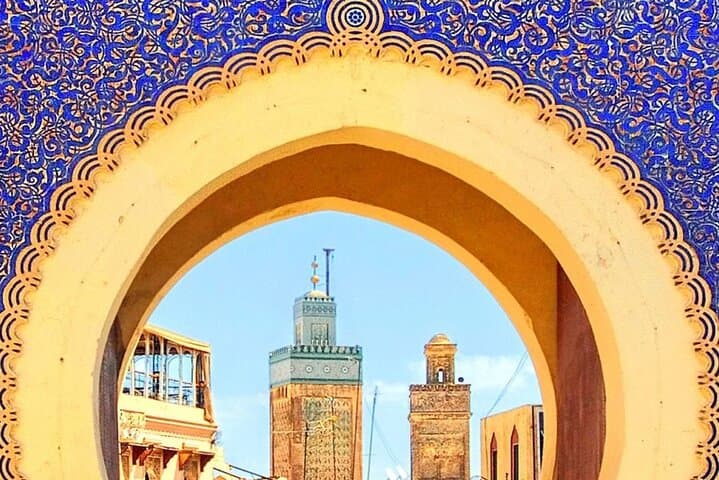
The route threads Volubilis’ stone-paved remains, the imperial gates of Meknes, the labyrinth of Fes el-Bali, the cedar groves and Berber villages of the Middle Atlas, then Marrakech’s ochre walls and Casablanca’s Atlantic edge. Geology shifts visibly — limestone terraces around Volubilis give way to volcanic and metamorphic outcrops through the Middle Atlas, where rivers have carved narrow valleys and cedar stands climb cooler slopes.
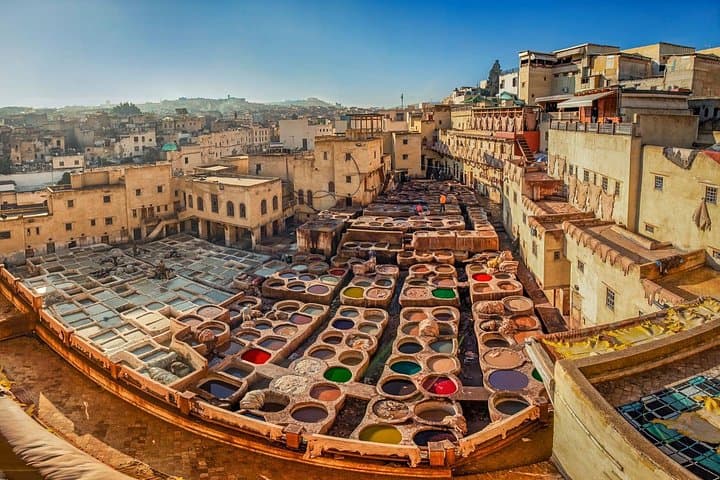
Culturally the trip is a compact primer: Roman provincial planning, Alaouite palaces, centuries of Islamic scholarship in Fes, and living Berber traditions in mountain settlements. Local guides and drivers translate language, practice, and foodways, turning souk stalls and tannery courtyards into practical lessons in craft and commerce.
Plan pragmatically: travel between cities involves long drives (several 3–6 hour segments), so pack layers for thermal swings, sturdy shoes for uneven cobbles, and a daypack for walking tours. Morning tours beat crowds at key sites like the Chouara Tannery and Majorelle Garden. Hydrate frequently in inland heat, and allow buffer time for photo stops — the itinerary is private and flexible, but mountain roads and medina alleys move at their own pace.
This is a travel experience that balances cultural immersion with accessible pacing — expect history, landscape variety, and the steady presence of local hospitality rather than adrenaline.
easy.
6 days.
Light to moderate — basic mobility for walking on uneven cobbles and short hikes; not strenuous.
Yes — the private format accommodates solo travelers; single-booking policies apply and your driver-guide can tailor activities.
Expect multiple long transfers, typically 3–6 hours on segments between Fes, the Atlas region, Marrakech, and Casablanca; the itinerary balances driving with extended site visits.
Some admissions (like Volubilis and select guided tours) are included per the itinerary; verify specifics with the operator when booking.
Driver-guides commonly speak English, French, and Arabic; confirm language preferences at booking to ensure the right guide.
The route links Roman Volubilis (a key provincial center) with the Alaouite imperial cities — Meknes, Fes, and Marrakech — reflecting centuries of layered rule and trade across North Africa.
Travel through sensitive sites and mountain ecosystems; stick to marked paths, minimize plastic use, and support local cooperatives to help preserve traditional crafts and reduce tourist pressure.
JTT Morocco operates guided outdoor trips and adventures with an emphasis on safety, stewardship, and memorable experiences.
You step from the harbor air of Tangier into a private car that will chart six distinct moods of Morocco: Roman ruins at dawn, medina alleys at midday, cedar-forested passes by afternoon, and saffron-scented kitchens at night.
You step from the harbor air of Tangier into a private car that will chart six distinct moods of Morocco: Roman ruins at dawn, medina alleys at midday, cedar-forested passes by afternoon, and saffron-scented kitchens at night.
The route threads Volubilis’ stone-paved remains, the imperial gates of Meknes, the labyrinth of Fes el-Bali, the cedar groves and Berber villages of the Middle Atlas, then Marrakech’s ochre walls and Casablanca’s Atlantic edge. Geology shifts visibly — limestone terraces around Volubilis give way to volcanic and metamorphic outcrops through the Middle Atlas, where rivers have carved narrow valleys and cedar stands climb cooler slopes.
Culturally the trip is a compact primer: Roman provincial planning, Alaouite palaces, centuries of Islamic scholarship in Fes, and living Berber traditions in mountain settlements. Local guides and drivers translate language, practice, and foodways, turning souk stalls and tannery courtyards into practical lessons in craft and commerce.
Plan pragmatically: travel between cities involves long drives (several 3–6 hour segments), so pack layers for thermal swings, sturdy shoes for uneven cobbles, and a daypack for walking tours. Morning tours beat crowds at key sites like the Chouara Tannery and Majorelle Garden. Hydrate frequently in inland heat, and allow buffer time for photo stops — the itinerary is private and flexible, but mountain roads and medina alleys move at their own pace.
This is a travel experience that balances cultural immersion with accessible pacing — expect history, landscape variety, and the steady presence of local hospitality rather than adrenaline.